
Product Details
- Home
- LOST IN JAPAN: FLEETING LIFE™
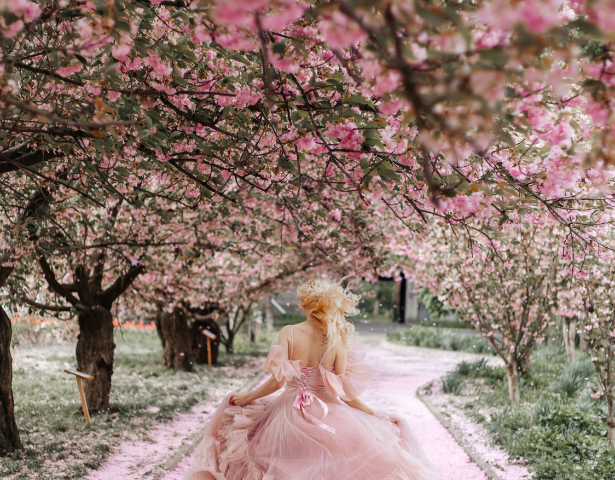
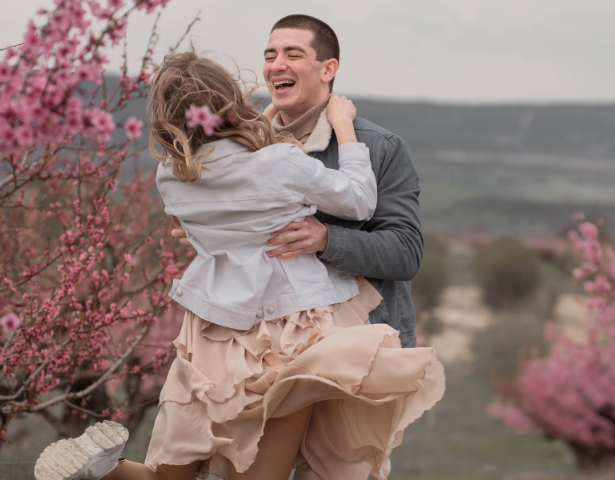
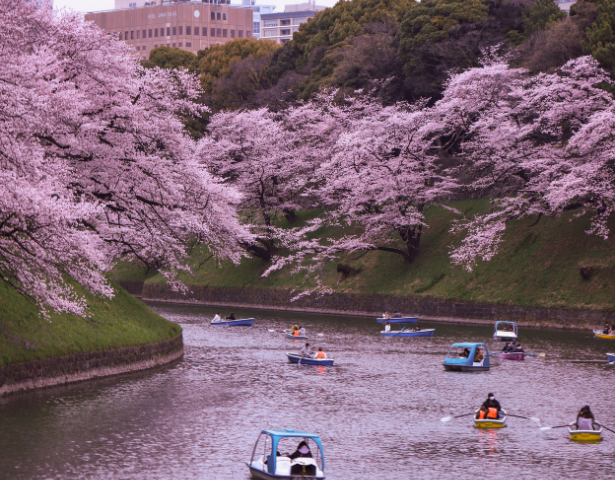
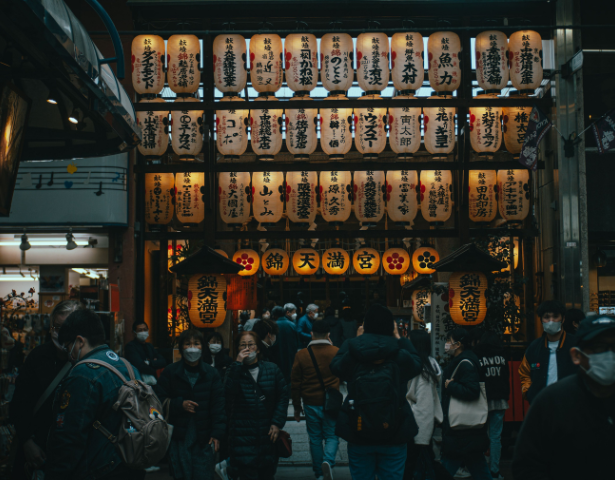

LOST IN JAPAN: FLEETING LIFE™3 Days / 2 NightsFLEXIBLE SEASONAL DATESCherry blossoms in Tokyo and Kyoto usually bloom from late March to early April. As bloom times vary each year, please check the latest forecast before choosing your dates.
$2,200 – $5,000Price range: $2,200 through $5,000
The price shown is per person, not per room. Use the quantity selector to choose the number of travelers and see your total price.
Limited packages available. Secure yours today with a 10% deposit.
THE L.U.X. PROMISE: THE ART OF TOTAL IMMERSION

ZERO FRICTION
At MASX, our guiding principle is LUX: Live Ultimate Xperiences — where true luxury is the freedom to stay present and fully immersed in the moment. To ensure your connection to the city’s quiet rhythm remains uninterrupted, we operate under a strict, silent protocol:

You aren’t led by a “guide.” You are accompanied by a N.I.T.E. Insider. They are local expert insiders who help you Navigate Immersive Travel Experiences. They are your sophisticated peers, your cultural translators, and your partners in after-dark cultural experiences that will open doors that don’t exist on any map.

THE ARTIFACTS
Your journey exists in two worlds. The Black Passport is your shared tactile anchor — a physical relic to hold in your hands. The Digital Artifact is your high-fidelity digital legacy — a cinematic film to revisit together.
A physical book that preserves the story of your experience.
Your story is captured as it happens. Seven days after your experience, you will receive a curated collection of captured moments from the experience.
OVERVIEW
FLEETING LIFE: CHERRY BLOSSOM TOKYO explores a city where cherry blossoms appear in almost every version of Tokyo life. They bloom beside old neighborhood streets and school grounds, fill major parks where friends gather for hanami, and appear unexpectedly between towers, train lines, convenience stores, and some of the busiest streets on Earth. For a few short weeks, spring softens this enormous metropolis, and people make time to stop, look up, share food, and appreciate something they already know will soon disappear.
Following the Japanese philosophy of mono no aware, the bittersweet awareness that things are beautiful partly because they do not last, experience sakura through the many ways Tokyo continues to cherish it. Walk from celebrated blossom destinations into everyday neighborhoods, discover how the changing seasons have inspired Japanese poetry, food, fragrance, and tradition, and taste the seasonal flavors that return each spring. Then step into modern Tokyo, from the energy of Shinjuku and its depachika food halls to a hanami picnic beneath the trees and the extraordinary streets of Shibuya. As night falls, join locals gathering beneath illuminated blossoms and experience how the season brings people together after the working day ends. Finally, leave the guidance behind and find your own way through Tokyo, noticing the small signs of spring for yourself. The exact blossoms may change, but that uncertainty is part of the journey. By the end, cherry blossoms are no longer simply something you came to Tokyo to see. They become something you understand.
ITINERARY
TOKYO
Day 1: The Royal Beginning
Long ago, cherry blossoms were a secret luxury. Only kings, queens, and top poets could sit in quiet, private spaces to look at them.
WHERE SPRING BEGINS
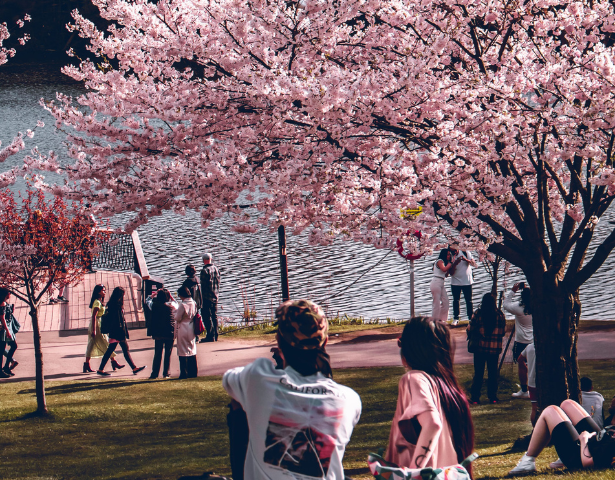
Begin the journey at Ueno Park, one of Tokyo's most celebrated cherry blossom destinations, where generations have gathered beneath the trees to welcome spring. Walk along the famous cherry-lined paths as the city begins its day, watching morning walkers, families, and early hanami visitors slowly fill the park. Your N.I.T.E. Insider introduces the tradition of hanami, Japan's tradition of flower viewing, and the simple idea behind it: making time to stop and appreciate flowers that will soon disappear. Cherry blossom viewing here stretches back centuries, with the blossoms of Ueno even appearing in the work of celebrated haiku poet Matsuo Basho. Rather than rushing towards the next sight, take your time beneath the trees, notice how people around you enjoy the season, and allow Tokyo's most anticipated sign of spring to make its first impression.
SAKURA IN EVERYDAY LIFE
Leave the scale of Ueno behind and continue into the neighborhoods of Yanaka, Nezu, and Sendagi, where narrow streets, temples, neighborhood shops, schools, bicycles, and older buildings reveal a quieter side of Tokyo. Your N.I.T.E. Insider brings out an old Tokyo map and shares stories from Japan's past, when flowers carried meanings far beyond their beauty. Hear old love stories from the palace days and discover how poets used flowers and seasonal imagery to express feelings that could not always be said directly. Through these stories, begin to understand how cherry blossoms, poetry, romance, and the changing seasons have been woven into Japanese culture for generations before continuing together through the surrounding neighborhood streets. Pass Sakura Dori at Yanaka Cemetery, explore local backstreets, and notice how cherry trees appear naturally within the neighborhood rather than only inside famous viewing destinations. This area has long been associated with Japanese writers and artists, adding another layer to the stories shared along the way. Whenever something seasonal catches your attention, step inside a local cafe or sweets shop and try it. Traditional or modern, simple or elaborate, the fun comes from discovering how sakura appears in everyday Tokyo each spring.
A SCENT TO REMEMBER
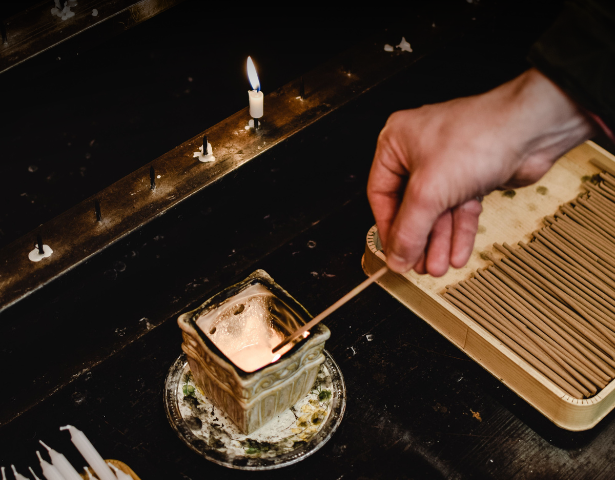
After lunch in the neighborhood, continue into Bunkyo for an afternoon spent exploring another Japanese tradition shaped by nature and the senses. Join a local artisan for an incense-making experience, discovering how different aromatic materials are blended to create balance, character, and memory through scent. Rather than following a predetermined cherry blossom recipe, explore the ingredients available that day and create something inspired by your own experience of spring in Tokyo. Perhaps it reminds you of flowers, fresh air, old wooden streets, damp earth, or something entirely unexpected. Mix and shape your chosen fragrance with guidance from the artisan before taking the finished incense with you. Cherry blossoms may disappear within days, but scent has a remarkable ability to bring a place and moment back to life, leaving you with a small, personal reminder of the Tokyo spring you experienced.
WHEN SPRING REACHES THE TABLE
As evening arrives, discover how Japan's appreciation of the seasons extends far beyond flowers with a kaiseki dinner, a traditional multi-course meal shaped by ingredients at their best at a particular moment of the year. Allow the menu to reveal what spring means to the chef that evening, noticing how ingredients, flavors, colors, presentation, and serving pieces reflect the changing season without expecting any particular dish. Japanese cuisine can often appear remarkably simple, yet that simplicity reveals a deep attention to nature and timing. After dinner, return to the blossoms for yozakura, or nighttime cherry blossom viewing, at a suitable nearby location selected according to the season and current bloom conditions. Join people gathering beneath illuminated trees after the working day has ended, and simply enjoy another way Tokyo makes time for spring. Tonight, the flowers are no longer something to study. They are something to share.
SIGNATURE MOMENTS
Morning Hanami at Ueno Park
Sakura Walk Through Yanesen Area
Seasonal Sakura Sweets
Japanese Incense-Making
Kaiseki Dinner and Yozakura
Day 2: The Metropolitan Festival
Hundreds of years later, the flowers became open to everyone. The city became alive with outdoor picnics, street food, and big drinking parties under the trees.
TOKYO IN FULL MOTION
Begin the morning in Shinjuku, where giant buildings, busy crossings, department stores, train lines, and thousands of people moving through the streets reveal a completely different Tokyo from yesterday. Walk through the district and simply enjoy being surrounded by the energy of one of the city's busiest areas. Japan can feel deeply traditional one moment and remarkably modern the next, yet neither side seems to cancel the other out. After exploring above ground, head beneath one of Shinjuku's major department stores into a depachika, the elaborate basement food halls that turn everyday food shopping into an experience of its own. Browse beautifully presented bento, prepared dishes, Japanese and Western sweets, fruit, and seasonal specialties, tasting a few spring discoveries along the way before choosing the bento, snacks, and treats you would actually like to take with you for lunch.
PICNIC BENEATH THE BLOSSOMS
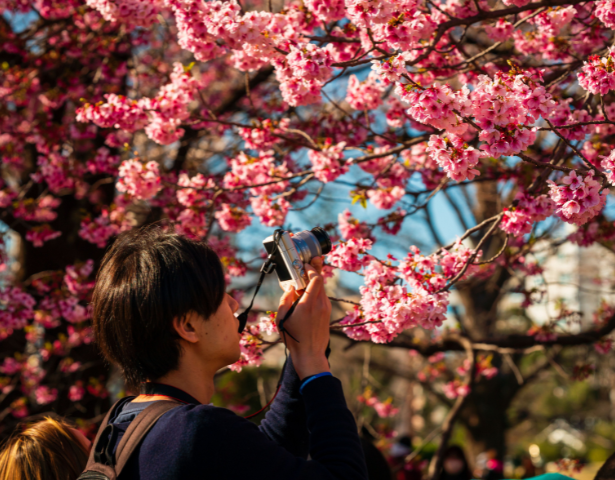
Carry your finds to Shinjuku Gyoen National Garden, where the pace of Tokyo changes almost immediately. Despite sitting close to one of the city's busiest districts, the garden opens into lawns, walking paths, traditional landscapes, and hundreds of cherry trees, including varieties that bloom at different points across the spring season. Find a comfortable place, open the bento and treats you selected at the depachika, and enjoy hanami the way countless people across Japan do each spring: sitting beneath the blossoms with good food and nowhere particularly urgent to be. Talk, people-watch, photograph the trees, or simply look up through the branches while Shinjuku's skyscrapers rise beyond the garden. There is no formal tasting and no specially prepared picnic waiting for you. You chose lunch yourself in busy Shinjuku, carried it here, and now get to enjoy one of Japan's simplest and best-loved spring traditions.
ABOVE THE SCRAMBLE
Leave the quiet of the garden behind and continue south to Shibuya, where Tokyo returns at full volume. Walk toward the famous Shibuya Crossing and join the streams of people moving across the intersection before exploring the surrounding streets, where fashion, music, cafes, screens, trains, and constant movement create one of the city's most recognizable modern landscapes. Later, rise above the district to see the crossing and surrounding city from an elevated viewpoint. From above, Tokyo stretches far beyond Shibuya, with towers, parks, neighborhoods, and occasional patches of spring disappearing towards the horizon. After spending yesterday among old maps, neighborhood streets, poetry, and traditional crafts, this view reveals another side of Japan entirely. Yet somewhere beneath that enormous skyline, people are still gathering under the same blossoms and following seasonal traditions that have survived for generations. Old and new do not feel separate here. They simply continue together.
WHEN TOKYO GLOWS PINK
Remain above the city as daylight begins to fade and enjoy dinner with views across Tokyo as sunset turns into night. From this height, the city seems almost endless, with millions of lives unfolding beneath the same evening sky. After dinner, return to street level and follow the season toward a lively yozakura location selected according to current bloom conditions, with riverside areas such as Meguro River among the possibilities when the blossoms align. Tokyo's nighttime light-ups and riverside viewing have become another popular way to experience sakura after dark. Before joining the crowd, stop at a nearby convenience store and choose a favorite drink and snack. Then walk beneath the illuminated trees alongside friends meeting after work, couples taking evening walks, and people stopping for photographs. No private terrace and no exclusive viewing area tonight. Simply find a place among the crowd and enjoy spring together.
SIGNATURE MOMENTS
Shinjuku City Walk
Depachika Food Discovery
Bento Picnic at Shinjuku Gyoen
Shibuya Crossing From Above
Convenience Store Snacks Under Yozakura
Day 3: The River Cinema
Eventually, every spring begins to disappear. Petals leave the branches, drift through the streets and gather on the water, transforming Tokyo one last time before the season moves on.
GOOD MORNING, TOKYO
Begin the final morning with your N.I.T.E. Insider around Kagurazaka and the Kanda River, where smaller streets and residential neighborhoods offer a gentler start to the day. Walk without rushing as local businesses begin opening, bicycles pass through the neighborhood, commuters make their way towards the station, and everyday Tokyo unfolds around you. Exchange a simple ohayo gozaimasu (good morning) when the opportunity naturally arises and enjoy being part of the morning rather than simply observing it. Continue towards Edogawa Park, where cherry trees line the Kanda River through a residential part of Bunkyo, creating another example of how spring appears alongside ordinary city life. After two days of following your Insider through Tokyo, today's walk gradually becomes something different. Before leaving, they give you a meeting place and a time. How you reach them is now entirely up to you.
FIND YOUR OWN WAY
Set out independently with only the meeting point and time your N.I.T.E. Insider has given you. Navigate Tokyo's trains and neighborhood streets for yourself, follow signs, ask locals for directions when you need help, and take a wrong turn without worrying if one happens. Along the way, pay attention to the small pieces of spring you might previously have overlooked: cherry trees beside schools and homes, petals collecting along the sidewalk, seasonal displays outside local businesses, or an unexpected tree appearing between buildings. There is no scheduled lunch or cafe stop during this chapter. Instead, follow your curiosity. Find somewhere for lunch when you become hungry, stop for coffee or matcha if a cafe catches your attention, or try another seasonal sweet simply because it looks good. For two days, someone has been showing you where to look. This morning, discover what Tokyo reveals when nobody is leading the way.
ONE LAST BLOOM
Eventually, find your N.I.T.E. Insider waiting at one final cherry blossom setting, chosen according to the bloom conditions and atmosphere of the day rather than revealed in advance. Spend time beneath the trees without another activity waiting immediately afterwards. Talk with locals when conversations happen naturally, take the photographs you still want, and reflect on everything that has surrounded these flowers over the past three days: poetry and old Tokyo, neighborhood streets, seasonal sweets, incense, kaiseki, busy Shinjuku, a picnic beneath the trees, and crowds gathering after dark. Return to the Japanese idea of mono no aware, an awareness of the beauty and emotion found in things precisely because they cannot last forever. This time, it is no longer simply a philosophy explained by your Insider. After watching Tokyo stop for something everyone knows will soon disappear, perhaps you understand a little more of what it feels like.
A LETTER BEYOND THE BLOOM
Before the journey ends, find a postcard that feels right to you and decide where you want this final piece of Tokyo to go. Write to yourself, or to someone you found yourself wishing could have seen the blossoms beside you, sharing whatever you want to remember from the past three days. Then walk to a nearby post office or postbox, add the stamp, and send it on its way. By the time the postcard arrives, Tokyo's blossoms may already be falling or gone, seasonal sweets may be leaving the shelves, and the city will be moving towards another season. Yet something of this spring will travel home with you. The next time cherry blossoms appear in a photograph, artwork, street, or another part of the world, perhaps you will remember Tokyo and understand why people stop beneath them. Your cherry blossom journey ends here, but your relationship with the season has only just begun.
SIGNATURE MOMENTS
Morning Walk Through Kagurazaka
Cherry Blossoms Along Kanda River
Find Your Own Way Through Tokyo
Final Sakura Viewing
Mail a Postcard From Tokyo
OVERVIEW
FLEETING LIFE: CHERRY BLOSSOM KYOTO explores a city where cherry blossoms seem to belong naturally to the world around them. Pink branches follow old canals, frame wooden temples and stone lanes, soften traditional neighborhoods, and gather people beneath the trees as Kyoto welcomes another spring. Here, the season is not simply something beautiful to see. It has shaped the city’s food, gardens, poetry, art, performance, and traditions for generations.
Following the Japanese philosophy of mono no aware, the bittersweet awareness that things are beautiful partly because they do not last, experience Kyoto through the many ways it continues to welcome spring. Walk beneath the dreamlike blossoms of Philosopher’s Path, discover seasonal flavors among the everyday life of Nishiki Market, and turn your own impression of spring into ink through traditional Japanese calligraphy. Watch Kyoto’s performing traditions come alive through dance, experience kaiseki shaped by the season, and join people gathering beneath the blossoms after dark. Finally, step into a quiet garden before traveling along Kyoto’s waterways and searching for one last bloom. The exact blossoms may change with the season, but that uncertainty is part of the journey. Before leaving, send a piece of your spring onward through a letter from Kyoto. By the time it arrives, the blossoms may already be gone, but the Kyoto you experienced beneath them will remain.
ITINERARY
KYOTO
Day 1: The First Ink
Long ago, cherry blossoms were a mirror for the soul. Philosophers and monks walked under the pink branches to meditate on the passing beauty of life.
WHEN KYOTO WELCOMES YOU
Begin in the eastern hills around Ginkaku-ji, where your first morning introduces both the playful and peaceful sides of Kyoto. Wander the traditional approach leading toward the temple, browsing small shops filled with Kyoto sweets, local teas, crafts, souvenirs, and seasonal discoveries. If something catches your attention, step inside, taste it, or simply see what people have come to buy. Then leave the lively street behind and enter the historic grounds of Ginkaku-ji, where wooden architecture, moss, stone, water, and carefully shaped gardens reveal a quieter rhythm. Take your time exploring before continuing toward the first cherry trees of the day. There is no need to rush toward the blossoms. Kyoto is already beginning to show you how naturally beauty, tradition, food, craftsmanship, and everyday pleasure exist beside one another, setting the tone for the spring journey ahead.
WHERE SPRING BECOMES A PHILOSOPHY
Continue onto Philosopher's Path, where cherry trees follow a quiet canal through northern Higashiyama and turn one of Kyoto's most famous walks into a dreamlike spring landscape. Walk beneath the branches as petals move across the water and the city seems to slow around you. The path takes its name from Japanese philosopher Nishida Kitaro, who was known to walk this area while reflecting, making it a natural place to explore another Japanese idea: mono no aware, the bittersweet awareness that something can feel more beautiful because you know it cannot last. Along the way, stop at Honen-in or step into a small craft shop, cafe, or sweets shop if something catches your attention. Continue south toward Nanzen-ji and Okazaki, allowing the blossoms, canal, temples, neighborhood streets, and unexpected discoveries to shape the walk rather than treating the path as another sight to complete.
TURN SPRING INTO INK
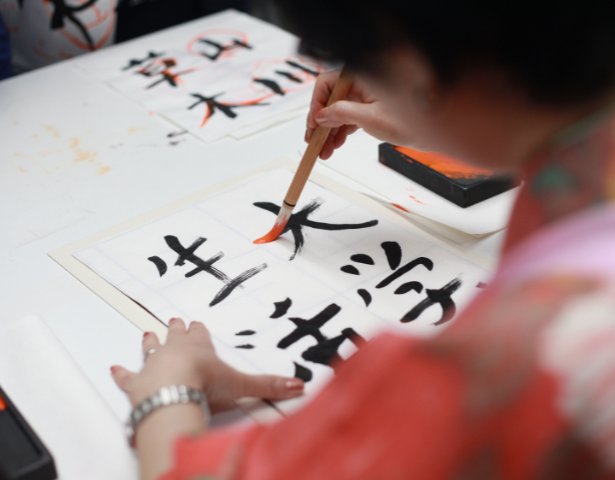
After lunch, turn what you have seen and felt into something of your own through a traditional Japanese calligraphy experience. With guidance from a local artisan, learn how ink, brush, paper, movement, and empty space work together in an art form that can make even a single character deeply expressive. Begin by slowly grinding sumi ink on an inkstone before practicing the movement and balance of the brush. Then choose one Japanese word or short phrase that captures something about your spring in Kyoto so far. It might reflect beauty, change, calm, joy, or something entirely personal that only makes sense to you. There is no expectation of perfect handwriting. The experience is about slowing down enough to turn a feeling into a physical mark. Keep the finished piece with you. Your journey through Kyoto is only beginning, and the words you choose today may feel different by the time it ends.
WHEN KYOTO TURNS GOLD
As afternoon begins to fade, continue through Higashiyama toward Kiyomizu-dera, where the temple's hillside setting opens toward Kyoto below. Explore the historic grounds and take in the changing city light before sitting down for kaiseki, a traditional multi-course meal shaped by ingredients at their best at a particular moment of the year. Let the menu reveal what spring means in Kyoto that evening, noticing how flavor, preparation, color, presentation, and tableware respond to the season without expecting any particular dish. After dinner, return to the old streets of Higashiyama without another attraction to chase. Walk through the quieter lanes around Ninenzaka and Sannenzaka as lanterns glow against wooden buildings and the daytime crowds begin to disappear. If a small bar, night cafe, tea stop, or somewhere unexpected catches your attention, step inside. Tonight, simply allow Kyoto after dark to decide where the evening ends.
SIGNATURE MOMENTS
Ginkaku-ji and Kyoto Streets
Cherry Blossoms Along Philosopher's Path
Japanese Calligraphy Experience
Sunset at Kiyomizu-dera
Kyoto Kaiseki
Day 2: The Observing Eye
Centuries later, the blossoms became the backdrop for art, music, and performance. The historic entertainment districts turned pink branches into a stage for celebration.
WHAT KYOTO EATS IN SPRING
After breakfast, step into Nishiki Market and discover what spring looks like in the everyday kitchens of Kyoto. Rather than arriving with a shopping list, walk through the narrow market and see what the season has brought with it. Look across counters filled with Kyoto vegetables, pickles, tofu products, sweets, seafood, tea, and ingredients that may appear only briefly at this time of year. Try something when curiosity wins, ask sellers about unfamiliar foods, and notice what local customers are choosing for themselves. Kyoto has developed its own approach to food through centuries of local traditions, preservation techniques, Buddhist influence, and close attention to the changing seasons. This morning is not a formal tasting tour. It is an opportunity to experience a working market, meet some of the people behind its counters, and discover how spring quietly changes what Kyoto buys, cooks, gives, and eats.
WHEN SPRING TAKES THE STAGE
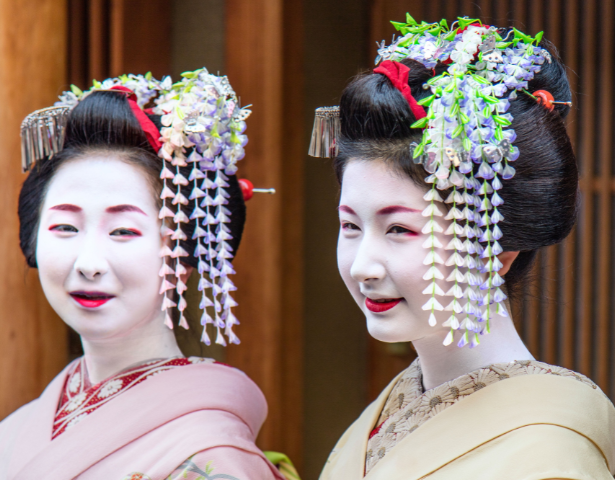
Leave the market behind and continue toward Gion, where another side of Kyoto's relationship with the seasons begins to appear. Walk through the traditional streets around Hanamikoji and Gion Shirakawa, where wooden machiya, narrow lanes, willow-lined waterways, and seasonal blossoms create the setting for one of Japan's best-known performing arts districts. Along the way, discover the world of geiko and maiko, highly trained performers whose arts include traditional dance, music, conversation, and hospitality. Learn how the seasons influence details of Kyoto's performing culture, from kimono and hair ornaments to music, dance, and the imagery used throughout the year. Rather than treating Gion as a place to search for performers on the street, focus on understanding the culture that continues behind its doors. Spring in Kyoto is not only reflected in gardens and food. For generations, it has also been interpreted through movement, clothing, sound, and performance.
A SPRING DANCE THAT LIVES ON
Now experience that tradition rather than simply hearing about it at Miyako Odori, Kyoto's celebrated spring dance performed by the geiko and maiko of Gion Kobu. First presented in 1872, the annual performance has become one of Kyoto's defining signs of spring, bringing together traditional dance, shamisen music, costumes, stage design, and seasonal imagery in a performance created around the changing beauty of Japan. Settle into the theater and watch scenes unfold across the stage as dozens of performers transform traditions that can sometimes feel distant into something living in front of you. There is no need to understand every movement or lyric. Notice the colors, music, precision, and way the seasons appear through the performance itself. After spending the morning discovering spring through food and everyday life, you now see how Kyoto turns the same changing season into art that has continued to bring people together for more than a century.
WHEN EVERYONE GATHERS BENEATH THE TREES
As evening arrives, return to the streets of Gion Shirakawa and watch lantern light begin to reflect across the water before continuing through Yasaka Shrine toward Maruyama Park. Along the way, stop at a convenience store, small shop, or seasonal stall and choose a drink and snack you actually want. Then join the people gathering beneath the cherry trees for evening hanami. Friends meet after work, families share food, couples stroll beneath the blossoms, and conversations continue as the park changes from daylight into night. Find somewhere comfortable to pause or simply walk through the atmosphere beneath the illuminated trees and the famous weeping cherry at the heart of the park. After a day spent discovering how Kyoto turns spring into food, clothing, music, and dance, tonight reveals something much simpler. The season also gives people a reason to make time for one another, gather outside, and enjoy something beautiful while it is still here.
SIGNATURE MOMENTS
Spring Flavors at Nishiki Market
Walk Through Gion
Discover Geiko and Maiko Culture
Miyako Odori Spring Dance
Night Hanami at Maruyama Park
Day 3: The Final Seal
Eventually, the blossoms begin to let go. Petals settle across gardens, travel along the water and disappear into Kyoto's old streets, leaving behind the memories of another spring.
WHEN THE GARDEN BEGINS TO FALL
Begin the final morning inside a historic garden in Okazaki, where Kyoto's spring becomes quieter again. Walk slowly through a carefully composed landscape of moss, stone, water, trees, and open space, allowing the details to reveal themselves without searching for a particular photograph. When conditions align, petals drift from the branches and settle across the garden, changing a landscape that may look different again only hours later. The idea of mono no aware returns, but this time there is less to explain. Over the past two days, you have already watched spring appear in food, art, streets, temples, performance, and gatherings beneath the trees. Here, simply experience the changing season for yourself. The garden was never designed to remain exactly as you find it today. Wind, light, flowers, water, and time continuously reshape it, making this morning less about seeing a perfect garden and more about being present for this particular version of it.
MOVE WITH SPRING
From the stillness of the garden, continue toward Okazaki Canal and experience Kyoto's spring from the water. Step aboard a seasonal boat and travel along the canal as cherry trees follow the banks and parts of the city appear from an entirely different perspective. Kyoto has long lived alongside rivers, canals, and waterways, and this journey gives you time to simply move with the landscape rather than walking through it. Look up toward branches extending over the water, watch petals collect and drift with the current when conditions align, and notice bridges, neighborhoods, temples, and everyday city life passing around you. Yesterday, you joined crowds celebrating beneath the blossoms. This morning, the experience is quieter and constantly changing. There is no single view to reach or photograph before moving on. For a little while, let the boat carry you forward and watch Kyoto spring pass naturally beside you.
FIND YOUR WAY TO THE FINAL BLOOM
After stepping off the boat, your N.I.T.E. Insider gives you only two things: a meeting place and a time. From here, find your own way through Kyoto. Follow smaller streets, cross canals, pass neighborhood shrines and local shops, ask someone for directions when you need help, and do not worry if a wrong turn leads somewhere unexpected. There is no scheduled lunch stop, so find somewhere that catches your attention along the way, whether it is a small local meal, a seasonal sweet, coffee, or tea. Eventually, your journey leads to the meeting point and one final cherry blossom setting, selected according to where spring is at its best that day. Spend time beneath the trees and think back to the word you placed on paper during your first day. After three days of following Kyoto through spring, mono no aware is no longer simply an idea that was explained to you. Perhaps now, it is something you have felt for yourself.
SEND SPRING ON ITS WAY
Before leaving Kyoto, find a postcard that reminds you of the spring you experienced and decide where you want it to go. Write to yourself or someone you found yourself thinking about beneath the blossoms, sharing a memory, a feeling, or simply something you do not want to forget. If you want, choose an envelope and include the calligraphy you created on Day 1, sending the words that began your journey along with the message that now ends it. Then visit a local post office, arrange the postage, and send it on its way from Kyoto. By the time it reaches you or someone you love, the blossoms may already be gone. Yet opening it may bring back the garden, the canal, the cool spring air, the sound of Kyoto around you, and petals moving in the wind. Perhaps that is why fleeting moments stay with us. They disappear, but sometimes leave behind a reason to return.
SIGNATURE MOMENTS
Morning Garden in Okazaki
Sakura Boat Along Okazaki Canal
Secret Final Cherry Blossom Spot
Choose a Kyoto Postcard
Send Spring From Kyoto
INCLUDES
- 3 Days / 2 Nights Accommodation (4★ Hotel)
- All transportation within the experience
- Breakfast, lunch, dinner, snacks and drinks
- The artifacts (Black Passport & Digital artifact)
- English-speaking N.I.T.E. Insider
- All admissions and activities outlined in the itinerary
- International airfare to Japan
- Travel insurance (Highly recommended)
- Visa fees (If applicable)
- Personal expenses & additional purchases outside the curated experience