Product Details
- Home
- CHINA – MYSTIQUE AND INTRIGUE: ULTIMATE CHINA

CHINA – MYSTIQUE AND INTRIGUE: ULTIMATE CHINA10–17 DAYS / 9–16 NIGHTSFLEXIBLE SEASONAL DATES
$4,750 – $26,200Price range: $4,750 through $26,200
The price shown is per person, not per room. Use the quantity selector to choose the number of travelers and see your total price.
OVERVIEW
China is often introduced through its biggest icons: the Great Wall, imperial palaces, ancient warriors, futuristic skylines, and landscapes that have inspired artists for centuries. But between them is a country still moving, gathering, eating, creating, remembering, and constantly reshaping what came before.
ULTIMATE CHINA: HEARTLAND is a 17-day journey through five very different expressions of China. Begin among the imperial spaces and neighborhood life of Beijing, follow the Silk Road stories of Xi’an, and arrive beneath the towers of modern Shanghai. Then slow down through Suzhou’s gardens, canals, tea, and Jiangnan culture before reaching Hangzhou, where West Lake, Longjing tea hills, legends, and everyday life bring the journey gently toward its end. Along the way, history is not simply visited. It appears in food, language, music, streets, landscapes, and the people who continue to live around it.
ITINERARY
HEARTLAND
Day 1: Hello Beijing
Beijing is a city of enormous scale, but its layers begin to make sense when seen from above.
BEIJING COMES INTO VIEW
As the journey begins, allow Beijing to arrive gradually. Settle into the city before climbing Jingshan Park, where the rooftops of the Forbidden City stretch below and the scale of the capital begins to reveal itself. From here, tomorrow's imperial world is already waiting.
BEIJING AT STREET LEVEL
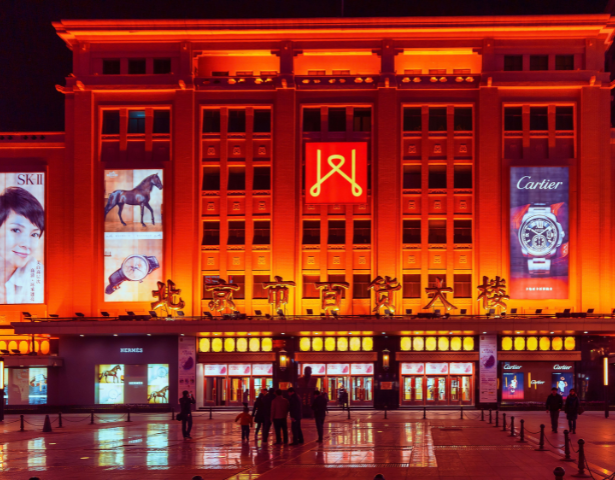
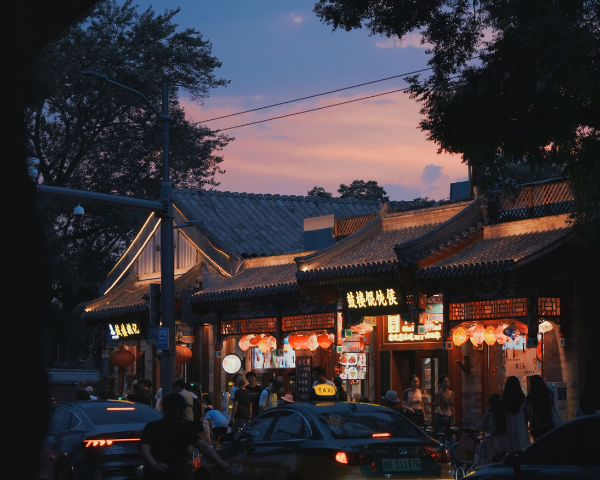
As daylight fades, descend toward Qianmen and Dashilan. Historic façades glow beneath the evening lights while shops, restaurants, food aromas, conversations, and passing crowds fill the streets. Wander with your N.I.T.E. Insider and choose dinner according to the night, from noodles and dumplings to local snacks or a full first meal in Beijing.
Day 2: Imperial Beijing
For centuries, Beijing was shaped around the rituals, symbols, and spaces of imperial power.
BEHIND THE IMPERIAL GATES
Enter the Forbidden City and move through courtyards, gates, ceremonial halls, and spaces once built around the power of China's emperors. Yesterday these roofs formed a vast pattern beneath you. Today, walk between them and discover the human stories, symbols, and traditions hidden within their scale.
BETWEEN HEAVEN AND EARTH
Continue to the Temple of Heaven, where imperial ceremony meets the everyday rhythm of Beijing. Beyond its famous architecture, watch the surrounding park come alive with people exercising, talking, playing games, practicing music, and spending time together.
BEIJING EATS AFTER-DARK
When evening arrives, follow the red lanterns of Guijie. Steam rises from kitchens, tables fill with friends and families, and restaurants stay busy deep into the night. Choose what catches your attention and experience one of Beijing's liveliest food streets from inside the crowd.
Day 3: From the Wall to the Neighborhood
Beijing can shift from monumental history to intimate neighborhood life within a single day.
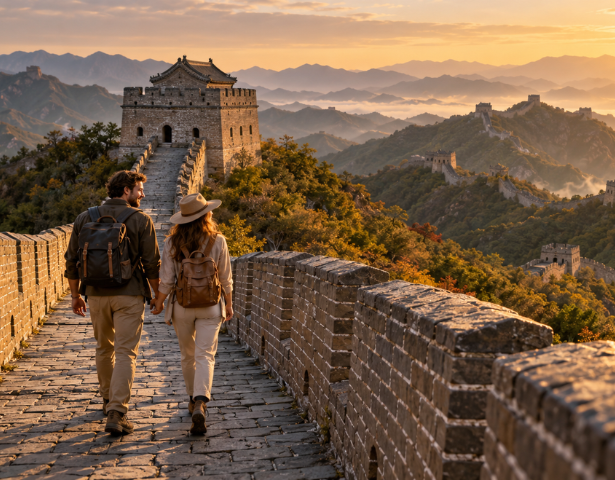
WALK THE GREAT WALL
Leave central Beijing behind and climb onto the Great Wall, where watchtowers and stone pathways follow the mountains beyond the horizon. Walk a section at your own pace and take in a landscape whose scale is difficult to understand until you are standing inside it.
INSIDE THE HUTONGS
Back in Beijing, trade monumental China for neighborhood life. Enter the hutongs and move through lanes, courtyards, small businesses, doorways, and spaces shaped by generations of everyday living. Your N.I.T.E. Insider helps open the experience beyond architecture, leaving room for conversations and human encounters to happen naturally.
SHICHAHAI AFTER-DARK
Follow the old neighborhoods toward Shichahai and Houhai as evening settles over the water. Lights begin reflecting across the lakes, music drifts from nearby streets, and friends, couples, families, and visitors gather along the shore. Walk, stop for something to eat or drink, and experience a softer, more social Beijing night.
Day 4: Beijing Then & Now
One final day reveals just how many Beijings exist at once.
AN IMPERIAL ESCAPE
Begin at the Summer Palace, where lakes, gardens, pavilions, bridges, and distant hills reveal a more graceful side of imperial Beijing. Walk beside Kunming Lake and discover how landscape itself became part of the architecture.
DECODE CHINA
Over tea and a few light Beijing sweets, look again at something that has surrounded you since arrival: Chinese characters. With your N.I.T.E. Insider, begin recognizing simple characters connected to places already visited and discover how shapes, components, and meanings come together. This is not a classroom. It is a chance to begin reading small pieces of the China around you.
A BEIJING CLASSIC
Tonight, gather around the table for Peking Duck. Watch the crisp-skinned duck carved before sharing it with pancakes, scallions, cucumber, and sauce, turning one of Beijing's best-known dishes into the final meal of your time in the capital.
BEIJING IN LIGHT
Then leave imperial Beijing behind. Board the Liangma River night cruise and watch contemporary Beijing unfold through illuminated bridges, waterfront architecture, reflections, and the social life gathering along the river. The capital that began with palace rooftops ends in light on the water.
Day 5: East to Xi'an
Another ancient capital waits at the end of the tracks.
ACROSS CHINA BY RAIL
Board the high-speed train for Xi'an and watch Beijing disappear behind you. Cities, farmland, stations, and changing landscapes pass beyond the window as the journey moves from China's present-day capital toward one of its great ancient ones.
AT THE HEART OF XI'AN
Begin around the Bell and Drum Towers, where the historic center introduces a city once known as Chang'an. Old landmarks now stand amid traffic, shops, lights, and contemporary city life, offering the first glimpse of how Xi'an lives alongside its past.
FLAVORS OF THE SILK ROAD
Enter the Muslim Quarter and follow the aromas into Xi'an's Hui food culture. Lamb skewers, breads, noodles, sweets, spices, grills, and busy counters fill the streets as another side of China's story emerges: one shaped by trade, migration, faith, and centuries of cultural exchange.
Day 6: Qin to Tang
Xi’an carries the legacies of dynasties that shaped China on a scale still visible centuries later.
AN ARMY BENEATH THE EARTH
Stand before the Terracotta Army and take in row after row of warriors created for the tomb complex of China's first emperor. Look beyond their sheer number to the individual faces, armor, horses, and details that make this underground army feel unexpectedly human.
A PALACE AND A LOVE STORY
Continue toward Huaqing Palace, where mountains, hot springs, imperial history, and the story of Emperor Xuanzong and Yang Guifei come together. The setting prepares the stage for a story that has survived far beyond the dynasty that created it.
WHEN HISTORY TAKES THE STAGE
After dark, watch The Song of Everlasting Sorrow transform that story into a large-scale outdoor performance of music, movement, light, water, and landscape. Ancient history leaves the museum behind and becomes something seen, heard, and felt.
Day 7: Ancient Chang'an, Modern Xi'an
The old capital is still part of the city Xi'an is becoming.
ABOVE THE OLD CITY
Climb onto Xi'an's Ancient City Wall and look across two versions of the city at once. Historic gates and rooftops sit against modern towers, traffic, and neighborhoods beyond, revealing how the ancient footprint of Chang'an continues inside contemporary Xi'an.
THE MONK WHO LOOKED WEST
At the Giant Wild Goose Pagoda, follow the story of Xuanzang, whose journey to India became one of the great stories of cultural exchange between China and the wider Buddhist world. Manuscripts, translation, religion, and knowledge traveled across borders, helping make ancient Chang'an one of the world's great cosmopolitan cities.
THE TANG DYNASTY, REIMAGINED
Return after dark to the Grand Tang Ever-Bright City, where modern Xi'an turns its Tang identity into public spectacle. Illuminated Tang-inspired façades, performances, crowds, Hanfu, phones, shops, and contemporary entertainment fill the pedestrian boulevard. This is not ancient Chang'an preserved. It is 21st-century Xi'an choosing how to celebrate it.
XI'AN NOW
Continue into modern Qujiang for dinner and, if the night feels right, a drink afterward. After three days of emperors, Silk Road stories, warriors, and dynasties, finish Xi'an firmly in the present.
Day 8: First Look at Shanghai
Leave ancient Xi'an behind. By night, China looks completely different.
EAST TO SHANGHAI
Cross China by high-speed rail toward Shanghai. The journey itself becomes part of the contrast, carrying you from one of China's great ancient capitals toward the vertical, fast-moving city waiting on the coast.
AMONG THE TOWERS
After arrival, step into Lujiazui for a short first encounter with Shanghai. Glass, steel, traffic, elevated roads, and some of China's most recognizable skyscrapers replace Xi'an's walls and pagodas almost instantly.
SHANGHAI AFTER-DARK
Cross toward the Bund as darkness settles over the Huangpu River. Historic waterfront architecture faces the illuminated towers of Pudong across the water, placing two very different eras of Shanghai within a single view. Walk beside the river, find dinner, and let the skyline provide the introduction.
Day 9: Shanghai Behind the Façade
Behind Shanghai’s famous skyline is a city of tree-lined streets, residential lanes, and everyday neighborhood life.
STREETS WITH MANY STORIES
Walk through the Former French Concession and around Wukang Road, where tree-lined streets and historic architecture reveal another chapter of Shanghai's international past. Look beyond individual buildings to the layers of migration, commerce, politics, fashion, and everyday life that shaped these neighborhoods.
BETWEEN THE LANES
Move deeper into Shanghai's lilong and shikumen environment, where residential lanes, small businesses, doorways, bicycles, deliveries, cafés, and daily routines exist behind the city's grander façades. The scale becomes smaller, and Shanghai becomes more human.
WHEN THE NEIGHBORHOOD CLOCKS OUT
Stay around Fumin, Changle, and Julu as afternoon becomes evening. Restaurants begin filling, friends meet after work, tables appear, cocktails are poured, and the neighborhood gradually changes mood. Have dinner, keep walking, or settle somewhere for a drink and let Shanghai's social side unfold around you.
Day 10: Shanghai, Old Soul
Shanghai's character is often easiest to understand through what it eats, remembers, and listens to.
BREAKFAST LIKE SHANGHAI
Start at street level with a local Shanghai breakfast. Discover combinations of warm soy milk, fried dough, rice rolls, flatbreads, and other morning staples while commuters and neighborhood regulars begin their day around you.
INSIDE THE OLD CITY
Continue toward Yu Garden and the surrounding Old City, where traditional architecture, courtyards, shops, food, and religious life survive inside one of the world's most modern cities.
XIAOLONGBAO
Then sit down for one of Shanghai's defining foods. Lift a xiaolongbao carefully, let the steam escape, taste the broth inside, and discover why something so small has become such an enduring part of the city's food identity.
SHANGHAI IN JAZZ
Later, follow Nanjing Road toward the Bund as Shanghai lights up again. After dinner, enter the Jazz Bar at the Peace Hotel, where live jazz and Art Deco surroundings recall the cosmopolitan Shanghai that flourished here generations ago. The hotel's Old Jazz Band continues to perform nightly.
Day 11: Shanghai Now
Shanghai has never stopped reinventing itself, and the city is still deciding what comes next.
THE WEST BUND
Begin slowly before heading toward Shanghai's evolving West Bund. Former industrial spaces now sit among contemporary culture, design, fashion, restaurants, shops, public spaces, and a waterfront increasingly shaped around how the city wants to live next.
WHAT'S HAPPENING NOW
Shanghai changes too quickly for every experience to be fixed months in advance. Around Gate M and the wider West Bund, exhibitions, installations, pop-ups, performances, and cultural events continue to change. Your N.I.T.E. Insider will guide you toward what is capturing attention during your visit, leaving part of today's story to the city itself.
FROM SUNSET INTO NIGHT
Stay as the light begins to change over the Huangpu. Afternoon becomes sunset, sunset becomes dinner, and dinner can continue over drinks before a final waterfront walk. Instead of racing toward another attraction, watch one part of Shanghai transform around you.
Day 12: Classical Suzhou
Shanghai's speed falls away. Suzhou asks you to look more slowly.
FROM SHANGHAI TO SUZHOU
Travel by high-speed rail to Suzhou, where the scale and rhythm change almost immediately. After lunch, begin discovering a city whose identity has long been shaped by gardens, waterways, craftsmanship, and the aesthetics of Jiangnan.
HOW TO SEE A CHINESE GARDEN
Enter the Humble Administrator's Garden and resist the urge to see everything at once. Water, pavilions, plants, windows, corridors, and carefully framed views reveal themselves gradually as you move. Classical Suzhou gardens were designed to recreate natural landscapes in miniature, turning walking itself into part of how the landscape is experienced.
SHANTANG AFTER-DARK
As evening arrives, follow Shantang Street beside the canals. Lanterns glow above the water, boats pass beneath bridges, kitchens open, and people move between shops and old façades. After Shanghai's towers and creative districts, Suzhou's first night feels deliberately smaller.
Day 13: Life on the Water
In Suzhou, water is not simply scenery. It is part of how places were built and lived.
INTO TONGLI
Spend the day in Tongli, where canals run between homes, lanes, bridges, courtyards, shops, and places to eat. Walk rather than rush, letting the water town reveal itself through its smaller details and everyday rhythms.
ALONG THE CANALS
Take to the water when the moment feels right, then continue on foot. Boats pass beneath stone bridges, doors open toward the canals, food appears along the lanes, and modern life continues inside a landscape shaped centuries ago.
WHEN KUNQU TAKES THE STAGE
Return for an evening of Kunqu Opera, a performing tradition that developed in the Suzhou region and became one of China's most influential theatrical forms. Song, music, movement, costume, poetry, and symbolic gesture replace Xi'an's enormous outdoor spectacle with something more intimate and refined.
Day 14: From Suzhou to Hangzhou
Across Jiangnan, water, tea, and old cities are connected by more than geography.
MORNING ON PINGJIANG ROAD
Walk beside the canals of Pingjiang Road while Suzhou settles into the day. Small shops, bridges, old façades, residents, visitors, and quiet corners make this less about reaching a landmark and more about spending a final morning inside the city's rhythm.
TEA, THE SUZHOU WAY
Settle into a smaller teahouse for Biluochun and something light. There is no formal ceremony to follow. Drink, talk, watch the room, and let conversation with the people around you happen naturally. Tea here is part of daily life; tomorrow, in Hangzhou, it will become an entire landscape.
ONWARD TO HANGZHOU
After lunch, board the high-speed train for Hangzhou. Arrive with enough of the day remaining to settle into the city rather than immediately rushing through it.
FIRST NIGHT IN HANGZHOU
Go out for dinner and a gentle evening walk. Water catches the city lights, trees soften the streets, and people gather outside as another rhythm begins to emerge. There is no need to understand Hangzhou tonight. Simply feel it for the first time.
Day 15: West Lake & Its Stories
For centuries, West Lake has existed somewhere between real landscape and cultural imagination.
LIFE BESIDE WEST LAKE
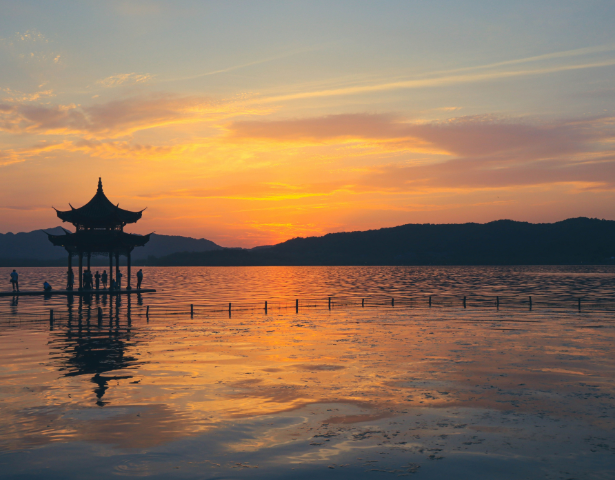
Begin late and enter West Lake at an unhurried pace. Willow trees, causeways, pavilions, distant hills, walkers, families, friends, and people simply sitting beside the water reveal why the lake belongs as much to everyday Hangzhou as it does to history.
FROM THE WATER
Step aboard a traditional wooden sculling boat and leave the shore behind. From the lake, Hangzhou rearranges itself into layers of water, trees, hills, bridges, rooftops, and sky, revealing the landscape from the perspective that has inspired generations of artists and storytellers.
THE LEGEND BENEATH THE PAGODA
Continue toward Leifeng Pagoda and enter the world of the Legend of the White Snake, where love, separation, magic, and West Lake became inseparable in Chinese cultural imagination. Look back across the landscape and see how a real place can become part of a story for centuries.
WHEN THE LAKE BECOMES THE STAGE
After dinner, return to the water for Enduring Memories of Hangzhou, the outdoor production staged directly on West Lake. Light, music, dance, water, and surrounding landscape transform the lake itself into the performance. When the show ends, stay beside the lake a little longer. The stage disappears, the ordinary night returns, and West Lake becomes simply West Lake again.
Day 16: From Landscape to Cup
In Hangzhou, one of China’s most famous teas begins not in a cup, but in the hills.
INTO THE TEA HILLS
Leave the lakeside city behind and enter the green hills around Longjing, where tea plants follow the contours of the landscape. Walk among the fields and meet the people connected to producing one of China's best-known teas. Longjing Village is closely associated with the origins of West Lake Longjing tea.
FROM LEAF TO CUP
Go beyond simply drinking the tea. Learn how Longjing is grown, picked, processed, roasted, and brewed, with seasonal picking included when conditions allow. Watch skilled hands work with the leaves, try parts of the process, and finally taste the result in the landscape that produced it.
TEA AT THE TABLE
Stay in tea country for lunch, where Longjing can move beyond the cup and into the meal. After a morning spent understanding the leaves, sit down together and experience how tea can become part of a wider Hangzhou food culture.
FOLLOW THE WATER
Continue into Nine Creeks, where streams, forest, paths, and tea-growing landscapes replace the city once again. Walk without adding another major attraction, allowing nature to carry the afternoon.
BACK TO HANGZHOU
Return toward Hubin as evening arrives. Cafés, restaurants, shops, desserts, tea, lights, and people gathering beside West Lake bring you back into contemporary Hangzhou. The tea hills may feel far away, even though they are part of the same city.
Day 17: Goodbye China
At Hangzhou’s western edge, forest, stone, and centuries of Buddhist history gather beneath the hills.
BENEATH FEILAI FENG
Begin the final morning among the carvings, trees, stone, and pathways of Feilai Feng before continuing toward Lingyin Temple. Here, Buddhism appears within a very different landscape from the story encountered through Xuanzang in Xi'an, bringing another thread of the journey gently back into view. Lingyin Temple sits west of West Lake facing Feilai Peak and traces its foundation to the Eastern Jin period, traditionally associated with the Indian monk Huili.
ONE LAST WALK
Before lunch, stop somewhere scenic for one last walk. Perhaps the water appears again. Perhaps there is a bench worth sitting on or a view worth keeping for another minute. Nothing needs to be added to it. After seventeen days, China has already given you plenty to remember.
YOUR LAST TASTE OF CHINA
Finish the morning on one of Hangzhou's lively streets, surrounded by choices for one final casual lunch. Follow whatever you have learned to love along the way: noodles, dumplings, rice, local dishes, snacks, or something completely unexpected. From here, let your final hours in Hangzhou unfold around your own onward journey, whether there is time for a little more exploring, some last-minute shopping, or simply one more moment to enjoy the city before saying goodbye.
OVERVIEW
China does not do landscapes quietly. Mountains rise like stone cities, lakes shift between impossible shades of blue, rivers disappear between karst peaks, and entire towns seem to cling to cliffs, waterfalls, and mountainsides. Yet between these natural wonders is another China — one lived through teahouses, neighborhood streets, regional food, performance, architecture, and cities that become completely different once the lights come on.
ULTIMATE CHINA: WONDERS is a 17-day journey from Sichuan to Guangxi, moving through Chengdu, Jiuzhaigou, Chongqing, Zhangjiajie, Furong, Fenghuang, Longji, and Yangshuo. Meet giant pandas before stepping into the traditions of Sichuan Opera. Walk beside Jiuzhaigou’s extraordinary lakes, navigate Chongqing’s vertical cityscape, rise into the mountains of Zhangjiajie, and watch ancient towns glow beside waterfalls and rivers. The journey eventually slows among the rice terraces and karst landscapes of Guangxi, where the Li and Yulong Rivers carry you toward a gentler final chapter. From enormous landscapes to small human moments, this is China at its most surprising — a journey built not simply around seeing its wonders, but feeling what it is like to move through them.
ITINERARY
WONDERS
Day 1: Hello Chengdu
Chengdu makes its first impression slowly — through tea, conversation, food, and the everyday pleasure of simply being outside together.
THE ART OF SITTING STILL
Settle into People's Park with a cup of gaiwan tea as bamboo chairs fill with conversation, mahjong tiles click nearby, and brushes turn pavement into temporary calligraphy. A few simple Chinese characters offer your first key to the journey — symbols you may begin recognizing as China unfolds around you.
CHENGDU BETWEEN THE LANES
Move through Kuanzhai's old lanes and courtyards before letting the evening lead toward Kuixinglou. Tea, coffee, sweets, Sichuan snacks, small shops, and whatever smells too good to ignore turn dinner into part of the discovery rather than another reservation on the clock.
WHEN CHENGDU STAYS AWAKE
If the night still has energy, follow Chengdu into Yulin, where neighborhood bars, cafés, music, and conversation reveal a younger side of the city. The mood is casual and local, with another version of Chengdu emerging as the evening stretches on.
Day 2: Pandas & the Spirit of Sichuan
From bamboo forests to flashes of painted silk, today belongs to some of Sichuan's most unmistakable characters.
MORNING WITH GIANTS
Meet Chengdu's most famous residents while the day is still young. Giant pandas climb, eat, sleep, and occasionally remind you that celebrity means very little when bamboo is available, while red pandas and leafy habitats reveal another side of the conservation world surrounding them.
OLD CHENGDU SLOWLY
Around Wenshuyuan, street life gradually gives way to monastery courtyards, incense, and quieter corners. Sit down for lunch, follow whatever catches your appetite, then move between neighborhood life and Buddhist atmosphere without turning the afternoon into a lesson or a checklist.
THE FACE CHANGES
Dress for an evening rooted unmistakably in Sichuan. Music, elaborate costumes, theatrical traditions, fire, and the famous art of Bian Lian — face-changing performed with astonishing speed — bring the region's performance culture to life before Chengdu closes over a relaxed late dinner.
Day 3: Into the Mountains
Beyond Chengdu, the horizon begins to rise and the rhythm changes with it.
WHERE THE CITY DISAPPEARS
Leave Chengdu behind as rail lines carry you toward higher country. Lunch travels with you, while city density gradually gives way to mountains and a completely different scale of China.
AT THE EDGE OF THE VALLEY
Arrive in Jiuzhaigou among communities shaped by the mountains and the Tibetan character of the region. Notice the architecture, local life, cooler air, and the unmistakable feeling that the journey has entered somewhere very different.
A TASTE OF THE HIGHLANDS
Gather around a Tibetan-style dinner as regional flavors introduce another layer of Jiuzhaigou. Warm food and mountain air make the transition from Chengdu feel complete.
NIGHT IN JIUZHAIGOU
Step outside again as shops glow and mountain-town life settles into evening. Tea offers a reason to linger, local streets invite an unhurried walk, and Jiuzhaigou reveals the quieter rhythm that remains after the day visitors begin to disappear.
Day 4: The Colors of Jiuzhaigou
Here, water seems to borrow its colors from everything around it — forest, stone, sky, and light.
WATER IN A HUNDRED COLORS
Enter Jiuzhaigou National Park as Five Flower Lake, Long Lake, and other waters reveal colors that seem to change with depth, light, forest, and sky. Clear blues, turquoise shallows, submerged trees, and mountain reflections make each section of the valley feel slightly unreal.
WHERE THE WATER FALLS
Follow boardwalks and valley routes toward places such as Pearl Shoal and Nuorilang Waterfall, where still water suddenly finds movement. Forest surrounds the cascades while the sound of rushing water follows the path through the valley.
DEEPER INTO THE VALLEY
Move between lakes, forests, waterfalls, and high mountain scenery as Jiuzhaigou continues changing around you. Weather and shifting light can transform familiar views within minutes, giving the valley an atmosphere that never feels completely still.
Day 5: Where the Mountains Meet the Megacity
The mountains recede and something altogether different rises ahead — layered, luminous, and almost impossible to read at first glance.
FROM MOUNTAINS TO MEGACITY
Travel from Jiuzhaigou toward Chongqing as highland scenery gradually gives way to greater density, bridges, towers, and the first signs of one of China's most unusual urban landscapes.
FIRST LIGHTS OF CHONGQING
Meet Chongqing through Jiefangbei once evening takes over. Screens, towers, food, crowds, illuminated streets, and layers of movement create the first encounter with a city that seems to keep unfolding above and below you.
TASTE THE CITY
Settle into Chongqing over dinner before returning to its illuminated streets. Sounds, smells, crowds, food, and towers compete for attention as the megacity begins revealing just how different it feels after sunset.
Day 6: The Vertical City
In Chongqing, looking up and looking down can lead to entirely different versions of the same street.
THE TRAIN THROUGH THE BUILDING
Ride Chongqing's urban rail system toward Liziba, where the city's famous monorail appears to pass directly through a residential building. More than a photo opportunity, it is an introduction to how infrastructure adapts when a megacity has mountains standing in the way.
WHAT FLOOR IS THE STREET?
At Kuixinglou, Chongqing's geography plays another trick. Bridges connect towers to streets far above what seems like ground level, while staircases and layered roads reveal a city built vertically as much as horizontally. The fun is not simply seeing it — it is trying to understand it.
WARM LIGHTS ABOVE THE RIVER
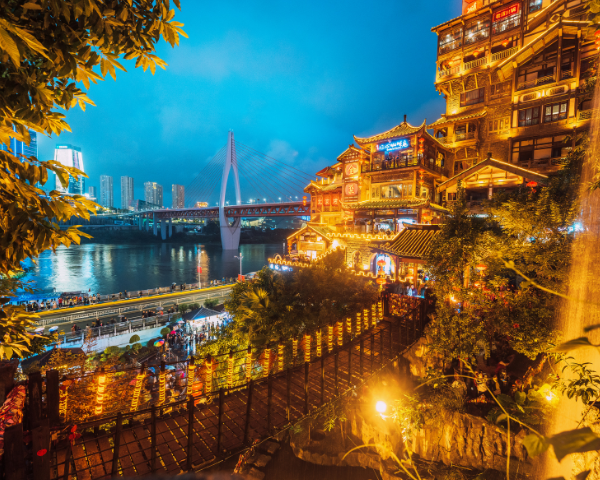
As evening settles over Chongqing, Hongyadong begins to glow. Warm lights trace its stacked architecture above the river while bridges, towers, crowds, and reflections fill the scene around it — one of the city's most distinctive transformations after sunset.
Day 7: Old Streets, Hotpot & Nightlife
Chongqing is a city of appetite — for food, conversation, heat, and nights that rarely seem ready to end.
THE OLD PORT CITY
Wander through Ciqikou, where sloping lanes, old façades, teahouses, courtyards, and traces of Chongqing's river-trading past create a more intimate counterpoint to the towers downtown. The deeper you walk, the more the megacity begins to feel like an old neighborhood again.
FOLLOW THE AROMA
Steam escapes from small kitchens. Skewers hit hot grills. Chili, sesame, peppercorn, sweet pastries, tea, and freshly cooked snacks pull people toward counters and tiny storefronts. Join the local rhythm of tasting a little, walking a little, talking, and discovering the street through its food.
WHEN THE HOTPOT STARTS BUBBLING
Later, Chongqing's streets begin glowing and dinner takes center stage. Red broth bubbles at the table, chilies and Sichuan peppercorn fill the air, and ingredients disappear into the pot piece by piece. Chongqing hotpot is loud, fragrant, social, and meant to be shared.
AFTER THE LAST BITE
The night continues beyond the table. Step into Chongqing's more polished After-Dark side, where cocktails, stylish interiors, skyline views, music, and conversation carry the evening forward long after the hotpot has stopped bubbling.
Day 8: Across the River
In Chongqing, rivers do more than divide the city. They create entirely different ways of seeing it.
THE CITY REIMAGINED
Explore Urban TESTBED 2, where older buildings and industrial spaces have found new life through design, cafés, creative businesses, and contemporary culture. It offers a smaller, more personal look at how younger Chongqing continues reshaping the city around itself.
ABOVE THE YANGTZE
Board the Yangtze River Cableway and leave Yuzhong suspended above the river. Towers, bridges, hills, and waterways rearrange themselves below as the cable car carries you toward the south bank.
LANES ABOVE THE RIVER
Follow Longmenhao's hillside streets through restored architecture, stairways, cafés, terraces, and glimpses of local life. Across the water, Yuzhong rises almost vertically from the river while late-afternoon light begins softening the city.
CHONGQING FROM THE OTHER SIDE
Watch the skyline illuminate across the Yangtze as bridges and towers turn into reflections on the water. Dinner and drinks on the south bank close Chongqing with the city itself spread out in front of you.
Day 9: From City Towers to Stone Towers
Concrete disappears behind you. Ahead, another skyline waits — this one carved by nature.
SOUTH INTO HUNAN
Leave Chongqing and travel toward Zhangjiajie as the scenery beyond the train begins changing once again. Hunan marks the next chapter of the journey, where dramatic landscapes and Tujia culture begin replacing the energy of the megacity.
WHEN 72 QILOU COMES ALIVE
Enter 72 Qilou as evening begins. Its towering architecture, lights, Tujia cultural elements, performances, shops, and gathering spaces create a lively introduction to Zhangjiajie beyond the mountains it is famous for.
EAT WITH THE NIGHT
Food stalls and restaurants become part of the evening as aromas drift through the complex. Follow whatever looks good, stop where the atmosphere pulls you in, and experience the social energy of 72 Qilou through food as much as performance.
Day 10: Gateway to Heaven
Above Zhangjiajie, the mountain opens into the sky.
RISE ABOVE ZHANGJIAJIE
Ascend toward Tianmen Mountain and watch the city fall away below. Cableways climb toward forests and sheer cliffs as the urban landscape slowly disappears beneath the mountain.
ALONG THE EDGE
Follow selected mountain walkways where paths trace the cliffs and enormous views open across the surrounding landscape. Glass underfoot may add another perspective, but the real sensation comes from standing high above a world that suddenly seems very far below.
THROUGH HEAVEN'S GATE
Reach Tianmen Cave, the enormous natural arch that gives the mountain its name. Framed by towering rock walls and mountain air, the opening creates one of Tianmen's most dramatic sights — a natural gateway cut straight through the mountain.
Day 11: Into the Stone Forest
Pillars rise through the forest by the thousands, disappearing into mist and returning again as the clouds move.
INTO ZHANGJIAJIE NATIONAL FOREST PARK
Enter Zhangjiajie National Forest Park and rise toward its higher landscapes aboard the Bailong Elevator. Forest and sandstone cliffs stretch below as the elevator carries you toward the extraordinary pillar scenery waiting above.
BETWEEN THE PILLARS
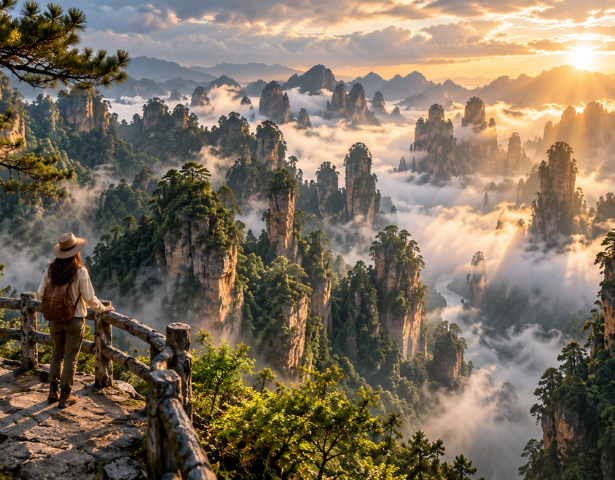
Move through Yuanjiajie's viewpoints, where sandstone columns appear in every direction. Forest fills the spaces between them, mist can erase and reveal entire peaks, and each opening in the trees seems to expose another layer of stone beyond the last.
ABOVE THE PEAK FOREST
At Tianzi Mountain, the sandstone forest stretches toward the horizon. Wind moves through the trees, clouds drift between distant pillars, and viewpoints open over ridges that appear to rise endlessly from the green valleys below.
Day 12: Where the Waterfall Meets the Town
Furong grew where cliffs, river, and falling water meet, with the town built almost into the landscape itself.
SLOWLY INTO FURONG
Arrive in Furong and follow its old streets through local shops, tea, viewpoints, and traces of Tujia culture. The town reveals itself gradually, with wooden architecture and narrow lanes opening unexpectedly toward the surrounding valley.
WHERE THE TOWN MEETS THE FALLS
Follow Furong toward the waterfall that defines its landscape. Water drops beneath the town while buildings rise above it, creating the unusual relationship between settlement and nature that makes Furong more than another preserved old street.
WHEN THE CLIFFS BEGIN TO GLOW
Stay as daylight disappears and lights begin tracing the town above the waterfall. Water catches the changing colors below, wooden buildings glow along the cliffs, and Furong takes on an entirely different character once night settles over the valley.
Day 13: Life Along the Tuojiang
In Fenghuang, the river is more than scenery. It is the thread connecting houses, bridges, boats, streets, and generations of life along its banks.
LIFE BESIDE THE TUOJIANG
Arrive in Fenghuang and follow the river into town. Stilted houses, bridges, lanes, local food, and Miao and Tujia influences reveal a place where architecture and water have shaped one another over generations.
SEE IT FROM THE WATER
Board a small boat on the Tuojiang River as the afternoon softens. From water level, bridges pass overhead, wooden houses line the banks, and everyday scenes unfold beside the river as Fenghuang slowly drifts past.
WHEN THE RIVER CATCHES THE LIGHT
Stay beside the Tuojiang as sunset gives way to illumination. Lanterns and buildings brighten along the banks, bridges glow above the water, and their reflections stretch across the river while food, drinks, and evening conversations keep the old town alive.
Day 14: Mountains Made by Hand
Across Guangxi, generations of farmers have transformed steep mountainsides into flowing lines of earth, water, and rice.
SOUTH INTO GUANGXI
Leave Fenghuang as the journey continues toward Guangxi. Mountains fill the route again, but the landscape ahead carries a different story — one shaped not only by geology, but by generations of people working with the land.
WHERE THE MOUNTAIN BECAME FIELDS
Enter the Longji Rice Terraces, where ribbons of cultivated land curve around the mountainsides from valley floor to high ridges. Village roofs appear between the slopes while paths thread through a landscape that changes color and character with every season.
LIFE BETWEEN THE TERRACES
Look beyond the famous curves to the villages woven into them. Homes, pathways, fields, farmers, and mountain life reveal Longji as a working landscape — not simply a viewpoint, but a place shaped by generations living between steep slopes and rice fields.
THE LAST LIGHT OVER LONGJI
Stay as afternoon light softens across the terraces. Shadows deepen between the curves, distant villages settle toward evening, and the mountain contours catch the final light before a quiet night begins in Longji.
Day 15: Into Karst Country
The landscape changes shape again. Sharp terraces give way to rounded limestone peaks rising between rivers, villages, and fields.
MORNING IN LONGJI
Wake among the mountains as mist, changing light, and village sounds bring another mood to the terraces. Breakfast comes with one final look at the highland landscape before the road begins winding south.
INTO KARST COUNTRY
Watch Guangxi transform as limestone peaks begin appearing around the road. Their shapes are different from Zhangjiajie's stone pillars — softer, greener, and increasingly intertwined with rivers, fields, villages, and farmland.
FIRST EVENING IN YANGSHUO
Meet Yangshuo as the heat of the day begins to fade. Karst silhouettes surround the town while streets fill with people browsing, eating, drinking, and settling into the evening beneath the peaks.
Day 16: Mountains Meet the Li River
For centuries, the combination of water, mist, and limestone peaks has made this corner of Guangxi one of China's most enduring landscape images.
WHERE MOUNTAINS MEET THE RIVER
Enter the Li River landscape around Xingping, where karst peaks rise beside the water in layers. Boats, riverbanks, villages, and changing viewpoints reveal why this corner of Guangxi has inspired generations of painters, photographers, and travelers.
LIFE AROUND XINGPING
Explore Xingping where old streets, river life, boats, local homes, and dramatic limestone peaks meet. The town gives human scale to the enormous scenery around it, with the Li River never far from view.
BETWEEN RIVER AND PEAKS
Follow the landscape beyond town as water bends between limestone mountains and villages sit beneath the karst skyline. Reflections shift with the light, boats move slowly along the river, and familiar images of southern China begin appearing in every direction.
THE MOUNTAINS BECOME THE STAGE
After night falls, experience Impression Liu Sanjie, where the natural landscape becomes part of the performance itself. Water, light, music, performers, and the surrounding karst peaks transform the setting into a stage for the final major night of WONDERS.
Day 17: One Last Current
The journey ends at a gentler pace, where water, fields, villages, and limestone peaks move together through the countryside.
DRIFT THE YULONG
Step onto a bamboo raft and let the Yulong River set the pace. Karst peaks rise beyond fields and villages while the raft moves through a softer landscape than the Li River — quieter, closer, and perfectly suited to the final morning.
THROUGH THE COUNTRYSIDE
Continue through Yangshuo's rural landscape by bicycle or e-bike, depending on conditions and comfort. Fields, village roads, waterways, and limestone peaks turn the countryside into something experienced at human speed rather than through a vehicle window.
ONE LAST TASTE OF GUANGXI
Settle around the table for a relaxed final lunch surrounded by the landscapes that have defined these last days. Local flavors, countryside views, and the slower rhythm of Yangshuo bring the journey gently toward its close.
THE ROAD CONTINUES
From Chengdu's tea tables to Jiuzhaigou's blue lakes, Chongqing's glowing towers, Zhangjiajie's stone forests, Hunan's river towns, and Guangxi's mountains and water, China has changed shape again and again. The journey ends here, but its wonders rarely leave all at once.
OVERVIEW
At China’s southwestern frontier, the landscape begins to change. Lakes stretch beneath mountain ranges, snow-covered peaks rise above ancient towns, and the road north eventually opens into the vast Tibetan highlands. But Yunnan is shaped just as much by the people who live among these landscapes — by cultures, languages, foods, beliefs, crafts, and traditions that have been carried from one generation to the next.
ULTIMATE CHINA: FRONTIER is a 10-day journey through Dali, Lijiang, and Shangri-La, moving through the worlds of the Bai, Naxi, and Tibetan people. Begin beside Erhai Lake, meet artisans and local communities in Dali, and discover Bai traditions through food, craft, and everyday life. Continue beneath Jade Dragon Snow Mountain into the Naxi world of Lijiang, where markets, music, murals, and conversations bring another culture into view. Then journey higher into Shangri-La, where monasteries, prayer flags, Tibetan families, open grasslands, and alpine wilderness shape the final chapter. From shared tables and warm lights after dark to enormous mountains and quiet highland lakes, this is a journey into a side of China where the deeper you travel, the more the country begins to change.
ITINERARY
FRONTIER
Day 1: The Gateway to Yunnan
Mountains behind you, lanterns ahead. Your journey into Yunnan begins.
FIRST STEPS IN DALI
Step into Dali Ancient Town beneath the Cangshan Mountains, where stone streets weave between whitewashed Bai homes, old gateways, leafy courtyards, and shops spilling warm light into the lanes. Follow the sounds of conversation and music as the cool mountain evening settles over your first night in Yunnan.
DECODE CHINA
Chinese characters are suddenly everywhere. As you wander, your N.I.T.E. Insider introduces a few simple characters found on signs, menus, and storefronts around you. It is not a language lesson, just a playful first look at how Chinese writing works and a chance to recognize something new along the way.
DALI AFTER-DARK
As lanterns glow above the old streets, Dali becomes a place to simply join the evening. Families gather over dinner, friends linger outside cafés, musicians fill the lanes with sound, and warm smiles appear in passing. Taste your first Yunnan dishes, follow the energy through teahouses, small bars, bookstores, and local shops, and experience an ancient town still very much alive.
Day 2: Between Mountain and Water
Morning arrives between the Cangshan Mountains and the waters of Erhai.
ALONG THE WATER’S EDGE
Meet Erhai Lake from its western shore, where open water stretches beneath the Cangshan Mountains. Follow part of the lakeside ecological corridor by bicycle or e-bike, passing wetlands, fields, small villages, and quiet stretches of shoreline where the changing reflections of mountain and sky become part of the ride.
A TASTE OF ERHAI
Pause beside the water for a leisurely lunch built around Bai and Yunnan flavors, local produce, and seasonal ingredients. Then cross toward Erhai’s eastern shore as the perspective slowly changes, until the Cangshan Mountains that once towered above you appear as a dramatic range stretching across the lake.
THE OTHER SIDE OF ERHAI
Step into Shuanglang, where old lanes lead toward the waterfront and teahouses and cafés open onto wide views across the lake. Wander without rushing, find a favorite corner beside the water, and watch the afternoon light begin to soften over Erhai.
WHEN THE LAKE GOES QUIET
Stay by the water as the sun sinks behind Cangshan and the mountains fade from gold into silhouette. Dinner arrives with the evening, followed by a final walk along the lakeshore as reflections shimmer across the dark water and Shuanglang settles into its quieter nighttime rhythm.
Day 3: The Bai Story
Before the road turns north, discover the culture that has shaped Dali for centuries.
INSIDE XIZHOU
Enter Xizhou through lanes framed by traditional Bai courtyard homes, carved wooden details, tiled roofs, local shops, and the everyday movement of village life. Explore a community where Bai heritage is not confined to monuments, but remains visible in the architecture, food, craftsmanship, and streets around you.
DYED BY HAND
Sit alongside Bai artisans and discover how plain cloth is transformed through one of Dali’s most recognizable traditions. Fold, twist, tie, and dip your own textile into deep indigo, then reveal the pattern hidden beneath the knots — a piece of Bai craftsmanship shaped by your own hands.
BENEATH CANGSHAN
Continue beneath the mountains to the Three Pagodas, where three ancient towers rise against the immense backdrop of Cangshan. Walk through a landscape that has watched over Dali for more than a thousand years, with temple roofs, reflecting water, and mountain peaks layering the final view of your time here.
NORTH TO LIJIANG
Leave Dali behind as the journey turns north toward higher country, carrying you through valleys and mountains toward Lijiang. After settling in, step out for your first taste of the city — find dinner among its old streets, follow the glow of lanterns along stone lanes and canals, and let Lijiang quietly introduce itself.
Day 4: The Rhythm of Lijiang
Meet Lijiang through the people, flavors, music, and traditions that bring its old streets to life.
MORNING AT THE MARKET
Begin at Zhongyi Market, where Lijiang shops for the day. Walk between stalls piled with vegetables, mountain herbs, mushrooms, spices, fruit, and local specialties while meeting the vendors behind them. Ask what you are looking at, taste something unfamiliar, learn a few local names, and discover everyday Lijiang through small conversations and shared smiles.
WHERE THE MOUNTAIN MEETS THE CITY
Later, make your way to Black Dragon Pool, where traditional pavilions, arched bridges, willow trees, and still water create one of Lijiang’s most beautiful settings. On clear days, Jade Dragon Snow Mountain rises beyond the park, offering your first close look at the snow-covered peaks that will define tomorrow’s adventure.
WHEN LIJIANG COMES ALIVE
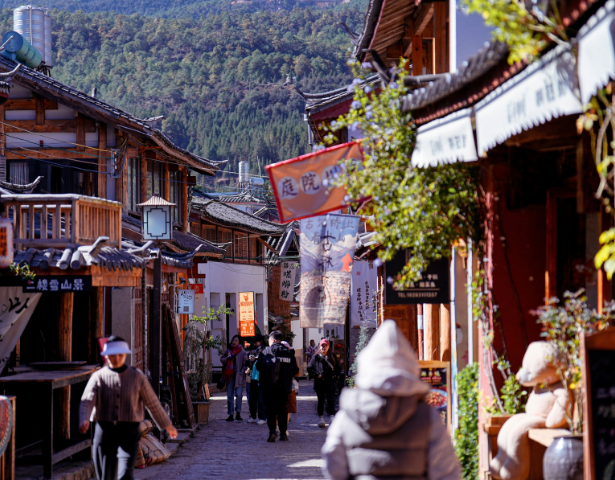
As evening arrives, follow the stone lanes and canals of Lijiang Old Town, a UNESCO World Heritage Site shaped by centuries of Naxi life and trade. Find dinner among its courtyards and old houses, then stay with the rhythm of the streets as lanterns glow, musicians perform, friends gather, and the ancient town takes on a different energy after dark.
MUSIC PASSED DOWN
End the cultural journey with Naxi Ancient Music, performed with traditional instruments by musicians carrying forward a remarkable musical heritage. Listen to sounds preserved across generations and meet another side of Naxi culture — not behind museum glass, but through the people who continue to play, protect, and share it today.
Day 5: Beneath the Snow Mountain
Today, the mountain you saw above Lijiang becomes the world beneath your feet.
INTO THE HIGH COUNTRY
Rise into the dramatic alpine world of Jade Dragon Snow Mountain, the snow-covered range that towers above Lijiang and holds deep significance in Naxi culture. Ride the Glacier Park cableway high into the mountains, where forests fall away and a stark landscape of rock, ice, snow, and enormous open skies takes over.
VALLEY OF BLUE
Descend from the mountain heights into Blue Moon Valley, where brilliant turquoise water winds beneath the snowy peaks. Walk beside cascading pools and milky-blue streams as the landscape shifts from exposed alpine terrain to forests, waterfalls, and mountain reflections — a completely different face of Jade Dragon Snow Mountain.
WHEN THE MOUNTAIN BECOMES THE STAGE
Experience Impression Lijiang, an open-air performance staged beneath Jade Dragon Snow Mountain itself. Hundreds of performers bring the stories, songs, movement, and traditions of Yunnan’s ethnic communities into the landscape, with the mountain rising behind them as part of the stage. It is a powerful finale to a day spent beneath its peaks.
Day 6: Stories of the Naxi
Before leaving Lijiang behind, step closer to the people and traditions that have shaped this land for generations.
INSIDE BAISHA
Enter Baisha Ancient Town, once an important center of the Naxi people and today a quieter window into life beyond Lijiang’s busiest streets. Walk beneath old wooden houses and mountain views while meeting artisans, shopkeepers, residents, and people protecting traditions that continue to pass from one generation to the next.
STORIES ON THE WALLS
Step deeper into Baisha’s history through the Baisha Murals, created over several centuries and remarkable for blending different artistic and spiritual traditions. Then bring the story back to the present through conversations, local crafts, and the people you meet — discovering how Naxi identity continues to live far beyond the walls of historic buildings.
A TASTE OF BAISHA
Discover Naxi culture around the table through local dishes, ingredients, and flavors rooted in this mountain region. Try something unfamiliar, learn the stories behind what you are eating, and experience food not simply as lunch, but as another way into the everyday lives, memories, and traditions of the people who call Baisha home.
INTO THE TIBETAN HIGHLANDS
Leave the Naxi world of Lijiang behind as the journey continues north toward Shangri-La, where Yunnan begins to take on a distinctly Tibetan character. Mountains open into high plateau country, prayer flags appear against the landscape, and a new world of architecture, food, spirituality, and traditions begins to emerge.
FIRST NIGHT IN SHANGRI-LA
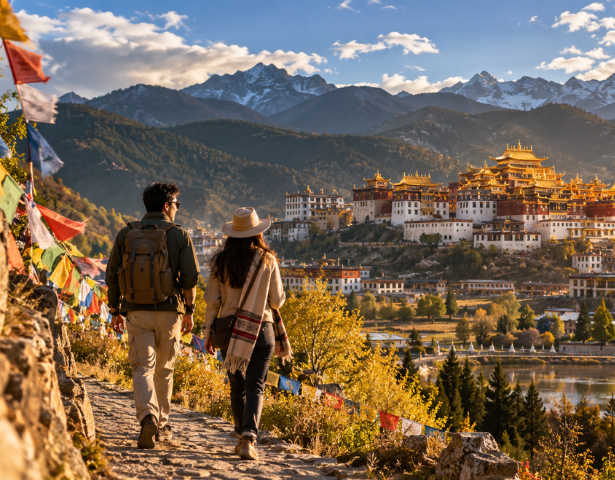
Step into Dukezong Ancient Town, a centuries-old Tibetan settlement of timber homes, stone lanes, temples, and colorful prayer flags. Wander beneath the evening lights, browse small shops, feel the mountain air, and settle around a warm Tibetan dinner as your first night in Shangri-La quietly introduces the next chapter of the journey.
Day 7: The Tibetan World
Step deeper into Shangri-La, where faith, family, and centuries of Tibetan tradition remain part of everyday life.
WHERE FAITH LIVES
Enter Songzanlin Monastery, the largest Tibetan Buddhist monastery in Yunnan, rising above the highlands with golden rooftops, whitewashed walls, and prayer flags moving in the mountain wind. Step inside its halls among murals, sacred images, and glowing butter lamps, and discover a spiritual tradition that continues to shape life across this region.
A SEAT AT THE TABLE
Meet local Tibetan people and experience the highlands through those who call them home. Step inside a traditional setting, share butter tea, taste tsampa and other local flavors, and listen to stories of family, food, celebrations, beliefs, and life at high altitude. Through conversation and laughter, discover the people behind the landscapes of Shangri-La.
PRAYERS IN THE WIND
Colorful prayer flags are part of the landscape here, stretching across rooftops, hillsides, monasteries, and mountain passes. Discover the meaning carried in their colors and printed prayers, then take part in a tradition that sends those blessings outward with every movement of the wind.
TURNING TOGETHER
As evening approaches, climb above Dukezong to the Giant Prayer Wheel at Guishan Park. Join others in placing your hands against its enormous golden surface and push together as the wheel slowly begins to turn. Below, the rooftops of the old town spread across the valley while the last light settles over Shangri-La.
BENEATH THE HIGHLAND SKY
Follow the warm lights back into Dukezong as another kind of Shangri-La appears. Laughter escapes from restaurants, families and friends gather around steaming dishes, and stone lanes glow beneath Tibetan-style timber houses. Stay for dinner, follow the sounds of the evening, and look upward on a clear night to a sky filled with stars.
Day 8: Life on the Plateau
Beyond Shangri-La’s old streets, the landscape opens into the immense skies and grasslands of the Tibetan Plateau.
WHERE THE LAND OPENS
Journey into the landscapes of Napahai and Yila Grassland, where mountains surround a vast expanse of wetlands, grazing land, and open sky. The scenery changes dramatically with the seasons, from broad waters and wetlands to sweeping grasslands, revealing a side of Shangri-La shaped as much by nature as by the people living within it.
LIFE BETWEEN EARTH AND SKY
Move through a landscape where yaks, horses, and sheep graze beneath distant mountains and Tibetan communities have long adapted their lives to the high plateau. Meet local people, hear stories from the grasslands, and discover how animals, seasons, weather, and the land itself continue to influence everyday life here.
FLAVORS OF THE HIGHLANDS
Gather around the table for another taste of Tibetan Yunnan, this time connected to the pastoral world surrounding you. Discover ingredients and dishes shaped by the plateau, share food and conversation, and experience how the flavors of Shangri-La tell their own stories about climate, landscape, and generations of highland life.
BACK TO THE WARM LIGHTS
After a day beneath enormous skies, return to the warmth of Dukezong. The contrast is part of the experience: open grasslands give way to glowing windows, timber houses, stone lanes, conversation, and the smell of dinner drifting into the cool mountain air. Wander without hurry and enjoy another night in a town that is beginning to feel familiar.
Day 9: Into the Wild Highlands
For one final journey beyond Shangri-La, leave the towns behind and enter the quieter wilderness of the highlands.
INTO PUDACUO
Enter Pudacuo National Park, where alpine lakes, forests, wetlands, and mountain meadows form one of Yunnan’s great highland landscapes. Follow trails and boardwalks through changing scenery as dense forests open suddenly onto water, grasslands stretch beneath the mountains, and the sounds of the city disappear completely.
BESIDE THE HIGH-ALTITUDE LAKES
Walk beside the clear waters and wetlands of the park, including the landscapes surrounding Shudu Lake. Watch clouds move across the mountains, listen for birds among the forests, and notice the smaller details along the way — wild plants, grazing animals, moving water, and reflections shifting across the lake.
WHERE THE JOURNEY BECOMES QUIET
Slow down as the trails lead deeper through forest, meadow, and open highland scenery. After days filled with markets, conversations, music, temples, food, and villages, experience another side of Yunnan in the simple rhythm of footsteps, mountain air, moving water, and an immense landscape stretching beyond you.
ONE LAST NIGHT IN SHANGRI-LA
Return to Dukezong for one final evening in the Tibetan highlands. By now, the stone lanes no longer feel entirely unfamiliar. Find a warm table, share a final Tibetan meal, hear laughter from the rooms around you, and step outside beneath the lights and stars for one last look at the town that has become your home in Shangri-La.
Day 10: Until We Meet Again
Leave Shangri-La carrying the landscapes, flavors, voices, and stories of a journey across China’s frontier.
ONE LAST LOOK
Wake once more among the mountains of Shangri-La, where prayer flags move above Tibetan rooftops and the highland air carries the sounds of another morning. Take in one last glimpse of the place that has become familiar over the past few days before your journey through Yunnan comes to an end.
ACROSS CHINA’S FRONTIER
From the waters of Erhai and the villages of the Bai, to the Naxi world beneath Jade Dragon Snow Mountain and the Tibetan highlands of Shangri-La, China’s Frontier leaves you with more than a collection of places. It leaves you with the people, conversations, flavors, landscapes, and moments that brought each one to life.
INCLUDES
- 4★ Hotel or Equivalent Accommodation
- All scheduled transportation within the experience
- Breakfast, lunch, dinner, snacks and drinks
- The artifacts (Black Passport & Digital artifact)
- English-speaking N.I.T.E. Insider
- All admissions and activities outlined in the itinerary
- International airfare to China
- Travel to the starting destination and onward travel after the experience
- Travel insurance (Highly recommended)
- Visa fees (If applicable)
- Personal expenses & additional purchases outside the curated experience
THE L.U.X. PROMISE: THE ART OF TOTAL IMMERSION

ZERO FRICTION
At MASX, our guiding principle is LUX: Live Ultimate Xperiences — where true luxury is the freedom to stay present and fully immersed in the moment. To ensure your connection to the city’s quiet rhythm remains uninterrupted, we operate under a strict, silent protocol:

You aren’t led by a “guide.” You are accompanied by a N.I.T.E. Insider. They are local expert insiders who help you Navigate Immersive Travel Experiences. They are your sophisticated peers, your cultural translators, and your partners in after-dark cultural experiences that will open doors that don’t exist on any map.

THE ARTIFACTS
Your journey exists in two worlds. The Black Passport is your shared tactile anchor — a physical relic to hold in your hands. The Digital Artifact is your high-fidelity digital legacy — a cinematic film to revisit together.
A physical book that preserves the story of your experience.
Your story is captured as it happens. Seven days after your experience, you will receive a curated collection of captured moments from the experience.