

Product Details
- Home
- INDIA – ETERNAL EUPHORIA: ECHOES OF AN EMPIRE™


INDIA – ETERNAL EUPHORIA: ECHOES OF AN EMPIRE™1 DayFLEXIBLE DATES
$390 – $780Price range: $390 through $780
The price shown is per person, not per room. Use the quantity selector to choose the number of travelers and see your total price.
Limited packages available. Secure yours today with a 10% deposit.
THE L.U.X. PROMISE: THE ART OF TOTAL IMMERSION

ZERO FRICTION
At MASX, our guiding principle is LUX: Live Ultimate Xperiences — where true luxury is the freedom to stay present and fully immersed in the moment. To ensure your connection to the city’s quiet rhythm remains uninterrupted, we operate under a strict, silent protocol:

You aren’t led by a “guide.” You are accompanied by a N.I.T.E. Insider. They are local expert insiders who help you Navigate Immersive Travel Experiences. They are your sophisticated peers, your cultural translators, and your partners in after-dark cultural experiences that will open doors that don’t exist on any map.

Your journey exists in two worlds. The Black Passport is your shared tactile anchor — a physical relic to hold in your hands. The Digital Artifact is your high-fidelity digital legacy — a cinematic film to revisit together.
A physical book that preserves the story of your experience.
Your story is captured as it happens. Seven days after your experience, you will receive a curated collection of captured moments from the experience.
OVERVIEW
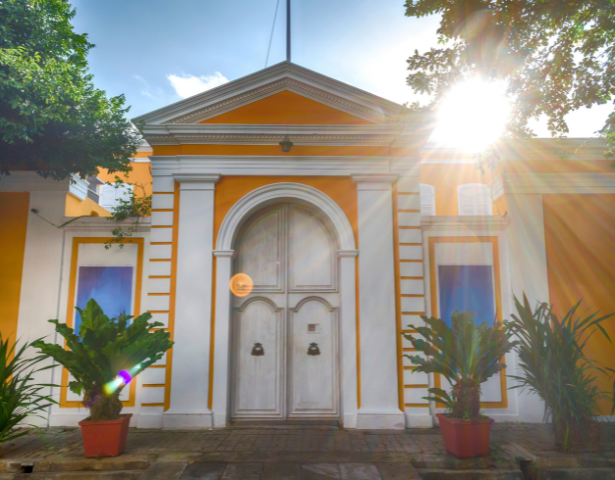
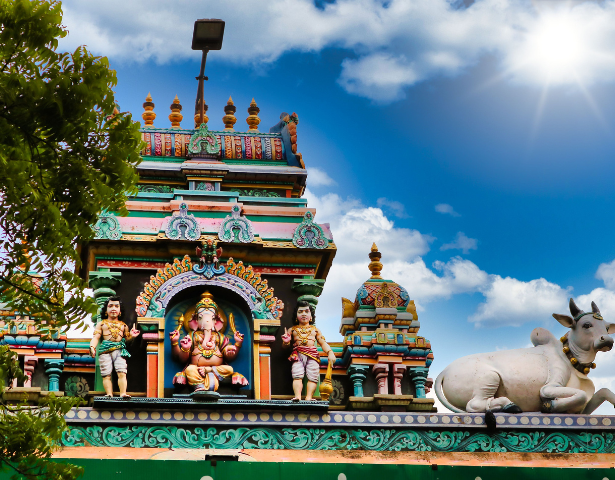
For centuries, Pondicherry has lived between worlds. This Tamil coastal town became the heart of French India, where colonial rule drew a physical line between European and Indian communities, even as everyday life gradually made those boundaries more complicated. French bread entered local kitchens. European facades rose beside Tamil homes. Culinary traditions crossed tables, architectural languages began sharing the same walls, and influences once brought from elsewhere became woven into the identity of the city itself.
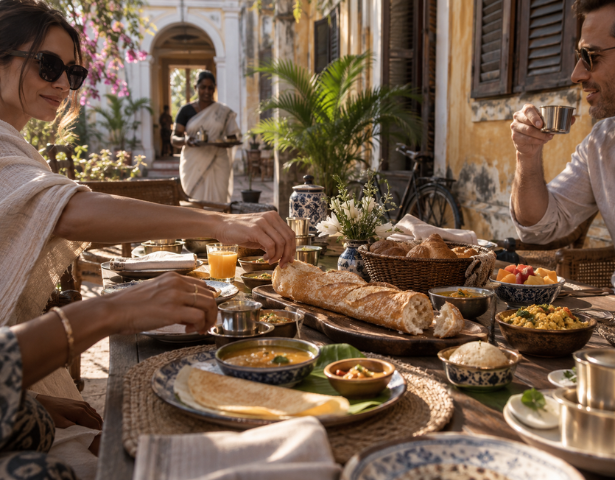
ECHOES OF AN EMPIRE: PONDICHERRY is a one-day journey through that extraordinary inheritance. Begin with a breakfast where a crisp baguette meets the heat of a Tamil kitchen, then walk from the old Tamil quarter toward the canal that once divided two very different worlds. Cross that line and watch the city change around you. Over a refined heritage lunch, taste what happened when cultures began meeting at the same table, before stepping inside spaces where Tamil and French architectural traditions eventually found themselves under one roof. As golden hour reaches the Bay of Bengal, look for the smaller echoes that survived empire before following one final trail into Pondicherry after dark. The old boundary remains on the map. The city has long since learned to live beyond it.
ITINERARY
PONDICHERRY
Chapter I: The First Bite
Sometimes history survives in the most ordinary things. This morning, it arrives warm from the oven.
Begin where Pondicherry itself begins each day: close to the street, among the sounds of shutters opening, steel tumblers touching tables, and breakfast being prepared. Tear into a crisp baguette and pair it with the deep spice and warmth of a local mutton preparation, followed by frothy South Indian filter coffee. The bread carries an unmistakable French inheritance, but what surrounds it belongs firmly to this coast. Pondicherry kept the baguette long after French rule ended, folding an imported baking tradition into a completely different world of flavor. Your first encounter with the city’s history is therefore not behind glass. It is in your hands, ready to be torn, dipped, tasted, and understood.
Chapter II: Across the Line
Two worlds once stood only a few steps apart. Between them ran a line that decided where people belonged.
Walk through the historic Tamil quarter before approaching the Grand Canal. Here, houses meet the street differently: shaded verandas, raised thinnai seating platforms, carved wooden doors, tiled roofs, temples, shops, and the close rhythm of neighborhood life. Then the canal appears. During the colonial era, this waterway became the physical divide between the European White Town toward the sea and the Indian Black Town to the west, reflecting a city structured around racial separation. Cross it on foot. There is no dramatic gate and no ceremonial marker, yet the change begins to reveal itself in wider streets, high compound walls, quieter facades, and European architectural forms. A few steps have carried you from one side of colonial Pondicherry into the other.
Chapter III: At the Same Table
The city could draw lines across its streets. Around the table, those lines became harder to keep.
Leave the heat behind and step into the shade of a graceful heritage setting for a slower, more refined chapter of the day. Beneath high ceilings, old timber, turning fans, or the green quiet of a courtyard, lunch explores Pondicherry’s Creole and Franco-Tamil culinary inheritance. French techniques and tastes encountered coconut, seafood, local produce, South Indian spices, and generations of cooks who adapted what arrived rather than simply reproducing it. The result was never purely French and never stopped being rooted in India. Let the meal unfold without rushing it. After a morning spent seeing how colonial Pondicherry separated communities in physical space, the table reveals another story: cultures may begin apart, but everyday life has a habit of bringing them together.
Chapter IV: Under One Roof
A home reveals a different side of history. Here, cultural exchange was not monumental — it became part of how people lived.
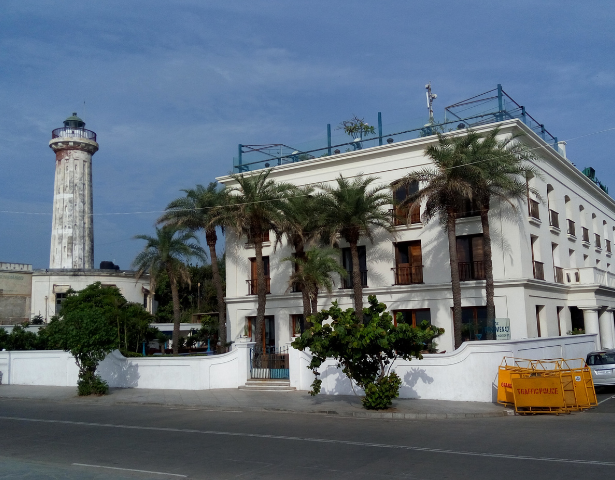
Step inside a heritage setting where French architectural ideas encountered Tamil craftsmanship, local materials, tropical heat, and the practical rhythms of life in Pondicherry. Look beyond the facade to the details that made these influences livable here, then settle into the quieter atmosphere within. With fragrant materials before you, shape and roll incense by hand while exploring the place scent holds across Indian life — from homes and ceremonies to memory and moments of reflection. As fragrance slowly fills the space, the chapter becomes less about identifying what is French or Tamil and more about understanding what happened when influences shared the same roof. Over generations, boundaries blurred, habits changed, and something distinctly Pondicherry emerged.
Chapter V: The Echoes Remain
By golden hour, history stops announcing itself. You begin finding it in the details.
Step back into the streets as the afternoon light warms Pondicherry’s pale facades and deepens the shadows beneath balconies and trees. By now, the clues are easier to recognize: a French name, a doorway, a familiar architectural detail, perhaps even the bright red French-style kepi still worn by members of the local police. These small inheritances lead toward Goubert Avenue, where the tight geometry of the old town suddenly opens to the Bay of Bengal. Walk the promenade as daylight begins to fade and the sea air moves through the city. For centuries, this coastline connected Pondicherry to worlds far beyond India. Empires came through it and disappeared. What remains is quieter: fragments absorbed into ordinary life, waiting for someone who now knows where to look.
Chapter VI: After the Line
The old city once told people where they belonged. Tonight, there is no line to follow.
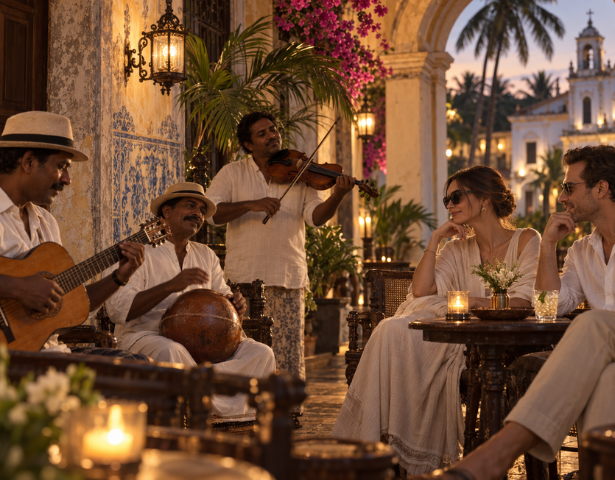
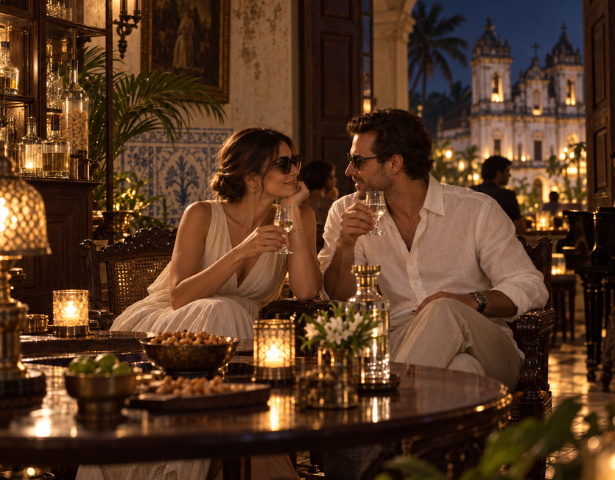
Return to the Pondicherry of the present over a relaxed local dinner, where Tamil and regional flavors replace the refinement of lunch and the city feels close again. Then something arrives at the table: a sealed letter. Inside are clues, not an address. Follow them into Pondicherry after dark, through illuminated heritage streets, quieter passages, familiar landmarks seen differently at night, and across boundaries that once carried far greater meaning. Eventually, the trail leads to an intimate contemporary venue and a final drink touched by the flavors of this coast. Settle in as the day’s different worlds finally overlap: Tamil, French, colonial, Creole, old, new. The empire disappeared. The canal remains. But the city on either side of it has become unmistakably Pondicherry.
OVERVIEW
For nearly 450 years, Goa lived under Portuguese rule, an encounter that transformed far more than its skyline. Churches rose beside older Indian worlds. European breadmaking entered local ovens. Recipes crossed oceans and changed in Goan kitchens. Houses adapted foreign architectural ideas to tropical life, while music, language, faith, and ingredients carried influences between cultures. When Portuguese rule ended in 1961, these things did not simply disappear. Generations of Goans had already adapted many of them into something with an identity of its own.
ECHOES OF AN EMPIRE: GOA follows that transformation through a day of taste, architecture, scent, music, and discovery. Begin with bread whose story stretches back centuries before entering Old Goa, where the scale of Portuguese ambition still rises from stone. Taste how recipes changed after reaching this coast, then step inside an Indo-Portuguese heritage setting where architecture reveals another kind of adaptation. As incense takes shape beneath your fingers, explore India’s relationship with fragrance, memory, and emotion before following Goa’s musical inheritance toward an Arabian Sea sunset. After dark, one final trail leads to a spirit born from a fruit that crossed an ocean. Again and again, the story is the same: something arrived from elsewhere. Goa made it its own.
ITINERARY
GOA
Chapter I: Bread of Goa
Long before the streets begin telling their story, the first echo is already waiting on the breakfast table.
Begin the morning close to everyday Goan life, with fresh pao or poi — local breads descended from a baking tradition introduced during Portuguese rule — alongside a distinctly Goan breakfast preparation and a warming drink. The bread may have distant European origins, but its story changed here. Local bakers developed their own methods, traditionally using palm toddy to ferment the dough before baking it in wood-fired ovens. Over generations, what arrived as a foreign breadmaking tradition became inseparable from Goa’s food culture. Tear it open while it is still fresh and taste the first idea that will follow you throughout the day: influence may arrive from somewhere else, but the people who inherit it decide what it becomes.
Chapter II: Where an Empire Stood
Power rarely thinks of itself as temporary. In Old Goa, its ambitions were built large enough to survive centuries.
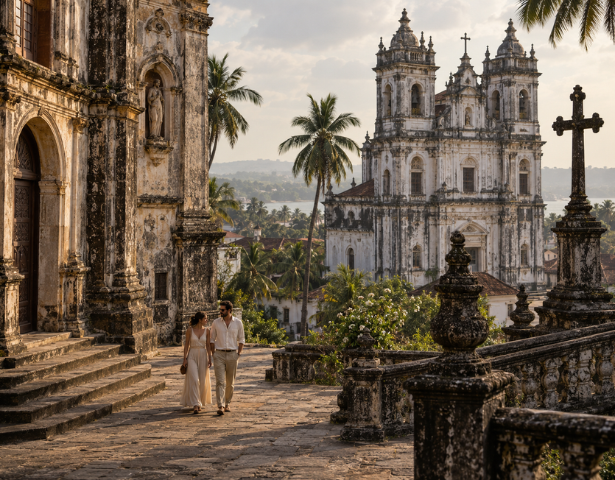
Enter the former heart of Portuguese Goa, where enormous churches still reveal the scale of the world once imagined here. Step inside the Basilica of Bom Jesus, completed in 1605 and home to the remains of St. Francis Xavier, before crossing the monumental precinct toward the vast Se Cathedral. Dark stone gives way to pale walls, intimate detail to extraordinary scale. Yet these buildings are more than European architecture transplanted onto Indian soil. Their construction drew upon materials, craftsmanship, and conditions found here, becoming part of a religious and architectural landscape unlike Portugal itself. Walk slowly between them. The empire that built this city has vanished, but the physical confidence with which it once announced itself remains impossible to miss.
Chapter III: What the Kitchen Changed
Recipes can travel with empires. What happens after they arrive belongs to the people who cook them.
Leave monumental Goa behind for the slower atmosphere of a sophisticated heritage setting, where lunch reveals another kind of exchange. Goan cuisine carries stories of ingredients, techniques, and recipes that traveled through Portuguese maritime networks before being transformed on this coast. Vindaloo offers one famous example, evolving from the Portuguese vinha d’alhos — meat traditionally prepared with wine and garlic — into something distinctly Goan as local cooks reworked flavor, heat, acidity, and spice. But this table tells a larger story than any single dish. Let the meal unfold beneath the character of an old Goan house, tasting a cuisine shaped not by one culture replacing another, but by generations of adaptation. History may have brought the ingredients together. Goa decided what they would become.
Chapter IV: Beneath the Same Roof
A house does more than shelter the people inside it. Over time, it begins to reveal how they learned to live.
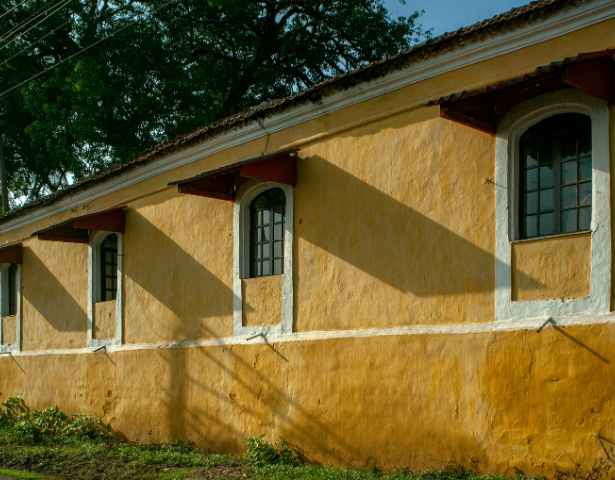
Step away from the afternoon heat and into the quieter world of an Indo-Portuguese heritage setting. Here, European architectural ideas encountered Goan craftsmanship, local materials, monsoon rains, tropical light, and a completely different rhythm of domestic life. Notice how the building responds to its surroundings before settling into a slower experience of your own. With fragrant materials before you, shape and roll incense by hand while exploring the place scent holds across Indian life — in homes, ceremonies, celebrations, memory, and moments of reflection. Fragrance changes a room without changing anything you can see. As your incense takes form, architecture and scent begin telling parallel stories: transformation is sometimes dramatic, but often it happens quietly, through everyday things people choose to make their own.
Chapter V: When Goa Sings
Not every echo survives in stone. Some are carried forward because people keep playing them.
Step back into Fontainhas as the afternoon begins to soften, moving among colorful facades, tiled roofs, balconies, and narrow streets touched by the last warm light of the day. Somewhere within this old quarter, let architecture give way to sound through an intimate encounter with Goan music. Listen for the meeting of local and Portuguese musical traditions, including the melodies and rhythms that evolved across generations into expressions belonging to Goa itself. Then follow the fading light toward the Arabian Sea. At Miramar, the streets finally fall away and the horizon opens. Watch the sun descend over the water as music, history, and the colors of the old city settle into something simpler: a moment with nowhere else to be.
Chapter VI: The Spirit That Remained
An empire once carried a fruit across an ocean. Goa found an entirely different reason to remember it.
After sunset, return to the present over a relaxed local dinner before a sealed letter arrives at the table. Inside is no final address, only the beginning of a trail. Follow its clues into Goa after dark, through familiar streets transformed by evening and toward a door you were never given the name of. Inside, settle into the intimate atmosphere of the night’s final stop and meet feni — Goa’s distinctive spirit traditionally distilled from cashew apples or coconut palm sap. Cashew itself reached India from South America through Portuguese maritime networks, but the drink waiting in your glass was created here. Raise it to a day filled with things that crossed borders and changed along the way. Portugal left Goa decades ago. Goa kept what it chose, transformed what it inherited, and made the story unmistakably its own.
INCLUDES
- All transportation within the experience
- Breakfast, lunch, dinner, snacks and drinks
- The artifacts (Black Passport & Digital artifact)
- English-speaking N.I.T.E. Insider
- All admissions and activities outlined in the itinerary
- International airfare to India
- Accommodation
- Travel insurance (Highly recommended)
- Visa fees (If applicable)
- Personal expenses & additional purchases outside the curated experience