
Product Details
- Home
- UN-PHO-GETTABLE VIETNAM: ECHOES OF AN EMPIRE™

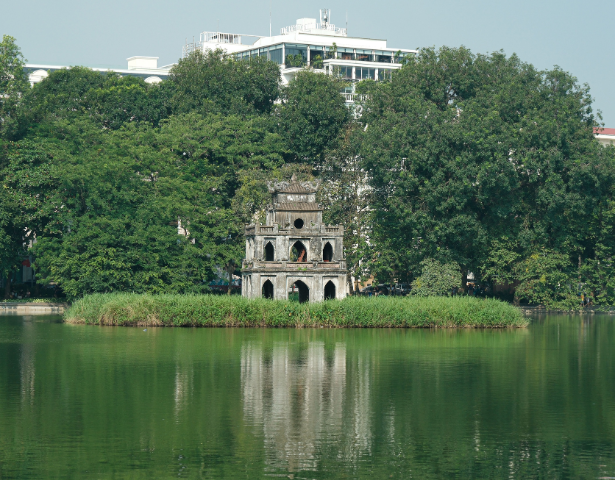

UN-PHO-GETTABLE VIETNAM: ECHOES OF AN EMPIRE™1 DayFLEXIBLE DATES
$340 – $750Price range: $340 through $750
The price shown is per person, not per room. Use the quantity selector to choose the number of travelers and see your total price.
Limited packages available. Secure yours today with a 10% deposit.
THE L.U.X. PROMISE: THE ART OF TOTAL IMMERSION

ZERO FRICTION
At MASX, our guiding principle is LUX: Live Ultimate Xperiences — where true luxury is the freedom to stay present and fully immersed in the moment. To ensure your connection to the city’s quiet rhythm remains uninterrupted, we operate under a strict, silent protocol:

You aren’t led by a “guide.” You are accompanied by a N.I.T.E. Insider. They are local expert insiders who help you Navigate Immersive Travel Experiences. They are your sophisticated peers, your cultural translators, and your partners in after-dark cultural experiences that will open doors that don’t exist on any map.

Your journey exists in two worlds. The Black Passport is your shared tactile anchor— a physical relic to hold in your hands. The Digital Artifact is your high-fidelity digital legacy — a cinematic film to revisit together.
A physical book that preserves the story of your experience.
Your story is captured as it happens. Seven days after your experience, you will receive a curated collection of captured moments from the experience.
OVERVIEW
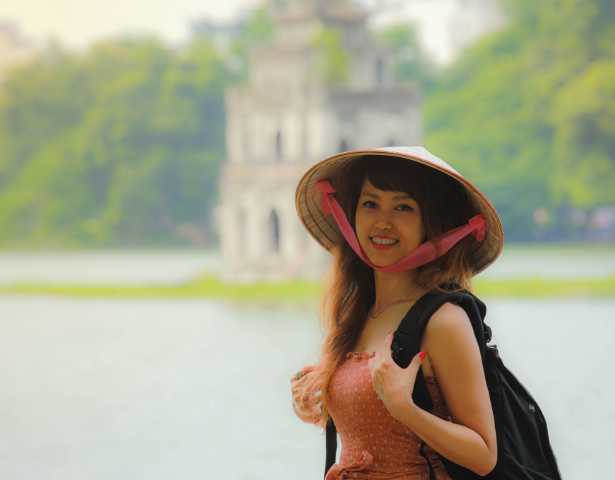
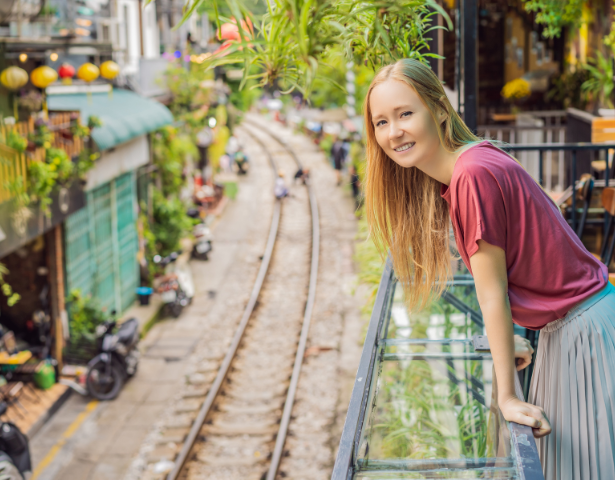
Hanoi has never belonged to just one chapter of history. An ancient Vietnamese capital became the political heart of French Indochina, and with that transformation came railways, grand hotels, European boulevards, coffee, new ingredients, and monumental architecture. But Hanoi did not simply become French. It absorbed what arrived, resisted what threatened it, adapted what proved useful, and gradually made those influences its own. The result is a city where different centuries still seem to occupy the same streets.
ECHOES OF AN EMPIRE: HANOI is a one-day journey through those layers. Begin with the flavors of a waking Old Quarter, cross a bridge that has survived more than a century of upheaval, and step into the elegance of another social world over lunch. Follow Hanoi's architecture as European grandeur begins to meet local climate and aesthetics, then reach a boulevard where beauty and difficult history stand remarkably close together. As sunset falls, return to the Hanoi that emerged from it all: eating its food, moving with its evening crowds, and following a final set of clues into the city after dark. The empire is gone. Hanoi kept moving. Its echoes are simply waiting to be noticed.
ITINERARY
HANOI
Chapter I: The First Taste
Hanoi wakes close to the ground, where steam rises from breakfast bowls and the first coffee of the day drips slowly while the Old Quarter comes alive around you.
Take your place among the morning rhythm for a bowl of pho, born in northern Vietnam during a period when ingredients, habits, and cultures were moving through the country in new ways. Beef became increasingly available during the French colonial period, but Vietnamese cooks gave the dish its own identity through rice noodles, fragrant broth, herbs, and spices. Then linger over Vietnamese coffee. Introduced from abroad, coffee found a completely different life here, strengthened by the slow drip of a metal filter and softened with condensed milk. Nothing on the table feels borrowed anymore. With two tastes now inseparable from Vietnam, Hanoi gives you the first clue to its character: what arrives from elsewhere rarely leaves unchanged.
Chapter II: The Witness
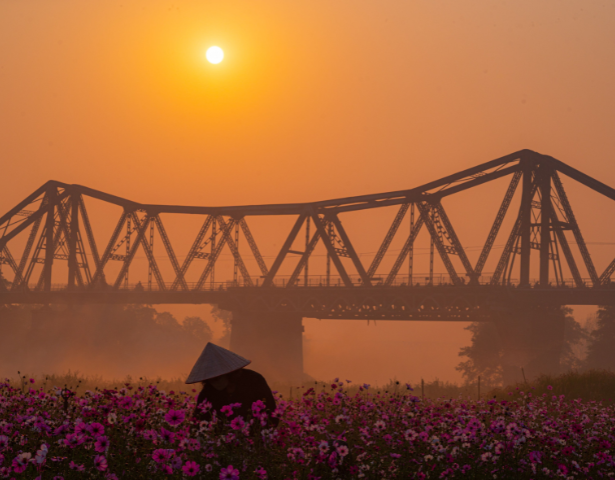
Long Bien stretches across the Red River like a witness that never left, carrying more than a century of Hanoi between its weathered steel.
See the bridge from the riverbank before stepping into its iron frame and joining the everyday movement still crossing it. Motorbikes and bicycles pass beside you, the Red River opens below, and perhaps a train sends a tremor through a structure first opened in the early twentieth century as one of colonial Hanoi’s great infrastructure projects. Long Bien would outlive the world that built it. War came, bombs fell, sections were destroyed and rebuilt, and Hanoi changed around it again and again. Yet the bridge never became merely a relic. Walk part of the same span the city still depends upon today and feel why Long Bien has become more than surviving architecture: its role keeps changing, but like Hanoi itself, it keeps going.
Chapter III: Behind Grand Doors
The street noise falls away behind polished doors, and for a while, you enter another Hanoi — quieter, measured, and shaped by the rituals of a very different social world.
Step into one of the capital’s historic grand hotels, where high ceilings, elegant interiors, careful service, and a beautifully set table create an immediate contrast with breakfast in the Old Quarter. Spaces like these once belonged to the privileged social world of colonial Hanoi, refined in appearance even as a far more complicated reality existed beyond their doors. Settle in for a course lunch where the exact menu follows the season, allowing French culinary traditions and techniques to meet Vietnamese produce, herbs, spices, seafood, and local tastes. As each course arrives, history becomes something you can taste: even traditions brought here with power and prestige began to change once Hanoi’s ingredients, climate, and people became part of the story.
Chapter IV: A Language of Two Worlds
Trang Tien opens ahead, and through trees, traffic, and the restless movement of Hanoi, the Opera House slowly takes the stage.
Approach on foot as its pale facade, columns, balconies, and European proportions rise above the street, bringing the architectural ambitions of early twentieth-century France into full view. Then keep walking, because the story changes nearby. At the former Louis Finot Museum, viewed from the exterior, rooflines stretch outward, deep eaves create shade, and Western construction begins sharing space with forms and practical responses better suited to Vietnam and its climate. The transition is subtle, but once you see it, the neighborhood begins to read differently. Let the afternoon slow over coffee or tea as scooters sweep past old facades and trees cast shifting shadows across them. Two architectural worlds no longer feel separate here. Hanoi has had generations to bring them together.
Chapter V: What the Boulevard Remembers
As sunset turns Hanoi gold, one of its most beautiful boulevards reveals a history that the evening light cannot soften completely.
Begin at Cua Bac, the surviving North Gate of Hanoi’s old imperial citadel, where traces of the French assault on the Vietnamese capital remain as a reminder that the meeting of these worlds brought resistance, sacrifice, and loss alongside cultural exchange. From there, follow Phan Dinh Phung beneath its enormous trees as sunset settles across old villas, weathered walls, cafés, homes, bicycles, and the everyday movement of the city. Once a colonial boulevard, it now belongs to generations who inherited these buildings long after their original world disappeared. Walk slowly through the changing light. Here, the difficult and the beautiful occupy the same street, while Hanoi does what it has done through every chapter of its history: remembers, adapts, and continues.
Chapter VI: After the Empire
By night, the history you have followed all day slips beneath the lights of a city that is far too alive to remain inside its past.
Return to Hanoi’s own table for dinner, perhaps over smoky bun cha, delicate banh cuon, banh mi, or another local favorite. Some tastes carry visible traces of outside influence; others remain deeply rooted in local tradition, but together they belong to the Hanoi that emerged from everything you have experienced today. Then open the letter waiting after dinner. There is no address inside, only clues. Step back into streets alive with scooters, conversation, charcoal smoke, glowing cafés, old facades, and fragments of music, and begin reading the city for yourself. Eventually, the trail leads to one final door, where low light, local flavors, and perhaps jazz or a Hanoi favorite set the final rhythm. This morning, you arrived looking at Hanoi. Tonight, you know how to read it.
OVERVIEW
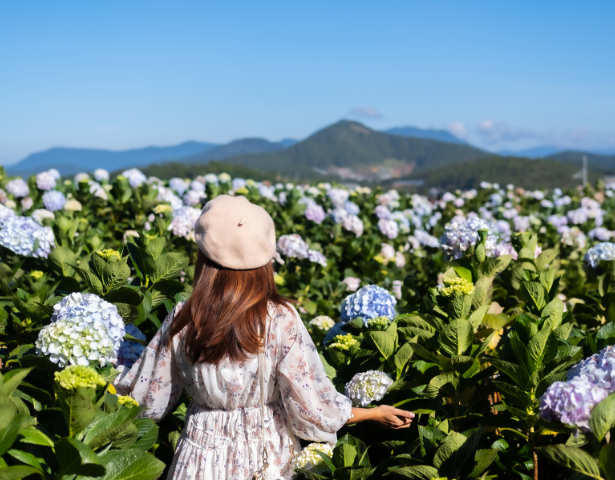
Dalat was imagined differently from most Vietnamese cities. High in the Central Highlands, where pine-covered slopes and cool mountain air offered an escape from the tropical lowlands, the French developed a hill station of villas, gardens, hotels, farms, and an extraordinary railway climbing into the mountains. But the landscape was never an empty canvas, and the city that grew here would never remain simply European. Indigenous cultures already belonged to these highlands, while Vietnamese workers, farmers, families, and generations of new residents gradually transformed what had been built and introduced into something distinctly Dalat.
ECHOES OF AN EMPIRE: DALAT follows that transformation through a city that still feels unlike anywhere else in Vietnam. Warm yourself with a mountain breakfast, ride the railway that once connected this remote retreat to the world below, and taste how imported crops found a new home in highland soil. Enter the private world of Vietnam's last emperor, then follow old villas through the changing light of sunset as another era settles into modern Vietnamese life. When darkness arrives, return to the flavors of Dalat before a final set of clues leads you into the city after dark. The city may have been imagined under empire. What it became belongs to Dalat.
ITINERARY
DALAT
Chapter I: A Mountain Morning
Dalat wakes beneath cool air and drifting mist, where something warm in your hands feels less like breakfast and more like the beginning of the day.
Settle into the morning with banh mi xiu mai, a Dalat favorite made for weather like this: crusty bread served beside hot pork meatballs and savory broth, ready for tearing, dipping, and eating slowly while the city wakes around you. Follow it with a hot Vietnamese coffee, dark and strong beneath its layer of condensed milk. Both carry ingredients and influences that arrived from elsewhere, yet neither feels foreign here anymore. Around you are hillside streets, jackets pulled against the morning chill, passing motorbikes, and the smell of breakfast escaping into the cold air. Before seeing a single villa or monument, you have already encountered something essential about Dalat: this city has always been remarkably good at making things its own.
Chapter II: The Climb
At the end of the tracks, three striking roof peaks rise against the mountains, marking the point where an extraordinary journey once reached Dalat.
Enter Dalat Railway Station and look beyond its unmistakably European lines to a roof whose form recalls the architecture of the Central Highlands, a quiet reminder that colonial Dalat was not created on an empty landscape. Then follow the story onto the tracks themselves. The original railway had to conquer an enormous change in elevation, using tunnels and specialized rack sections to pull trains through terrain ordinary railways could not manage. Much of that remarkable mountain route has disappeared, but the station and part of its railway remain alive. Board the train for a short ride and watch Dalat move beyond the window. What began as infrastructure for a remote colonial retreat has become something else entirely: a piece of history still carrying people through the city it helped create.
Chapter III: What Took Root
Behind the doors of an old villa, the story of Dalat moves from architecture to the land itself.
Settle into the elegance of a restored French-era villa surrounded by gardens, old trees, and the cool landscape that once made these hills so desirable. Lunch follows the season, bringing French and Vietnamese culinary traditions together through ingredients grown around Dalat today. The connection runs deeper than the plate. Colonial agricultural experiments introduced numerous temperate vegetables, fruits, flowers, and crops to a climate where they could thrive, but Vietnamese farmers were the ones who adopted, cultivated, expanded, and ultimately made many of them part of Dalat’s identity. Artichokes, potatoes, lettuce, strawberries, and other highland produce may appear depending on the season. What began as agricultural experimentation eventually escaped its original purpose. Look outside the villa today, and an entire city has grown around what took root.
Chapter IV: Between Two Worlds
Inside a quiet palace on a Dalat hillside, the story becomes personal: one family living between a Vietnamese monarchy nearing its end and a colonial world already beginning to change.
Enter Bao Dai Palace III, built in the 1930s as both residence and workplace for Bao Dai, the last emperor of Vietnam. Move from the restrained European modernist exterior into reception rooms, offices, private quarters, and the spaces once occupied by the royal family. This was not simply a holiday villa. Decisions were made here while Bao Dai occupied an extraordinarily complicated position between Vietnamese sovereignty, monarchy, and French colonial power. Upstairs, the scale becomes more intimate as public history gives way to bedrooms, personal spaces, and views across the surrounding hills. Rather than another grand monument to an empire, the palace reveals people living inside a political world that could not last. Within a few decades, both colonial Indochina and Vietnam’s monarchy would be gone.
Chapter V: The City Inherited
As sunset reaches the pines and mist begins gathering between the hills, Dalat’s old villas seem to belong to several eras at once.
Follow Tran Hung Dao through one of Dalat’s remarkable surviving villa districts as the last light settles over tiled roofs, stone walls, gardens, chimneys, and winding streets. These houses once belonged to another vision of the city, but the society that created them has long disappeared. Dalat continued around them. Some became hotels, cafés, restaurants, or offices; others remained part of ordinary Vietnamese life, where a parked motorbike, an open doorway, laundry near an old wall, or voices from inside can suddenly collapse the distance between heritage and home. There is no need to recreate the past here. Walk as the lamps begin to glow and the mountain air turns colder. The villas survived because Dalat found new lives for them.
Chapter VI: After the Fog Falls
Night brings the cold back to Dalat, along with steaming bowls, glowing windows, and a city that no longer needs its past to explain what it has become.
Begin with Dalat-style pho, served hot against the evening chill and surrounded by the abundance of highland greens that gives the familiar Vietnamese dish a distinctly local character. Among them may be lettuce and other temperate produce that once arrived through agricultural experimentation and now seem completely at home in Dalat’s soil. Then open the sealed letter waiting for you after dinner. There is no final address inside, only clues. Follow them into the night as cafés glow through the mist, motorbikes disappear around sloping streets, and old buildings share the darkness with the city that grew around them. Eventually, the trail leads to an inconspicuous entrance and an intimate, low-lit hideaway, where a final drink inspired by local or seasonal flavors closes the journey. Dalat’s last echo is not something preserved. It is something still being created.
OVERVIEW
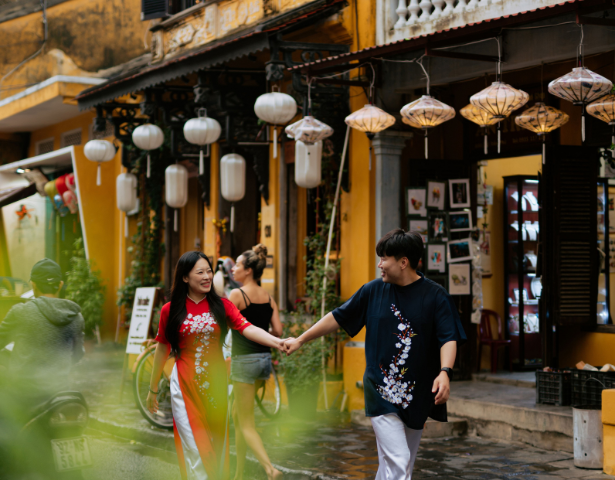
For centuries, the Thu Bon River carried more than cargo into Hoi An. From the late 16th century onward, merchants from Japan, China, and across the maritime world arrived at this Vietnamese port to trade, settle, worship, and build lives alongside the people already here. Communities formed, merchant houses filled the waterfront, new flavors entered local kitchens, and different architectural traditions began appearing beneath the same tiled roofs. Hoi An did not become Japanese or Chinese. Something more interesting happened: generations of exchange slowly became part of the town itself.
ECHOES OF AN EMPIRE: HOI AN follows the traces of that trading world from the first bowl of the morning to the glow of the river after dark. Taste how even Vietnam's familiar pho developed a local character here, cross a bridge left by the Japanese merchant community, share the flavors of Hoi An inside a historic house, and step through the spaces where merchant families once balanced business and home. As afternoon light turns golden, follow the legacy of Chinese communities toward the river that once connected Hoi An to the world. By night, the old port has transformed again. The ships are gone, but centuries of exchange still flicker through its kitchens, houses, streets, and water.
ITINERARY
HOI AN
Chapter I: The Port Wakes
Before the lanterns glow and the old streets fill, Hoi An belongs to the people beginning an ordinary morning.
Start near the river as market stalls open, bicycles roll past, shutters lift, and the smell of breakfast begins drifting through the streets. Your first bowl is pho, but Hoi An has developed its own way of serving Vietnam’s most recognizable noodle soup. The local style may bring slightly chewy dried noodles, clear beef broth, peanut sate, annatto oil, and pickled green papaya alongside the bowl. Follow it with Vietnamese iced milk coffee as the town gathers momentum around you. There is no need for a monument yet. Hoi An’s story begins with something more immediate: steam rising from a bowl, voices from the market, and a living Vietnamese town waking beside the river that once connected it to the world.
Chapter II: Across the Water
Beneath an old tiled roof, a few footsteps are enough to cross between worlds.
Walk toward Chua Cau, the Japanese Covered Bridge, where one of Hoi An’s most recognizable landmarks preserves the memory of a community that once crossed the sea and made this distant port part of its world. Japanese merchants established themselves here during Hoi An’s trading era, and the bridge became a physical connection within the growing town. Its story did not end with them. The structure was repaired and altered by later generations, including Hoi An’s Chinese community, and continues to be preserved by Vietnam today. Cross its wooden passage, notice the small temple built into the structure, and listen to the town moving beyond its walls. What survives is more than Japanese architecture. It is a bridge repeatedly inherited by the communities around it.
Chapter III: At the Same Table
In a trading port, cultures do not meet only on docks and in marketplaces. Eventually, they find their way to the same table.
Leave the movement of the streets behind and step inside a historic house, where timber, tiled floors, slow fans, and a quieter courtyard set the pace for lunch. Local specialties such as Hoi An chicken rice and delicate white rose dumplings turn the city’s long history of migration and exchange into something you can taste. Their stories belong to different periods and influences, yet that is precisely the point. Hoi An’s cuisine did not stop evolving when its harbor grew quiet. Ingredients traveled, communities changed, recipes shifted, and local cooks continued making them their own. Beneath an old roof, lunch becomes less about tracing where every influence began and more about tasting where generations of exchange eventually led.
Chapter IV: The Merchant's House
Push beyond the storefront and the old port begins to reveal how it actually lived.
Enter Tan Ky Old House, where more than two centuries of family history remain folded into a remarkably compact merchant home. Move from the street-facing world of commerce into darker timber interiors, open courtyards, family spaces, shafts of afternoon light, and the passages through which life and business once flowed. The house was shaped around more than beauty: trade, family, climate, light, ventilation, and the movement of goods all had to coexist beneath one roof. Vietnamese, Chinese, and Japanese architectural influences appear along the way, not as separate exhibits but as parts of the same living structure. Here, Hoi An’s multicultural history becomes physical. Different worlds did not simply meet outside its doors. They learned to live together inside them.
Chapter V: The World Came by Water
Then the light begins to fall, the lanterns stir to life, and Hoi An slowly turns its face back toward the river.
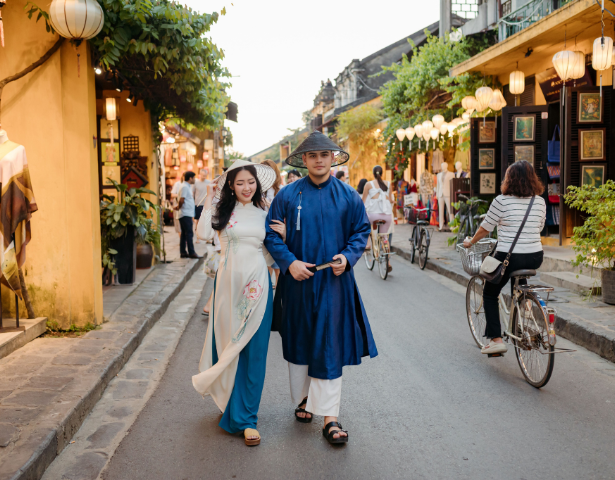
Enter one of the assembly halls established by Hoi An’s Chinese communities, where merchants far from their ancestral homes created places for worship, gathering, mutual support, and cultural continuity. From there, follow Tran Phu through yellow facades and old shopfronts as the afternoon softens and another version of Hoi An begins to appear. Lanterns glow beneath dark timber roofs, doors remain open, and present-day life continues inside buildings inherited from another trading age. Then return to the Thu Bon River and step aboard a small boat. As daylight slips away, look back toward the illuminated town from the water. For centuries, this was the direction from which much of the world arrived. Now, for a moment, you see Hoi An as it once approached them.
Chapter VI: What Remained
Night closes around the old port, but the exchange that shaped Hoi An never really ended.
Return to shore for cao lau, the noodle dish so closely associated with Hoi An that even its debated origins feel appropriate for a town shaped by centuries of cultural exchange. Thick noodles, pork, greens, herbs, and crisp textures come together in something that invites theories about where its influences began while belonging unmistakably to the city serving it. After dinner, break the seal on the letter waiting for you. There is no address inside, only clues. Follow them beneath glowing lanterns, past fading storefronts and into quieter passages until the trail finally reveals an intimate hideaway within the old town. Settle into the shadows for one final drink shaped by Vietnamese or local flavors. The old trading ships have disappeared. The exchange never did.
INCLUDES
- All transportation within the experience
- Breakfast, lunch, dinner, snacks and drinks
- The artifacts (Black Passport & Digital artifact)
- English-speaking N.I.T.E. Insider
- All admissions and activities outlined in the itinerary
- International airfare to Vietnam
- Accommodation
- Travel insurance (Highly recommended)
- Visa fees (If applicable)
- Personal expenses & additional purchases outside the curated experience