
Product Details
- Home
- CHINA – MYSTIQUE AND INTRIGUE: FLEETING LIFE™
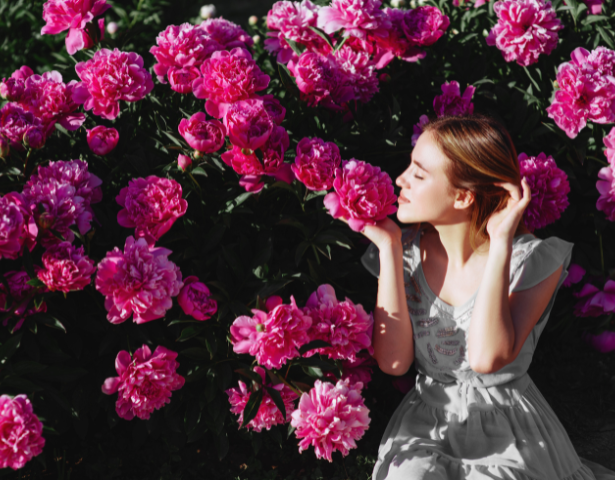
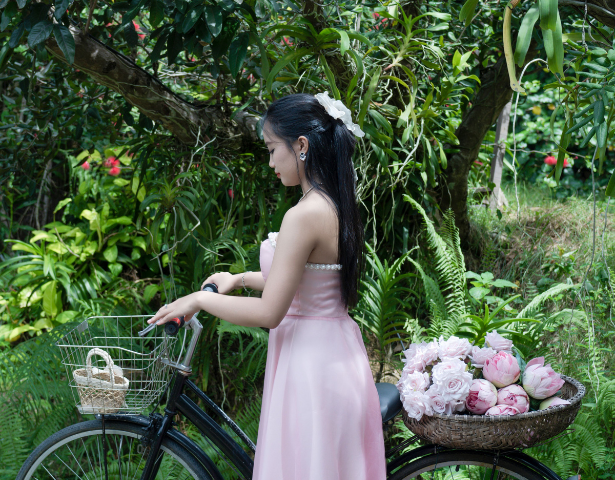
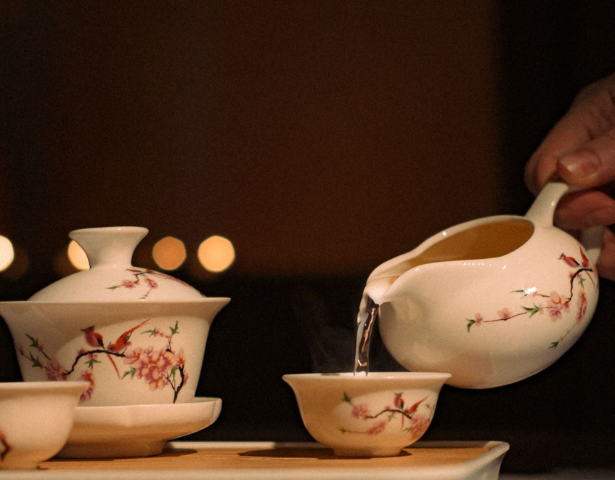
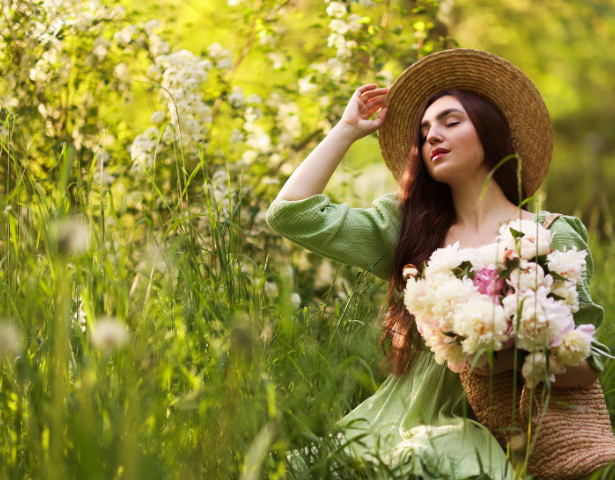
CHINA – MYSTIQUE AND INTRIGUE: FLEETING LIFE™3 Days / 2 NightsFLEXIBLE SEASONAL DATESPeonies in Luoyang and Hangzhou usually bloom throughout April, with peak timing varying by location and weather conditions. As bloom times vary each year, please check the latest seasonal updates before choosing your dates.
$1,400 – $3,200Price range: $1,400 through $3,200
The price shown is per person, not per room. Use the quantity selector to choose the number of travelers and see your total price.
Limited packages available. Secure yours today with a 10% deposit.
THE L.U.X. PROMISE: THE ART OF TOTAL IMMERSION

ZERO FRICTION
At MASX, our guiding principle is LUX: Live Ultimate Xperiences — where true luxury is the freedom to stay present and fully immersed in the moment. To ensure your connection to the city’s quiet rhythm remains uninterrupted, we operate under a strict, silent protocol:

You aren’t led by a “guide.” You are accompanied by a N.I.T.E. Insider. They are local expert insiders who help you Navigate Immersive Travel Experiences. They are your sophisticated peers, your cultural translators, and your partners in after-dark cultural experiences that will open doors that don’t exist on any map.

THE ARTIFACTS
Your journey exists in two worlds. The Black Passport is your shared tactile anchor — a physical relic to hold in your hands. The Digital Artifact is your high-fidelity digital legacy — a cinematic film to revisit together.
A physical book that preserves the story of your experience.
Your story is captured as it happens. Seven days after your experience, you will receive a curated collection of captured moments from the experience.
OVERVIEW
In Luoyang, the peony is Mudan, the tree peony that has become inseparable from the city’s identity. Cultivated here for more than a thousand years, its enormous blooms have inspired legends, poetry, painting, celebrations, and generations of people who still wait for their return each spring. Mudan became closely associated with the deeply rooted cultural idea of fugui: wealth, prosperity, honor, and the good fortune of living an abundant life. But in Luoyang, the flower carries something more personal too. It is a source of local pride, the center of an annual April tradition, and a familiar presence that continues to appear in art, food, tea, porcelain, design, and everyday life.
FLEETING LIFE: PEONY LUOYANG follows this relationship across three days of ancient stories and modern city life. Walk among tree peonies at their seasonal best, uncover meanings hidden within Chinese characters, paint Mudan through traditional Gongbi art, and discover Luoyang through its markets, food, people, and illuminated streets. Beyond the flowers, experience the extraordinary Longmen Grottoes and the city’s Sui-Tang heritage after dark, before following the bloom one final time. Mudan may only fill Luoyang’s gardens for a short part of the year, but the culture surrounding it remains long after the last petals have fallen.
ITINERARY
LUOYANG
Day 1: When Mudan Became King
Long before Luoyang's April crowds, Mudan, the tree peony, was already taking root in the city's gardens and imagination. History tells one story. Luoyang's favorite legend tells another.
WHERE LUOYANG BLOOMS
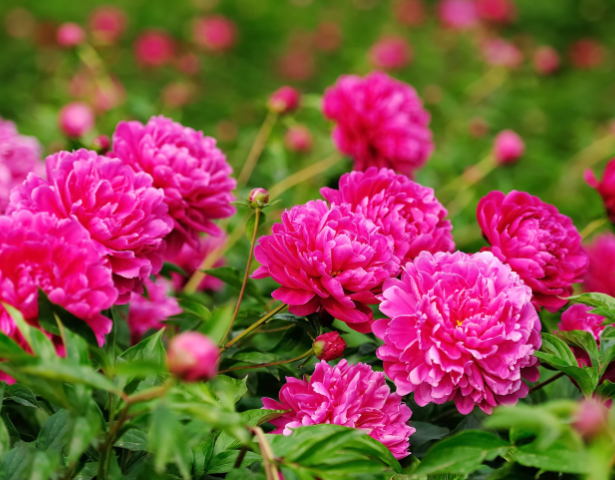
Your first encounter with Luoyang's most celebrated flower begins inside the China National Flower Garden, where the scale of Mudan becomes immediately clear. Tree peonies rise from woody stems beneath blooms that can feel almost impossibly full, unfolding in whites, pinks, reds, purples, yellows, and greens across the garden. Instead of rushing toward a checklist of famous cultivars, take time to notice the differences: tightly layered petals, open crowns, subtle fragrances, and flowers bending slightly under their own weight. Around you, Luoyang is doing the same. Families stop for photographs, flower enthusiasts lean closer to inspect particular varieties, and visitors arrive from across China for a season that lasts only weeks. This is not yet the moment for a history lesson. First, simply meet Mudan as Luoyang does every spring: alive, abundant, and impossible to ignore.
THE FLOWER THAT SAID NO
After seeing Mudan in full bloom, settle into a relaxed local restaurant and begin discovering why this particular flower means so much to Luoyang. Look first at the characters 牡丹, Mudan, before decoding 富贵, fugui, and the ideas of wealth, prosperity, honor, and good fortune that became attached to the peony. Chinese characters can carry histories and associations far beyond their immediate translation, and these few begin opening another layer of what you saw this morning. Then hear one of Luoyang's most enduring legends, a story involving an empress, an impossible command, and a flower remembered for refusing to obey. History and folklore do not tell exactly the same story, and that difference is part of the intrigue. Over lunch, discover how a flower celebrated for elegance and abundance also became a symbol Luoyang proudly claimed as its own.
PAINT WHAT CANNOT LAST
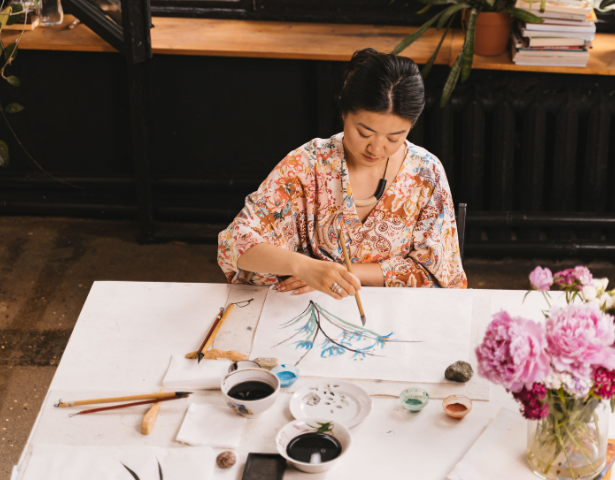
Now that you have seen Mudan and begun uncovering the stories carried with it, sit down with a local artist who has learned to capture its form by hand. Through a Gongbi painting experience, discover a Chinese painting tradition built around controlled lines, layered color, and careful observation. Watch how your artist approaches the flower, ask about the details they notice first, and then look again at the tree peony yourself: the weight of its bloom, the movement of individual petals, and the leaves beneath it. With their guidance, begin creating your own interpretation. This is not about producing a perfect painting or becoming an artist in an afternoon. It is about sharing a table, learning through someone else's hands, and slowing down long enough to really look at something nature will soon remove. Your finished piece preserves in pigment what the gardens can only hold for a short season.
WHEN THE OLD CITY STAYS AWAKE
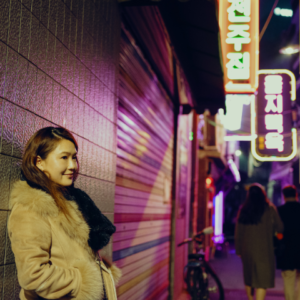
Tonight, Luoyang reaches the table through one of its most recognizable culinary traditions: the Luoyang Water Banquet, a progression of dishes known for soups, broths, contrasting flavors, and the distinctive local Peony Swallow Dish. But dinner is only the beginning of the evening. Step through the area around Lijing Gate and continue into the Old City, where illuminated architecture gives way to the movement of everyday night life. Follow the flow toward Cross Street as friends meet for food, vendors work behind steaming counters, families wander between stalls, and another side of Luoyang replaces the quiet concentration of the afternoon. There is no need to turn every stop into an activity. Look, ask questions, follow an interesting smell, or stop somewhere simply because it feels right. Tonight's Luoyang is less about the dynasties that shaped it and more about the people still filling its streets.
SIGNATURE MOMENTS
Mudan at China National Flower Garden
Decode the Meaning of Mudan
Gongbi Peony Painting
The Legend of the Defiant Peony
Illuminated Luoyang Old City
Day 2: When Spring Became a Stage
Centuries later, the flower became a grand stage for art, poetry, and celebration. Each spring, Luoyang drew crowds to admire the blooms, turning the arrival of Mudan into one of the city's great seasonal traditions.
BEFORE THE CITY CHANGES GEAR
Begin among vegetables, breakfast stalls, household goods, conversations, and the sounds of vendors starting another ordinary morning. A neighborhood market shows a side of Luoyang far removed from imperial courts and formal gardens. Watch residents shop before work, see what people are eating for breakfast, and try asking a vendor about something you do not recognize. During peony season, Mudan may appear here in much smaller ways: printed on packaging, worked into seasonal products, or sold as peony flower cakes among dozens of things that have nothing to do with flowers at all. That is precisely the point. Yesterday, Mudan filled an entire garden. Here, it slips quietly into everyday commerce. Pick up a snack if something catches your attention, practice a few words, and experience a place designed primarily for people getting on with their day.
A CITY WRITTEN IN STONE
After a relaxed lunch, travel south to the Longmen Grottoes, where Luoyang's past appears not in petals but in limestone. Thousands of Buddhist images, inscriptions, caves, and niches line the cliffs beside the Yi River, shaped over centuries and reaching extraordinary scale during periods when Luoyang stood at the center of Chinese political and cultural life. Walk slowly through the site rather than treating the figures as another collection of monuments. Some are monumental; others are small enough to miss unless you look closely. Even the name offers another small puzzle in Chinese: 龙, long, means dragon, while 门, men, means gate, together forming 龙门, Longmen, or "Dragon Gate." After learning what Luoyang attached to a flower yesterday, Longmen reveals something different: what generations carved into stone when they wanted belief, devotion, power, and artistry to endure.
BETWEEN ANCIENT AND MODERN LUOYANG
After the steps and stone paths of Longmen, slow everything down over tea or coffee before returning to the heart of the city. From here, continue into the Sui-Tang Luoyang City heritage area, where the footprint of an ancient capital still shapes modern Luoyang. Rather than approaching it only as a collection of reconstructed landmarks, notice how the city continues to bring its history into contemporary life. Tang-inspired clothing appears on young visitors, historic architecture becomes a backdrop for evenings out, and ancient aesthetics mix freely with cafés, photography, performances, and modern city life. There is time to sit, look around, and simply watch these different versions of Luoyang overlap. The dynasties are gone, but the city has not placed them behind glass. Their imagery, stories, and sense of place continue to be reinterpreted by another generation.
WHEN THE DYNASTY LIGHTS UP
As daylight disappears, continue toward Jiuzhou Pool, once part of the imperial landscape of ancient Luoyang. Reconstructed pavilions and illuminated architecture transform the area after dark, their reflections stretching across the water as the city begins its evening cultural programming. Depending on the season, performances, music, light, costume, and immersive experiences bring different interpretations of Luoyang's past into the night. Rather than pretending you have stepped backward in time, experience how modern Luoyang chooses to bring that history forward. The same city that filled its gardens with Mudan and carved thousands of figures into stone now turns architecture, performance, and technology into another way of telling its story. Yesterday ended among food stalls and busy Old City streets. Tonight, Luoyang becomes a stage.
SIGNATURE MOMENTS
Morning at a Luoyang Market
Mudan in Everyday Life
Longmen Grottoes
Sui-Tang Luoyang City
Jiuzhou Pool After Dark
Day 3: Before the Petals Fall
Spring will move on, as it always does. But before it does, there is still time to see another side of Luoyang, return to Mudan once more, and understand why people keep waiting for its return.
WHERE BUDDHISM TOOK ROOT
Begin at White Horse Temple, traditionally regarded as the first Buddhist temple established in China. Its story reaches back nearly two thousand years, when Buddhist scriptures and monks are said to have arrived from India carried by white horses, giving the temple its name. Walk through its courtyards and halls in the quieter morning hours, past incense, temple roofs, worshippers, and spaces still used for Buddhist practice today. After yesterday's immense carvings at Longmen, this is a very different encounter with the same faith. There, Buddhism was carved dramatically into a mountainside. Here, it is experienced through a living temple and the rituals that continue within it. Luoyang has spent centuries absorbing influences, beliefs, people, and ideas from beyond its borders. White Horse Temple reveals just how far back that story reaches.
ONE MORE SPRING
Then return to the reason this journey could only happen now. Today's Mudan location follows the strongest seasonal display, taking you wherever Luoyang's tree peonies are showing their best. Perhaps the blooms are still impossibly full. Perhaps later varieties have taken over, or the first petals have begun collecting beneath flowers that were at their fullest only days before. This time, there is no history to decode and no technique to learn. Simply be among them. Notice the fragrance, the colors you now recognize, and the flowers you instinctively stop to look at twice. Around you, families pose together, friends compare favorites, and visitors make the most of a season everyone knows will soon disappear. Your first garden showed you why Mudan commands attention. After three days in Luoyang, this final encounter reveals something more: why people keep coming back when it blooms again.
LUOYANG AT HUMAN SCALE
After the flowers, slow down in a lived-in corner of the city and let the afternoon become less structured. Follow a street that looks interesting. Find something small for lunch or dessert. Step into a shop because something in the window catches your attention. Use the Chinese characters and phrases you have picked up over the journey, ask someone what they recommend, and see where a simple conversation leads. After imperial stories, Buddhist carvings, famous flowers, painting, food, and performance, Luoyang now feels different at this scale. The landmarks have helped you understand its history. Moments like these let you experience the city that exists between them.
SEND SPRING FROM LUOYANG
Before leaving, make one final stop at a local post office and choose a postcard that feels like the Luoyang you have come to know. Mudan will not remain in bloom for long, but perhaps that is why its colors and fragrance, the crowded gardens, and the happiness surrounding its return become so easy to remember. Write while spring in Luoyang is still fresh in your mind: the flowers at their fullest, the people gathering around them, and the feeling of being here during the few weeks when the city seems to belong to Mudan. Send it to someone you love or back to yourself, carrying a little of this season beyond Luoyang. By the time it arrives, the petals may already have fallen. But another April will come, Mudan will bloom again, and perhaps one spring, you will find yourself back here too.
SIGNATURE MOMENTS
China's First Buddhist Temple
One More Spring Among the Peonies
A Taste of Local Luoyang
Luoyang at Human Scale
Send Spring From Luoyang
OVERVIEW
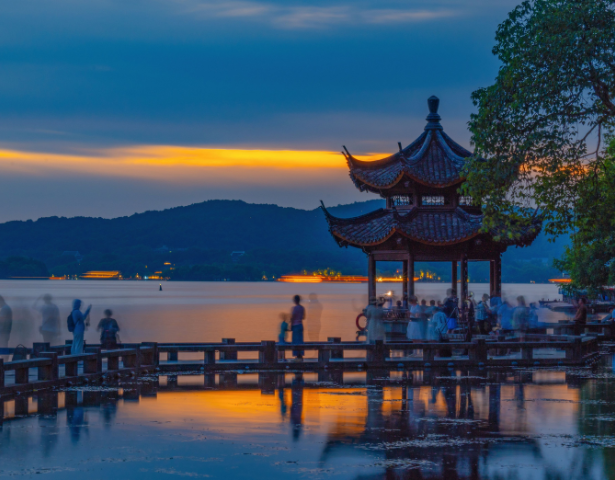
Hangzhou has been compared to a painting for centuries. West Lake reflects willow branches and wooded hills, temples disappear between trees, and beyond the water, rows of Longjing tea climb the slopes. In spring, Mudan, the tree peony, adds another color to this landscape. Associated for centuries with beauty, prosperity, and honor, the flower appears in gardens around the city just as Hangzhou itself begins changing with the season. New leaves return to the trees, people spend longer beside the water, and the first Longjing tea of the year is picked in the hills.
FLEETING LIFE: PEONY HANGZHOU follows Mudan into the wider season unfolding around it. Meet the flowers beside West Lake and beneath an ancient pagoda, but also discover what happens in Hangzhou while they are here. Walk through landscapes shaped by poets, put brush to paper with a local calligrapher, cross West Lake by hand-rowed boat, and taste Longjing during its short spring harvest. Follow residents into markets and green hills, experience the city unwinding beside an old canal, then watch another Hangzhou appear beneath a modern skyline. Mudan may bring you here, but over three days, the flower becomes part of something larger: a brief season moving through the whole city.
ITINERARY
HANGZHOU
Day 1: The Ink-Wash Landscape
Long before cameras could capture Hangzhou, poets wrote about its water and painters carried its mountains, flowers, and spring landscapes onto paper with brush and ink.
MUDAN BY THE WATER
Begin at Viewing Fish at Flower Harbor, where West Lake, willow trees, gardens, and the first Mudan of the journey come together. Walk through the Peony Garden as spring unfolds around you, with tree peonies opening in white, pink, red, and deeper shades while families, couples, photographers, and older residents stop along the paths to enjoy them. Your N.I.T.E. Insider introduces Mudan and the associations with beauty, prosperity, and honor that have followed the flower through Chinese culture for centuries, but there is no need to learn everything at once. Look closely at the tightly layered petals, notice how dramatically one bloom can differ from another, and see how people around you enjoy the flowers in their own ways. Before leaving, choose one Mudan that catches your attention. You will meet the flower again before Hangzhou lets you go.
THE POET’S WEST LAKE
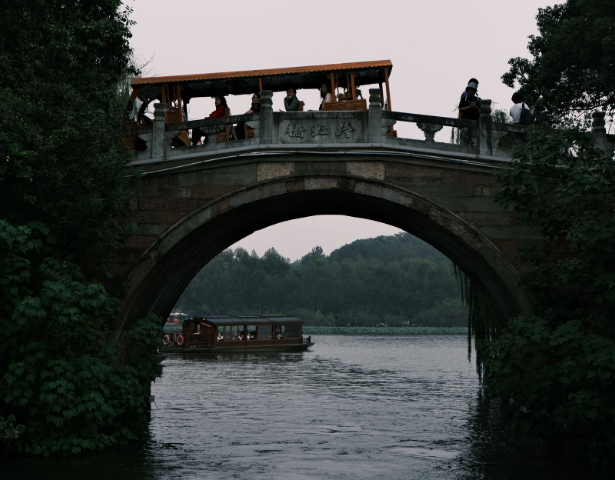
Continue through West Lake and Su Causeway, where bridges, willow branches, water, and distant hills create scenes that have inspired generations of Chinese poets and painters. An old map introduces Su Dongpo, the poet and statesman who governed Hangzhou during the Northern Song dynasty and whose work restoring West Lake helped create the causeway that still carries his name. Walk rather than rush, stopping when the landscape gives you a reason to, whether it is a boat passing beneath a bridge, fresh spring growth along the water, or people finding their own place to enjoy the season. Su Dongpo’s connection to Hangzhou eventually reaches beyond poetry and into the city’s food too. Over lunch, try local flavors that may include Dongpo Pork, bringing one of the names from the morning’s story directly to the table.
WORDS IN INK
After seeing the landscape that generations tried to capture in poems and paintings, sit down with a local calligrapher and try another Chinese tradition shaped by brush and ink. Begin by learning how pressure, speed, and movement change a single stroke, then explore a small selection of Chinese characters and short expressions connected to what surrounds you: Mudan, spring, water, flowers, wind, or another idea that has begun to mean something during the day. Rather than copying the same phrase as everyone else, choose something personal and work with the calligrapher to put it onto paper. The result does not need to be perfect. A brushstroke can hesitate, become unexpectedly heavy, or move differently from the one before it. Keep the finished piece as your own small record of Hangzhou in spring, created while the peonies outside are still here.
WHEN HANGZHOU UNWINDS
As evening arrives, sit down to a Hangzhou dinner built around the region’s delicate flavors before following the Grand Canal toward Dadou Road and Xiangji Temple Wharf, where the city settles into a different rhythm. Friends meet after work, couples walk beside the water, restaurant tables fill, bicycles pass, and conversations stretch into the evening. Sometimes music appears along the canal from people playing simply because they feel like playing. Walk without a checklist and see what the night gives you. Stop for something sweet, find somewhere to sit, or simply follow the canal a little farther. The Mudan gardens are behind you for the evening, but spring is still easy to recognize in a city spending more time outdoors, gathering beside the water and letting another day of the short season drift into night.
SIGNATURE MOMENTS
Mudan Beside West Lake
Walk Su Dongpo’s Causeway
Create Your Own Calligraphy
Authentic Hangzhou Dinner
Grand Canal After Dark
Day 2: The Floating Seasons
In the old paintings, flowers were never alone; water, mountains, trees, and empty space were all part of the same changing landscape.
THE WATER POEM
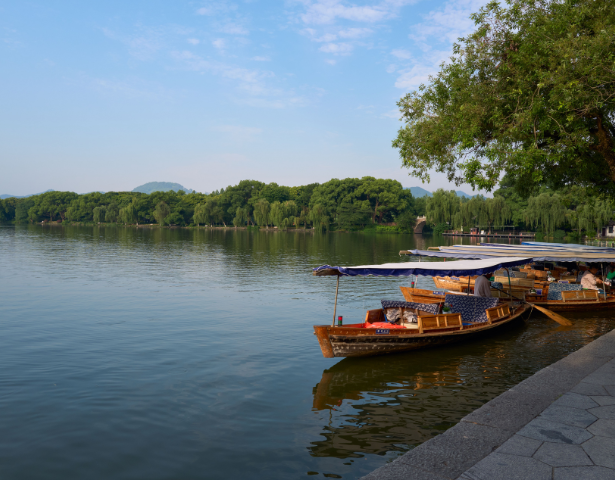
Return to West Lake, but this time leave the shore behind. Step aboard a traditional hand-rowed boat and watch the landscape change with every pull of the oar. From the water, willow branches lean toward the lake, flowering trees and fresh spring growth color the shoreline, bridges appear between trees, and distant hills slip in and out of view. Yesterday, spring first introduced itself through Mudan. From the boat, it becomes much larger, spreading across the water, trees, hills, and people gathering along the shore. Traditional Chinese handscroll paintings were revealed gradually rather than viewed all at once, with one section opening as another disappeared. West Lake begins to feel much the same. There is no single view to reach before moving on. Sit back, listen to the water against the boat, and watch another part of Hangzhou’s short spring slowly unroll around you.
BENEATH THE TEMPLE TREES
Leave the lake and travel into Hangzhou’s forested western hills, where the city begins to disappear beneath trees. At Faxi Temple, walk through stone paths and temple courtyards as incense rises between traditional buildings and worshippers move quietly through a place that remains part of everyday religious life. Rather than trying to understand every hall, statue, or symbol, follow the rhythm already happening around you. Watch someone pause with incense in hand, hear a bell somewhere beyond the courtyard, or step aside as people arrive to make offerings. Here, the same spring feels different: greener, quieter, carried through new growth, warmer air, and wooded hills. After the openness of West Lake, spend time inside this calmer side of the season before continuing deeper into the hills, where something else Hangzhou waits for each spring is beginning.
WHERE SPRING BECOMES TEA
At roughly the same time Mudan begins opening around Hangzhou, the city waits for another short spring arrival in the hills: the year’s first Longjing tea. Continue into Longjing tea country, where neat rows of tea bushes climb the slopes and fresh leaves are picked while they are still tender. When seasonal conditions allow, watch the leaves move from hillside to basket and into the hands of people who know how to shape and pan-fire them, then sit down and drink the tea close to where it was grown. Ask questions, compare cups, or simply watch the leaves slowly open in the water. The peonies and tea are completely different, but both belong to a moment people here wait for and enjoy before it passes. Afterward, return from the hills with time to slow down and refresh before heading back out for the evening.
THE OTHER HANGZHOU
As darkness arrives, travel toward Qianjiang New City and the Qiantang River, leaving temple roofs and tea terraces behind for towers, broad public spaces, and a skyline filled with light. Walk along the riverfront as office workers finish their day, families gather outside, friends take photographs, and couples look across the water toward the illuminated city. Depending on the evening’s schedule, the skyline may become part of one of Hangzhou’s light displays, but the modern city does not need a show to make its point. Find dinner nearby and spend time among the people enjoying this newer side of Hangzhou. The Hangzhou that inspired ancient poems and paintings never stopped changing. Every spring returns to a city that is somehow different from the one that welcomed it the year before.
SIGNATURE MOMENTS
Hand-Rowed West Lake Boat
Spring at Faxi Temple
Fresh Spring Longjing Tea
Hangzhou’s Modern Skyline
Qiantang River After Dark
Day 3: The Last Impression
Eventually every flower disappeared and every brush left the paper, but what remained was enough to remember what had once been there.
THE MORNING MARKET
Begin among the narrow lanes of Dama Nong, where Hangzhou’s morning is already well underway. Vegetables fill stalls, steam rises from breakfast foods, scooters squeeze through the street, and residents stop at vendors they have known for years. Look closely and see what spring has brought to the market that morning, from seasonal greens and ingredients to foods that appear and disappear as the months change. There is no prepared tasting or list of things you are supposed to try. Follow the smell of something cooking, ask a seller what they recommend, or see what the person ahead of you is taking home. You might leave with a warm bun, crispy fish, something sweet, or a little handmade sweet rice wine. Mudan may be the most celebrated flower of this journey, but in a neighborhood market, the season reveals itself in much more ordinary ways.
UP INTO WUSHAN
From Dama Nong, continue on foot toward Wushan, allowing the market streets to give way gradually to trees and hillside paths. There is no major attraction waiting at the end and no viewpoint everyone must reach. Walk only as far as feels right, find somewhere pleasant to stop, and open whatever you chose at the market below. Around you, residents walk, rest, talk, exercise, or simply sit beneath the trees while the city continues beyond the hillside. Share what you bought, compare discoveries, and look back toward the neighborhoods you have just walked through. By now, you have begun to recognize spring beyond the flowers. It is in the fresh tea you drank yesterday, the food changing with the market, the green returning to the hills, and the simple pleasure of being outside while the season is here.
MUDAN BENEATH THE PAGODA
Return to Mudan one final time at Six Harmonies Pagoda, where peonies bloom beneath one of Hangzhou’s historic landmarks near the Qiantang River. The setting feels different from the garden beside West Lake where the journey began. Here, Mudan is part of an established Hangzhou spring tradition, with seasonal peony exhibitions continuing to bring people together beneath the ancient pagoda. Walk among the blooms and see what you notice now. Perhaps a color or form catches your attention that you would have passed on the first morning. Perhaps you find yourself watching the people around the flowers as much as the flowers themselves. Some blooms may be opening, some at their fullest, and others already beginning to change. There is less to explain this time. Simply enjoy Mudan while it is still here.
SEND SPRING HOME
Before leaving Hangzhou, choose a postcard that reminds you of something from the journey. It might show Mudan, West Lake, a pagoda, tea hills, or the modern skyline, but what goes on the other side belongs entirely to you. Write to someone you wish had been here, or address it to yourself and send a small message back into your own future. You might write about the first peony that caught your attention, the sound of an oar on West Lake, young Longjing leaves opening in hot water, people laughing beside the canal, or the breakfast you carried into Wushan. Add a stamp and place the card into the post. By the time it reaches its destination, Hangzhou’s Mudan may already have disappeared for another year. The flower brought you here. What remains is the Hangzhou you discovered while it was blooming.
SIGNATURE MOMENTS
Dama Nong Morning Market
Breakfast on Wushan
Mudan Beneath Six Harmonies Pagoda
Hangzhou in Spring
Send Spring Home
INCLUDES
- 3 Days / 2 Nights Accommodation (4★ Hotel)
- All transportation within the experience
- Breakfast, lunch, dinner, snacks and drinks
- The artifacts (Black Passport & Digital artifact)
- English-speaking N.I.T.E. Insider
- All admissions and activities outlined in the itinerary
- International airfare to China
- Travel insurance (highly recommended)
- Visa fees (if applicable)
- Personal expenses & additional purchases outside the curated experience