
Product Details
- Home
- SOUTH KOREA – MIND, BODY & SEOUL: FLEETING LIFE™
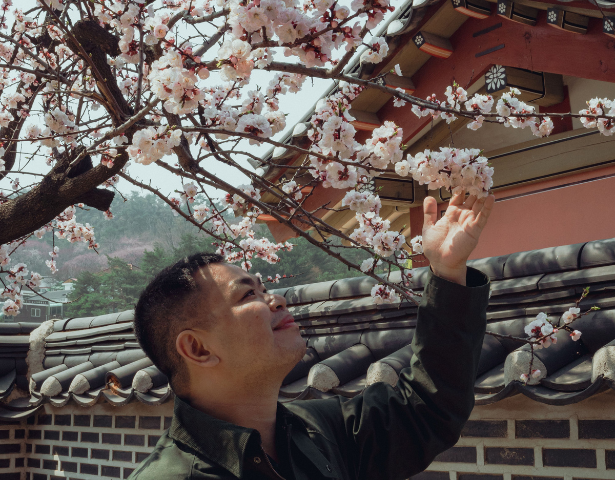
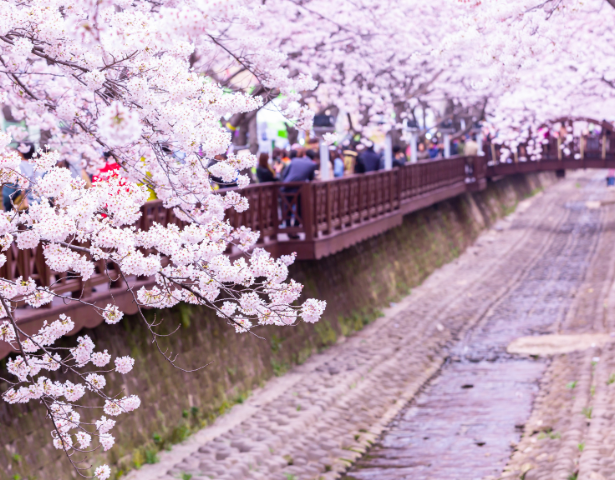
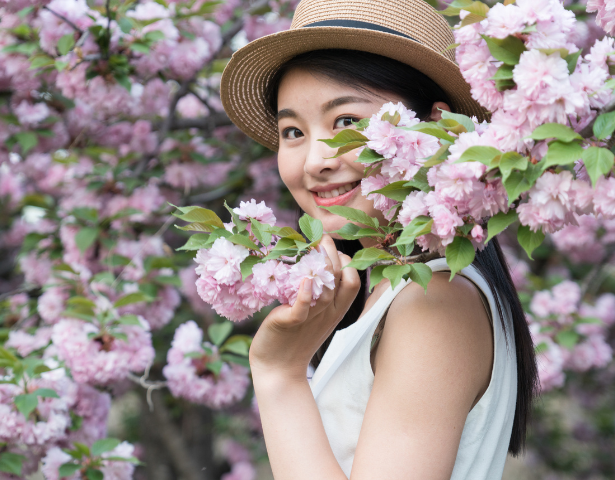
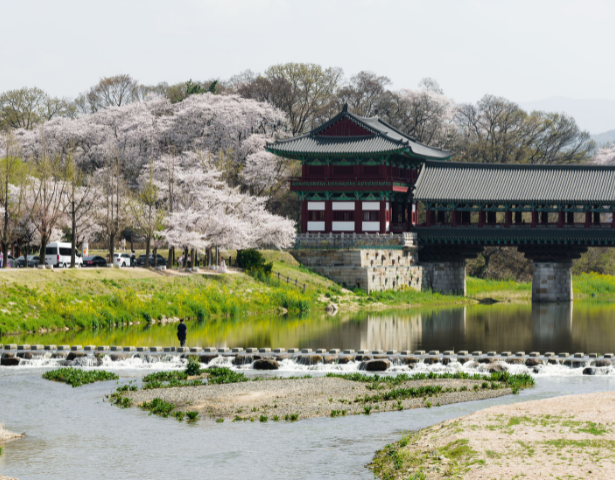
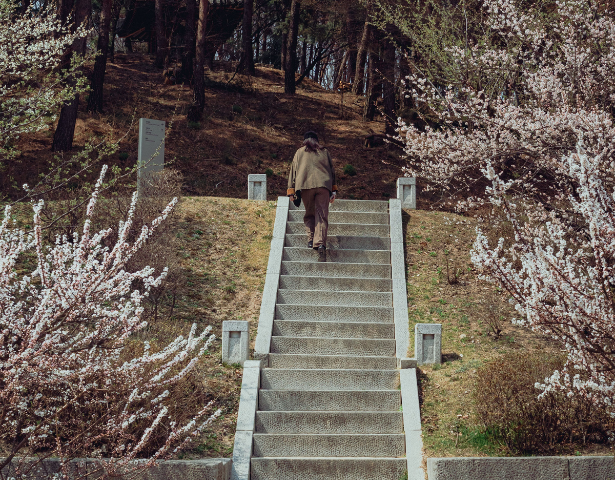
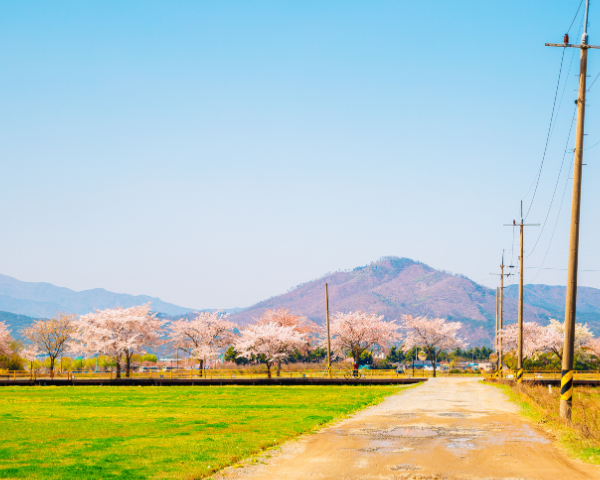
SOUTH KOREA – MIND, BODY & SEOUL: FLEETING LIFE™3 Days / 2 NightsFLEXIBLE SEASONAL DATESCherry blossoms in Jinhae and Gyeongju usually bloom from late March to early April. As bloom times vary each year, please check the latest forecast before choosing your dates.
$1,700 – $4,400Price range: $1,700 through $4,400
The price shown is per person, not per room. Use the quantity selector to choose the number of travelers and see your total price.
Limited packages available. Secure yours today with a 10% deposit.
THE L.U.X. PROMISE: THE ART OF TOTAL IMMERSION

ZERO FRICTION
At MASX, our guiding principle is LUX: Live Ultimate Xperiences — where true luxury is the freedom to stay present and fully immersed in the moment. To ensure your connection to the city’s quiet rhythm remains uninterrupted, we operate under a strict, silent protocol:
NO MENUS: We curate based on your pulse, you simply taste.

You aren’t led by a “guide.” You are accompanied by a N.I.T.E. Insider. They are local expert insiders who help you Navigate Immersive Travel Experiences. They are your sophisticated peers, your cultural translators, and your partners in after-dark cultural experiences that will open doors that don’t exist on any map.

Your journey exists in two worlds. The Black Passport is your shared tactile anchor — a physical relic to hold in your hands. The Digital Artifact is your high-fidelity digital legacy — a cinematic film to revisit together.
A physical book that preserves the story of your experience.
Your story is captured as it happens. Seven days after your experience, you will receive a curated collection of captured moments from the experience.
OVERVIEW
FLEETING LIFE: CHERRY BLOSSOM JINHAE steps into a city that seems to change personality when spring arrives. Cherry trees sweep over old railway tracks, climb roads towards the mountains, follow streams through the city, and turn ordinary streets into some of South Korea’s most celebrated spring scenery. But Jinhae during cherry blossom season is about much more than finding the prettiest view. Music drifts through festival streets, the smell of food rises from busy stalls, couples stop beneath the trees for photographs, friends carry snacks towards picnic spots, and pink seasonal treats and products seem to appear everywhere. For a short time, the air feels softer, the streets become brighter, and the entire city seems ready to go outside and enjoy itself.
This is beotkkot, Korean cherry blossom season, at its most joyful and alive. In Jinhae, spring is something people step into together, filling the days with food, music, picnics, photographs, romance, festival energy, and long evenings beneath illuminated trees. Yet beyond the celebration are quieter moments too: blossoms moving in the coastal breeze, neighborhoods carrying on with everyday life, and pink branches stretching across the hills above the city. Jinhae brings these different sides of Korean spring together without asking the season to be anything more serious than it needs to be. Colorful, social, playful, and sometimes beautifully simple, it is a city making the most of something everyone knows will not stay for long.
JINHAE
Day 1: Falling for Spring
Spring does not arrive quietly in Jinhae. Blossoms fill the railway, music reaches the streets, food stalls begin cooking, and suddenly the whole city seems to have somewhere to be.
THE FIRST BLOOM
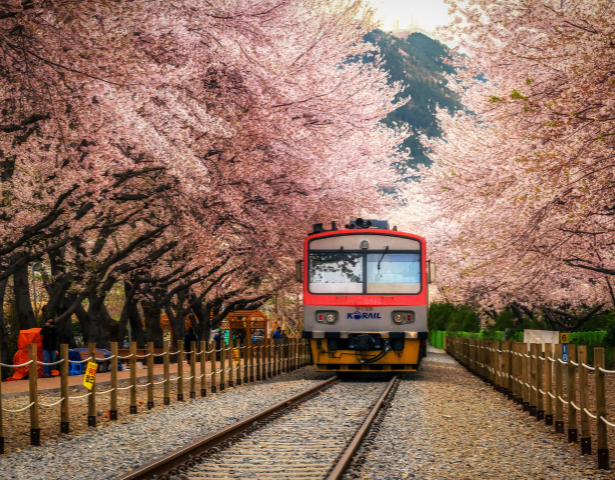
Begin at Gyeonghwa Station, where an old railway line disappears beneath one of Jinhae's most recognizable cherry blossom canopies. Walk beside the tracks in the cool spring air as branches stretch overhead, soft morning light filters through the pale pink flowers, and petals collect between the rails. Around you, couples take turns finding the perfect angle, friends squeeze together for photographs, and families move slowly beneath the trees with warm drinks and snacks in hand. There is no need to chase an empty railway or pretend you have the blossoms to yourself. The voices, footsteps, camera shutters, and people enjoying them are part of the season too. Pick up a warm or chilled spring drink if something catches your attention, take the photographs you came hoping for, and follow the tracks at your own pace. Jinhae has plenty more pink ahead, but this is where it makes its first impression.
SPRING IS OUTSIDE
Follow the growing sound of music and conversation towards the heart of Jinhae's spring celebration and spend the afternoon doing something wonderfully simple: join in. Browse festival streets and pop-ups, look through colorful seasonal goods, follow the smell of something sizzling towards a busy food stall, and choose lunch from whatever looks best that day. Try something familiar, something local, and perhaps something unnecessarily pink simply because this is the season for it. Depending on your dates, music, performances, markets, cultural events, or other cherry blossom programming may be happening nearby, and your N.I.T.E. Insider follows the day's schedule rather than forcing you towards one predetermined event. Stay when something is fun. Move on when something else catches your attention. Between warm food, music, conversations, photographs, bright spring colors, and blossoms floating above ordinary city streets, Jinhae begins to reveal what Korean cherry blossom season does best: it gives everyone a reason to go outside.
A DIFFERENT TASTE OF SPRING
After several hours among festival stalls and busy streets, leave the noise behind and settle into a more refined setting for dinner. Discover how a good Korean kitchen responds to spring through ingredients that are fresh and at their best at this particular moment. Seasonal greens and vegetables may arrive alongside carefully prepared banchan, rice, steaming soups, fish, or seafood from Korea's southern coast, depending on what the kitchen has chosen that evening. Warm dishes arrive at the table as the energy of the afternoon begins to soften. Street food eaten among festival crowds gives way to carefully prepared seasonal cuisine, bright spring colors to a quieter evening, and the noise outside to conversation around the table. Spring can be playful without always being casual. Tonight, experience its more polished side.
WHEN JINHAE GLOWS
Step outside after dinner into the cooler night air and discover what the blossoms become once daylight disappears. The exact route follows the season and the evening's events: perhaps an illuminated cherry blossom road is glowing nearby, music is carrying from a nighttime festival program, or a quieter stretch of trees offers somewhere to walk beneath the branches without the afternoon crowds. Follow whatever Jinhae is giving you that night. Warm pools of light catch the pale blossoms differently from the morning sun, conversations drift through the darkness, and petals occasionally flash through the light before disappearing again. Stop somewhere scenic for a warm drink or something chilled if the evening calls for it, or simply keep walking. Tomorrow brings Jinhae's biggest spring night, so there is no need to chase every light tonight. For now, enjoy realizing that even after an entire day surrounded by cherry blossoms, they can still surprise you after dark.
SIGNATURE MOMENTS
Gyeonghwa Cherry Blossom Railway
Join Jinhae's Spring Festival
Local Festival Food Discovery
Seasonal Korean Dinner
Cherry Blossoms After Dark
Day 2: Everyone Is Outside
When Jinhae turns pink, people make a day of it. Lunch travels outside, couples and families gather beneath the trees, and the celebration follows the blossoms from the water to the hills.
PACK THE PICNIC
Begin at Jinhae Jungang Market, where the morning belongs to ingredients, conversations, steaming food, stacked fruit, and people getting on with their day. Walk between the stalls and build lunch as you go rather than receiving a picnic somebody else chose for you. Pick up kimbap or another easy Korean favorite, add local specialties that look good that morning, choose bright red strawberries or other fruit when they are at their best, and leave room for something sweet. Taste something immediately if the smell of a hot griddle or freshly prepared snack makes waiting until lunch seem unreasonable. This is not a formal market tour and there is no checklist of foods you are required to try. Ask questions, point at things, change your mind, and put together the picnic you actually want to eat. Once the bags are full and one last snack has somehow joined them, step back into the spring air. Somewhere beneath Jinhae's pink canopy, lunch is waiting to happen.
PINK BY THE WATER
Carry the morning's finds to a quieter cherry blossom setting selected according to the bloom and atmosphere of the day. Away from the festival's busiest streets, spread out a picnic mat, open the bags from Jungang Market, and let lunch become part of the scenery. Around you, Korean spring continues without needing much explanation: friends share food, couples photograph each other between bites, families settle into their own corners, and someone nearby inevitably seems to have brought more snacks than anyone could possibly finish. Enjoy lunch beneath the trees, people-watch, take photographs, or simply spend some time beneath the pale branches overhead. Petals may land on the mat or disappear into the breeze before reaching it. There is nothing scheduled to accomplish here. For a while, experience beotkkot season in one of its simplest forms: good food, good company, fresh spring air, and a reason to stay outside a little longer.
ABOVE THE PINK CITY
Leave the picnic behind and follow the blossoms upwards towards Anmin Hill, where Jinhae begins to open beneath you. Walk a selected section of the cherry-lined road rather than treating the afternoon like a hike, stopping where the views pull your attention away from the path. Pink and white branches stretch along the hillside while Jinhae Bay, mountains, neighborhoods, and flashes of blue water appear beyond them, replacing the close canopy of Gyeonghwa and the intimacy of the picnic with something much larger. Feel the cooler coastal breeze against your face as you climb, listen as the festival noise fades into wind and footsteps, and watch loose petals lift from the roadside whenever a stronger gust moves through. Take photographs, but occasionally put the phone away too. From up here, the spring celebration you have been moving through since yesterday suddenly has a landscape around it. For these few weeks, the entire city seems wrapped inside the season.
WHEN THE PINK LIGHTS UP
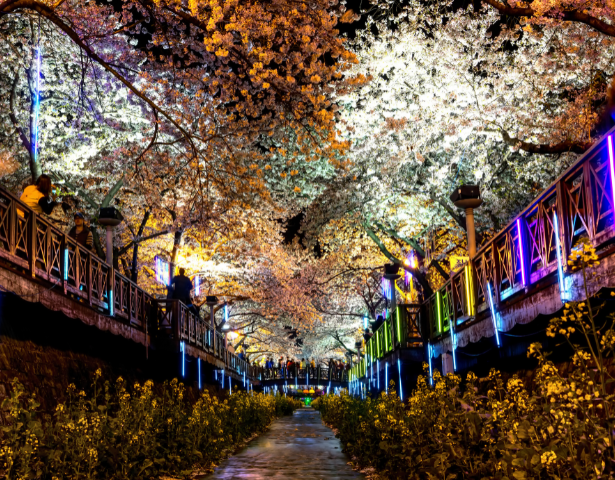
As evening arrives and the temperature begins to drop, head towards Yeojwacheon and let Jinhae turn the volume back up. Illuminated cherry trees follow the stream, their pale branches glowing pink and white above the dark water while couples, friends, photographers, food stalls, lights, and festival crowds fill the surrounding streets. Cross the bridges, including the stretch associated with Jinhae's famous Romance Bridge, and watch reflections tremble beneath the blossoms as the water passes below. Depending on the night's program, follow live music, performances, festival activities, or whatever spring event is worth joining during your dates. Warm your hands around something hot, grab a cold drink, share another snack, and don't worry about finding a private corner away from everyone. Tonight, everyone is part of the view: light above you, water below, music somewhere ahead, and an entire city making the most of spring while it is still here.
SIGNATURE MOMENTS
Shop Jinhae Jungang Market
Build Your Korean Spring Picnic
Picnic Beneath the Blossoms
Cherry Blossom Views From Anmin Hill
Yeojwacheon After Dark
Day 3: Keep This Spring
Eventually, Jinhae will turn green again. The festival will end, the streets will grow quieter, and another Korean spring will become something people remember until the blossoms return.
A FRESH START
Begin the final morning with another side of contemporary Korean spring: the small rituals of refreshing yourself as the season changes. Choose a K-beauty experience that suits you, perhaps Korean skincare, scalp care, or a custom fragrance, and settle in while cool textures, gentle scents, warm water, or practiced hands replace yesterday's festival lights and long walks. Spring in Korea does not only appear on the trees. It arrives in new colors, fragrances, products, beauty routines, and the simple desire to start the season feeling a little different. When authentic spring editions, floral fragrances, or seasonal colors are available, explore them if they appeal to you. Perhaps you leave with softer skin, a lighter head, or a scent that unexpectedly reminds you of the past two days. After a busy night beneath the blossoms, this is a slower way to enjoy the season: refresh, reset, and step back outside ready for one last day of spring.
JINHAE BETWEEN THE BLOSSOMS
Step back outside for lunch and spend some time with the version of Jinhae that continues after the festival banners eventually come down. Move through a local neighborhood as restaurant doors open for lunch, coffee drifts from cafés, scooters pass, and ordinary conversations replace the festival soundtrack. Notice small restaurants and shops, browse somewhere that catches your attention, or return to something you spotted earlier but did not have time to explore. Find lunch somewhere relaxed and order what sounds good rather than following a special cherry blossom menu. If a café window is full of spring desserts or a shop has seasonal products you want to investigate, go in. After two days of famous railway tracks, markets, festival streets, mountain views, and illuminated blossoms, there is something satisfying about allowing the city to become ordinary again. You already know why you came. This afternoon is simply time to enjoy being here.
ONE LAST BLOOM
For the final blossom experience, there is no location printed in advance. Your N.I.T.E. Insider follows current conditions and takes you wherever Jinhae is offering its strongest final scene, perhaps along a quieter section of Jangboksan, Dream Road, another local blossom road, or somewhere the season has unexpectedly held on particularly well. Walk without another attraction waiting immediately afterwards. Notice the color of the afternoon light through the branches, the temperature of the air, and the sound the wind makes when it moves through thousands of small leaves and petals. Take the photographs you still want and find one moment worth keeping. Then bring out an instant camera and capture a final Polaroid beneath the trees. It does not need to be perfectly posed. A laugh, wind moving through someone's hair, petals caught halfway to the ground, or the slightly imperfect photograph nobody planned may say more about these three days anyway. Hold it as the image slowly appears.
SEND SPRING FROM JINHAE
Before leaving, choose a postcard that feels like the Jinhae you want to remember and decide who should eventually find it in their mailbox. Find somewhere comfortable to sit, put pen to paper, and write to yourself, to someone at home, or to the person standing beside you. Tell them about the railway covered in pink, the smell of something cooking at the festival, the picnic in the spring air, the lights reflected along Yeojwacheon, or something entirely different that became your favorite moment. Slip the postcard together with your final Polaroid into an envelope, add the address and postage, and send it on its way from Korea. By the time it arrives, Jinhae may already be green again. Festival music will have stopped, the lights will be packed away, and Korea will have moved towards another season. But one small, colorful piece of the spring you were here to enjoy will still be traveling home.
SIGNATURE MOMENTS
Choose Your K-Beauty Experience
Local Jinhae Lunch and Café
Follow the Best Remaining Blossoms
Take Your Final Spring Polaroid
Mail Spring Home From Jinhae
OVERVIEW
FLEETING LIFE: CHERRY BLOSSOM GYEONGJU arrives when one of Korea’s oldest cities turns unexpectedly soft. Once the capital of the Silla Kingdom, Gyeongju is a landscape of enormous royal burial mounds, ancient stone, temple roofs, palace remains, and stories stretching back more than a thousand years. Then spring comes. Cherry trees brighten roads and lakesides, pale blossoms appear beside green tombs and old walls, and petals drift through places that have watched generations come and go. The blossoms do not belong to Gyeongju’s ancient history. They belong to its spring today, briefly framing an empire in pink.
And today’s Gyeongju is very much alive. Around the old city, hanok roofs shelter contemporary cafés and restaurants, young Koreans fill Hwangridan-gil, markets stay busy, and Bomun Lake draws people outside as the weather warms. Cherry blossom season brings these different Gyeongjus together beautifully: ancient and contemporary, quiet and playful, monumental and wonderfully ordinary. Sometimes the blossoms take center stage; elsewhere, they simply become part of the season unfolding around you. Spring will return to Gyeongju. The question is never whether the flowers will bloom again, but where life will have taken us when they do.
ITINERARY
GYEONGJU
Day 1: When Spring Meets History
Every spring, something new arrives among Gyeongju's oldest landscapes. Pink settles beside green royal mounds, petals cross ancient stone, and a city shaped by centuries begins another season.
THE ROYAL MOUNDS
Your first steps into Gyeongju lead between the enormous green curves of Daereungwon, where the tombs of Silla royalty rise quietly from the earth. In spring, cherry branches reach across the paths and pale petals gather against grass made brighter by the season. Walk through the grounds as locals, couples, and families stop beneath the trees, and step inside Cheonmachong, one of the excavated tombs open to visitors, to discover what once lay hidden beneath these seemingly simple hills. Back outside, royal history sits beneath your feet while a new season moves overhead. Before continuing, stop for Hwangnam-ppang, Gyeongju's famous red bean-filled bread, accompanied by tea or coffee. Warm pastry, cool spring air, green royal mounds, and pale blossoms offer a first glimpse of the contrasts that make Gyeongju so distinctive at this time of year.
WHERE THE OLD CITY BREATHES
Continue towards Cheomseongdae and the Eastern Historic District, where Gyeongju begins to feel less like a collection of monuments and more like one enormous historical landscape. Walk through open lawns and spring scenery towards the ancient stone observatory as your N.I.T.E. Insider introduces the Silla Kingdom that once made this city its capital. Discover why Cheomseongdae was built and how the surrounding area fitted into a city that stood at the center of Korean life more than a thousand years ago. Yet the landscape around these stories belongs just as much to the present. Families cross the lawns, bicycles pass nearby, couples stop for spring photographs, and flowering branches appear beside ancient stone. Gyeongju's history remains visible almost everywhere, but in cherry blossom season it becomes the backdrop to another generation simply enjoying spring.
OLD ROOFS, NEW GYEONGJU
Leave the ancient landscape behind and continue into Hwangridan-gil, where traditional-looking roofs now shelter one of Gyeongju's most popular contemporary neighborhoods. Settle in for lunch before exploring streets filled with cafés, restaurants, small boutiques, design shops, photo studios, desserts, and young Koreans enjoying the warmer weather. This mixture of old architecture and modern lifestyle has given the area a distinctly newtro character, where Gyeongju's visual past is continually being reinterpreted by the city living inside it today. Follow whatever catches your attention along the way, whether that is a contemporary shop, a seasonal drink, a spring dessert, or simply a side street worth wandering down. Only a short distance separates these busy streets from the royal mounds, yet the atmosphere has changed completely. Ancient Gyeongju has not disappeared. It has simply become part of something new.
SPRING AFTER DARK
As evening arrives, experience another expression of the Korean season with a refined dinner shaped by ingredients at their best at this particular time of year. Allow the menu to reveal how the kitchen interprets spring through flavor, presentation, and seasonal produce without expecting any particular dish. Afterwards, continue towards Gyochon and Woljeonggyo Bridge as darkness settles over the old city. Traditional roofs fade into shadow while the illuminated bridge glows across the water, its reflection stretching beneath it whenever the surface becomes still. Walk through the surrounding historic streets and along the riverside, where night lighting and spring scenery give familiar architecture an entirely different atmosphere. When official spring performances, markets, illuminations, or other seasonal events happen to coincide with your stay, the evening may shift to include them. Otherwise, enjoy Gyeongju after dark at its own pace, with cafés, desserts, or a drink nearby if the night continues.
SIGNATURE MOMENTS
Walk Among Silla's Royal Mounds
Taste Gyeongju's Hwangnam-ppang
See Cheomseongdae in Spring
Explore Newtro Hwangridan-gil
Seasonal Korean Dinner and Woljeonggyo
Day 2: Spring Is for Living
When the days grow warmer, Gyeongju moves outside. Markets fill the morning, blankets appear beside the water, and beneath the blossoms, spring becomes something to eat, share, laugh through, and live.
PACK THE PICNIC
Begin the morning at Seongdong Market, where the voices of vendors, cooking aromas, fresh produce, seafood, prepared dishes, and local shoppers reveal another side of everyday Gyeongju. Walk through the market and discover what is fresh, popular, or particularly good that morning. Browse Korean side dishes, snacks, fruit, rice dishes, sweets, and whatever seasonal discoveries appear along the way, tasting a few things before choosing what you would actually like to take for lunch. There is no prepared picnic menu waiting today. Your N.I.T.E. Insider can help with recommendations and conversations with vendors, but the final selection is yours. Traditional favorites may sit beside something completely unfamiliar, and everyone may leave the market carrying something different. Once your picnic is ready, leave the busy aisles behind and head towards the water for one of Gyeongju's favorite spring landscapes.
PINK BY THE LAKE
Continue to Bomun Lake, where cherry trees follow sections of the water and spring opens into a much wider landscape of blossoms, hills, walking paths, and sky. Find a comfortable place in a suitable viewing area and enjoy the picnic gathered at the market while people around you make the most of the season. Couples walk beneath the trees, families spend the afternoon outside, friends stop for photographs, and conversations drift across the lakeside whenever the breeze moves through. Bomun has become one of Gyeongju's best-known cherry blossom areas, and its modern resort setting offers a completely different view of the city from yesterday's royal landscapes. Spend time beneath the trees, explore the lakeside, photograph the spring scenery, or simply enjoy being outside with good food. Cherry blossom season in Korea is as much about what happens beneath the flowers as the flowers themselves.
SPRING ON THE WATER
Leave the lakeside behind without leaving the lake. Head onto Bomun itself aboard one of the leisure boats operating on the water, with an electric Moon Boat or another suitable option selected according to current conditions and availability. From the lake, Gyeongju's spring scenery takes on a different scale. Cherry trees become pale lines along the shore, hills stretch behind them, and the breeze across the water carries the sounds of the resort area away. Enjoy the views, take photographs, or simply spend some time out on the lake before returning to shore. After yesterday's ancient observatory, royal tombs, and traditional streets, Bomun reveals how contemporary Gyeongju enjoys spring: outdoors, relaxed, and with plenty of room for fun. Out here, the blossoms belong to a lighter side of Gyeongju: spring on the water, with nowhere particularly serious to be.
THE PALACE IN THE WATER
As night arrives, return to Gyeongju's Silla past at Donggung Palace and Wolji Pond, once part of a royal palace complex and today one of the city's most beautiful places after dark. Follow the path around Wolji as illuminated roofs appear across the water and return again in reflection, changing with every angle and ripple across the pond. Discover how the palace complex was used during the Silla period while allowing the nightscape itself to remain the main attraction. Golden architecture, dark water, trees, and cooler evening air create a completely different atmosphere from the brightness of Bomun earlier in the day. Gyeongju has moved from a local market to a blossom picnic, from spring on the water to the reflection of an ancient palace, all within a few hours. Here, old and new rarely need to compete. They simply keep appearing beside one another.
SIGNATURE MOMENTS
Shop Seongdong Market
Build Your Korean Spring Picnic
Picnic Beneath the Bomun Blossoms
Boat Across Bomun Lake
Donggung & Wolji After Dark
Day 3: Another Spring Will Come
Soon the petals will fall and Gyeongju will turn green again. Spring will find its way back next year, but who we are, where we are, and who stands beside us may have changed.
SPRING AT THE TEMPLE
Begin the final morning at Bulguksa, one of Korea's most important Buddhist temples and one of the great surviving expressions of the Silla period. Walk through temple grounds surrounded by mountain scenery, stone terraces, wooden halls, tiled roofs, and the quieter sounds of morning. Your N.I.T.E. Insider introduces the temple's place in Silla history and the ideas behind its architecture while leaving time to experience the setting itself. Around the wider Bulguksa area, cherry blossoms add another layer to the landscape when bloom conditions align, appearing against old roofs, stone, and the green slopes beyond. Spring here feels different from the crowds of Hwangridan-gil or the open water of Bomun, with cooler mountain air, birds, temple sounds, and occasional traces of incense shaping the morning. The blossoms will not remain for long, but Bulguksa has watched seasons come and go for centuries.
ONE LAST TASTE
After leaving Bulguksa, return towards the city for lunch and one final taste of Gyeongju. Settle into a local restaurant where the menu follows Korean ingredients and flavors suited to the season, allowing the kitchen to decide what spring looks like on the table that day. There is no royal banquet or historical recreation here, simply good Korean food enjoyed in the city as it exists now. Afterwards, keep some time open for the parts of Gyeongju that may have caught your attention over the previous two days. Return to a café, look for something you meant to buy, try another local sweet, or explore a little more of the surrounding streets. Famous landmarks may be what first brought you to Gyeongju, but smaller discoveries often become the things that make a place feel familiar. By now, the city has had time to become more than a list of places you came to see.
THE SCENT OF THIS SPRING
Continue to a local fragrance studio and explore another way of carrying the season home. With guidance from a fragrance maker, discover floral, green, fresh, woody, and other notes before creating a personal blend inspired by your own experience of Gyeongju in spring. When authentic cherry blossom notes, seasonal fragrances, or special spring options are available, explore them alongside the wider selection rather than following a predetermined recipe. Your fragrance may remind you of the blossoms, fresh grass around the royal mounds, mountain air at Bulguksa, the lake, old wooden buildings, or something entirely different. Blend and adjust the scent until you find a combination that feels right, then give the finished fragrance a name of your own. Long after the blossoms have disappeared, opening the bottle may bring a small piece of this particular Gyeongju spring back with it.
SEND SPRING HOME
For the final chapter, follow the season to one last cherry blossom setting selected according to the bloom conditions and atmosphere of the day. Spend time beneath the trees, take the photographs you still want, and receive one final Polaroid from your journey. Before leaving Gyeongju, choose a postcard and write it to yourself. Cherry blossoms will fall soon, but they will return next spring, and again the year after that. Gyeongju will still be here too. What may be different is everything surrounding them: where you live, who you travel with, what you are hoping for, and the life waiting for you at home. There is no required message to write. The postcard is simply a reminder that you were here for this spring, that you stopped long enough to notice it, and that if another spring calls you back to Gyeongju someday, you already know the way. Leave the postcard with MASX to send after your departure. You will arrive home first. Spring will follow later.
SIGNATURE MOMENTS
Bulguksa in Spring
Taste Gyeongju's Season
Create Your Spring Fragrance
One Final Cherry Blossom View
Mail Spring Home From Gyeongju
INCLUDES
- 3 Days / 2 Nights Accommodation (4★ Hotel)
- All transportation within the experience
- Breakfast, lunch, dinner, snacks and drinks
- The artifacts (Black Passport & Digital artifact)
- English-speaking N.I.T.E. Insider
- All admissions and activities outlined in the itinerary
- International airfare to South Korea
- Travel insurance (Highly recommended)
- Visa fees (If applicable)
- Personal expenses & additional purchases outside the curated experience