

Product Details
- Home
- INDONESIA – EXOTIC ISLANDS: ECHOES OF AN EMPIRE™
INDONESIA – EXOTIC ISLANDS: ECHOES OF AN EMPIRE™1 DayFLEXIBLE DATES
$290 – $790Price range: $290 through $790
The price shown is per person, not per room. Use the quantity selector to choose the number of travelers and see your total price.
Limited packages available. Secure yours today with a 10% deposit.
THE L.U.X. PROMISE: THE ART OF TOTAL IMMERSION

ZERO FRICTION
At MASX, our guiding principle is LUX: Live Ultimate Xperiences — where true luxury is the freedom to stay present and fully immersed in the moment. To ensure your connection to the city’s quiet rhythm remains uninterrupted, we operate under a strict, silent protocol:

You aren’t led by a “guide.” You are accompanied by a N.I.T.E. Insider. They are local expert insiders who help you Navigate Immersive Travel Experiences. They are your sophisticated peers, your cultural translators, and your partners in after-dark cultural experiences that will open doors that don’t exist on any map.

Your journey exists in two worlds. The Black Passport is your shared tactile anchor — a physical relic to hold in your hands. The Digital Artifact is your high-fidelity digital legacy — a cinematic film to revisit together.
A physical book that preserves the story of your experience.
Your story is captured as it happens. Seven days after your experience, you will receive a curated collection of captured moments from the experience.
OVERVIEW
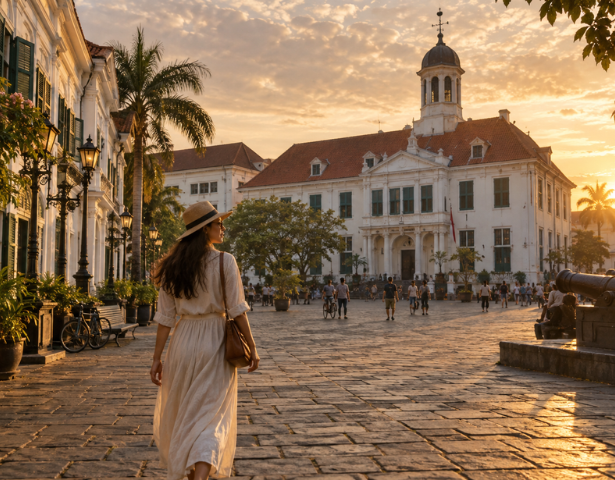
Long before the Dutch called it Batavia, Jakarta’s coast was already connected to a wider world. Ships arrived at Sunda Kelapa carrying goods, people, beliefs, and ideas, while generations of exchange helped shape the cultures that would eventually define the city. Colonial rule transformed that world on an enormous scale. Canals cut through Batavia, trading networks expanded, European institutions rose around them, and Indonesian flavors entered elaborate colonial dining rooms. Yet the city never belonged to one culture alone. Even the carefully planned Batavia struggled against the tropical environment it was designed to control.
ECHOES OF AN EMPIRE: JAKARTA moves through that story from the quiet edge of the water to Kota Tua after dark. Taste the Betawi traditions that grew from Jakarta’s cultural encounters, follow the canals of a city once imagined through Dutch urban ideals, enter the former seat of Batavia’s government, and watch wooden trading vessels gather at a harbor older than the colonial city itself. As night falls, return to streets and buildings that have found entirely new purposes. Batavia may have left its architecture behind, but Jakarta decided what came next.
ITINERARY
JAKARTA
Chapter I: Before Batavia
Before canals divided the city and trading houses lined its streets, people were already arriving, exchanging, cooking, adapting, and creating something new along this coast.
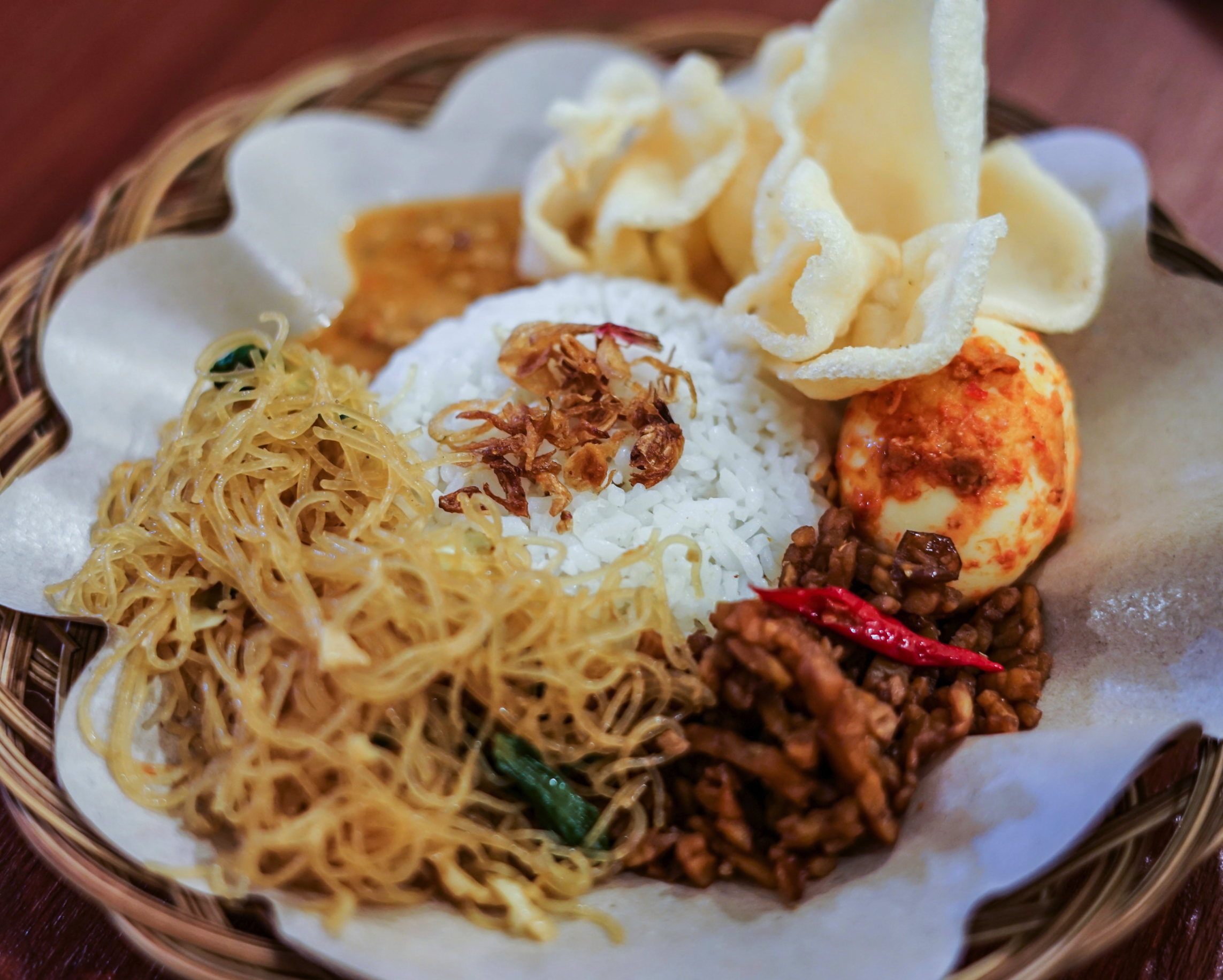
Begin beside the water with an easy morning walk as Jakarta gradually wakes around you. Slow the pace for a few quiet minutes, listening to the city before tasting jamu, Indonesia’s traditional herbal drink. Then settle into a clean local setting for a Betawi breakfast of nasi uduk — fragrant rice cooked with coconut milk and aromatics — accompanied by strong kopi tubruk, traditional Indonesian coffee brewed directly with finely ground beans. These are everyday flavors rather than remnants of a colonial table, and that distinction matters. Betawi culture grew through generations of interaction among communities with different origins. Before entering the world the Dutch called Batavia, begin with the Jakarta that emerged from those encounters.
Chapter II: Amsterdam in the Tropics
Batavia was built around an ambitious idea: impose the order of a European trading city upon tropical Java. The environment had other plans.
Follow Kali Besar through the old city and cross the historic Kota Intan drawbridge while tracing the waterways that once formed part of Batavia’s commercial machinery. Dutch planners drew heavily from the canal cities they knew, creating channels that moved people and goods through a city increasingly shaped by global trade. But European urban ideas met very different conditions here. Tropical heat, heavy rains, sedimentation, poor drainage, sanitation problems, and stagnant water helped turn parts of the canal city dangerously unhealthy. Over time, colonial administration and European settlement increasingly shifted toward higher ground farther south. What was meant to demonstrate control instead revealed its limits: a city could be drawn according to imported ideas, but the landscape still had a say.
Chapter III: The Rice Table
When cultures meet, food rarely remains exactly where history tries to place it. Recipes travel across kitchens, dining rooms, social boundaries, and generations.
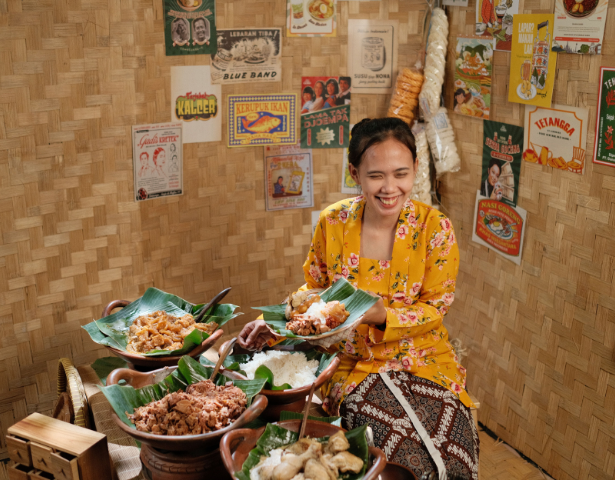
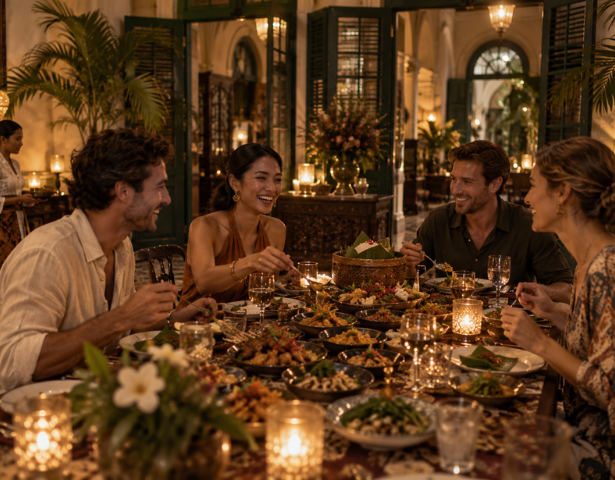
Enter a carefully selected heritage setting for an elevated lunch inspired by the rijsttafel, or “rice table,” tradition that developed in the Dutch East Indies. Numerous Indonesian dishes arrive together, creating a table of contrasting spices, textures, regions, and cooking traditions. During the colonial era, this abundance was reorganized into an elaborate style of dining associated with status and spectacle, yet the flavors at its heart remained overwhelmingly Indonesian. Rendang, sate, sambal, vegetables, rice, and other selections may vary according to the setting, allowing the meal to tell a broader story than any single recipe. Rather than recreating colonial luxury, taste the more interesting result: Indonesian cuisines entering that world, surviving it, and remaining long after the dining society around them disappeared.
Chapter IV: Where Batavia Ruled
Every system of power eventually needs a room from which decisions are made. In Batavia, many of those decisions passed through the building still standing over the old city square.
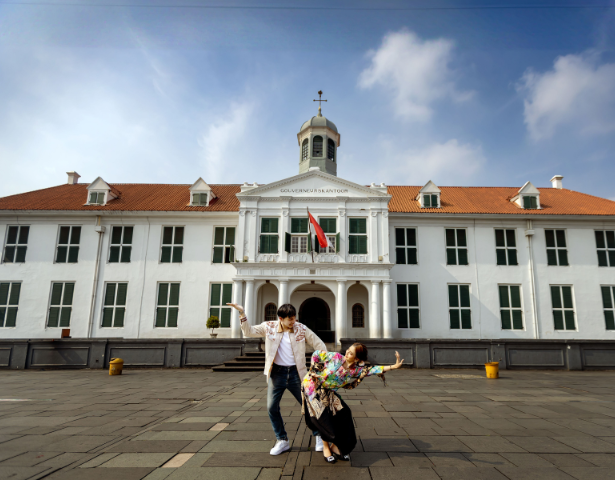
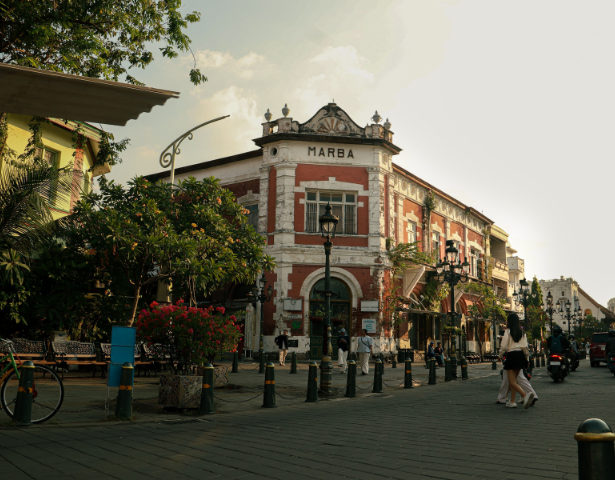
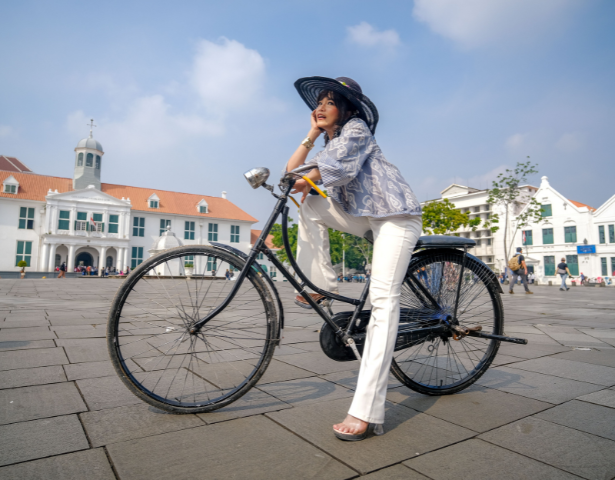
Step inside the former Batavia City Hall, completed in the early eighteenth century and now home to the Jakarta History Museum. Move through the rooms of a building that once represented the administrative authority of the colonial city, looking beyond its imposing facade to the system it helped govern. Trade, law, punishment, commerce, and everyday urban life all intersected with institutions such as this. Then emerge into Fatahillah Square, where the meaning of the building changes simply because the world around it has changed. Continue into a nearby restored heritage setting for a quiet drink and a moment to observe the square. The architecture remains recognizable, but the authority it once represented has become history.
Chapter V: Before and After Batavia
The canals, city hall, and trading houses belonged to Batavia. The harbor’s story began long before any of them existed.
Travel toward Sunda Kelapa as afternoon gives way to sunset and Jakarta meets the sea. Long before Dutch ships arrived, this harbor connected the region with trading networks stretching across Asia and beyond. Today, traditional wooden vessels still line the working port, continuing an Indonesian maritime story that cannot be contained within the colonial period. Walk along the harbor as crews, cargo, timber, ropes, and towering hulls replace the formal facades of Kota Tua. As the sky changes over the water, look back at the day’s story from a different perspective. Batavia once made this port central to its ambitions, but it did not create the world around it. Sunda Kelapa was here before Batavia. It remained after Batavia was gone.
Chapter VI: What Jakarta Became
By night, the story no longer belongs to Batavia. The flavors are Betawi, the streets belong to Jakarta, and buildings created for an earlier world are alive for entirely different reasons.
Begin with a relaxed local dinner built around the cuisine Jakarta made its own. Taste a Betawi specialty such as soto Betawi — a rich beef soup traditionally served with a creamy coconut or milk-based broth — with the possibility of other local flavors such as kerak telor, a savory rice-and-egg specialty associated with Betawi food culture. Then, just as dinner appears to close the journey, a sealed letter arrives. Follow its clues back through Kota Tua after dark toward an address kept secret until the final moment. Behind the doors of a restored heritage setting, settle in with music and a locally inspired cocktail or non-alcoholic creation. The walls may belong to another century. The night does not. Batavia became history. Jakarta kept living.
OVERVIEW
Semarang has always looked outward. Long before railways crossed Java, its position on the northern coast brought Javanese, Chinese, Arab, and later European worlds into contact through trade, migration, food, and everyday life. Dutch colonial rule transformed the scale of that exchange. Commercial offices filled the old quarter, railways connected the interior with the port, and European architecture adapted to a tropical city thousands of miles from where its ideas began. Yet Semarang was never simply remade in Europe’s image. The people who lived here continued shaping the city around their own tastes, traditions, and ways of life.
ECHOES OF AN EMPIRE: SEMARANG follows those layers from a quiet morning beside the water to the illuminated streets of Kota Lama after dark. Taste a city shaped by different cultures, stand inside the headquarters of the company behind Indonesia’s first railway, dine within a setting connected to the city’s colonial-era dining culture, and discover how European buildings changed in response to Java. As evening arrives, the story shifts from what colonialism built to what Indonesia inherited. Old offices, shops, and warehouses have found new lives, revealing a city that did not simply preserve its past. It continued writing over it.
ITINERARY
SEMARANG
Chapter I: Before the City Wakes
Before streets, stations, and trading houses begin telling Semarang’s history, take a few moments to notice something simpler: water moving, leaves stirring, and a city slowly waking around you.
Begin with an easy morning walk beside the water, allowing the pace to slow before the historical journey begins. Pause somewhere quiet for a few minutes of stillness, listening rather than looking for the next thing to do, before tasting a small serving of jamu — Indonesia’s traditional herbal drink. Then follow the waking city toward breakfast at an established local restaurant, where crisp Lumpia Semarang — a spring roll filled traditionally with bamboo shoots and other savory ingredients — reveals another kind of cultural encounter through Chinese and Javanese influences. Pair it with Indonesian coffee and discover how Java’s beans became part of a vast global trade that passed through ports such as Semarang. Before the Dutch story grows larger, breakfast establishes something important: this city has never belonged to only one cultural world.
Chapter II: The Machine Behind the Empire
An empire could claim territory with soldiers and laws. Holding together its economy required something else entirely: movement.
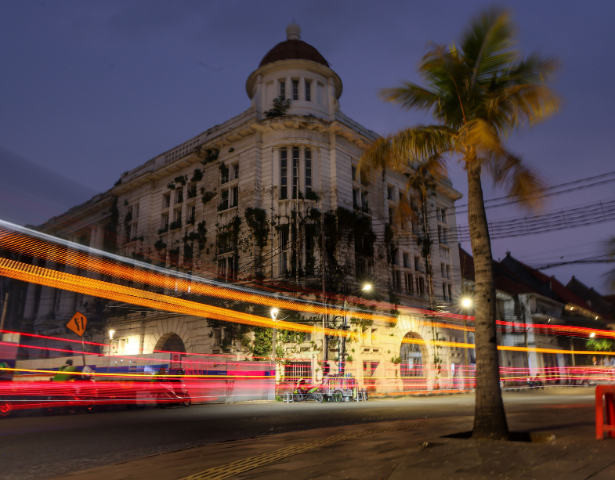
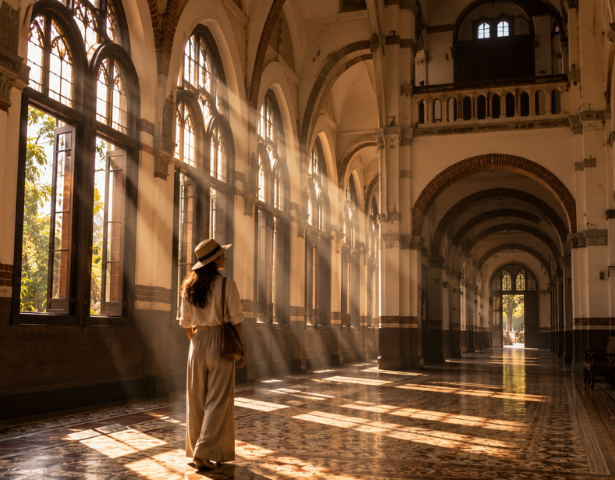
Enter Lawang Sewu, the monumental former headquarters of the Nederlandsch-Indische Spoorweg Maatschappij, the private railway company behind Indonesia’s first railway line. Walk beneath high ceilings and along repeating corridors while tracing how rail transformed the relationship between Java’s interior, Semarang, and wider commercial networks. Yet the building’s story did not end with the company that commissioned it. Japanese occupation, the struggle surrounding Indonesian independence, railway administration, military use, abandonment, and restoration all added new chapters to the same walls. What began as infrastructure serving a colonial economy eventually became part of an independent nation’s inheritance. Standing inside Lawang Sewu today means encountering more than Dutch ambition. It means seeing how a building can outlive the system it was created to serve.
Chapter III: What Stayed on the Menu
History does not survive only in monuments. Sometimes it remains because generations keep ordering the same dish.
Step inside a carefully selected historic dining setting where Semarang’s colonial-era culinary world can still be encountered through the atmosphere and the food. Settle in for a heritage lunch inspired by a period when Indonesian, Chinese, and European flavors increasingly shared the same tables, kitchens, and city. Rather than a conventional modern meal, selected dishes reveal how imported dining traditions encountered local ingredients and tastes before gradually becoming part of Semarang’s own culinary memory. A classic such as bestik lidah — beef tongue prepared in a local interpretation of the European steak tradition — may form part of the experience, alongside other recipes chosen according to the setting and season. The purpose is not to recreate colonial luxury, but to taste how culinary influences survived by changing.
Chapter IV: Built for Another Climate
Architecture can arrive with plans and proportions. The moment it meets a different climate, landscape, and way of living, those ideas begin to change.
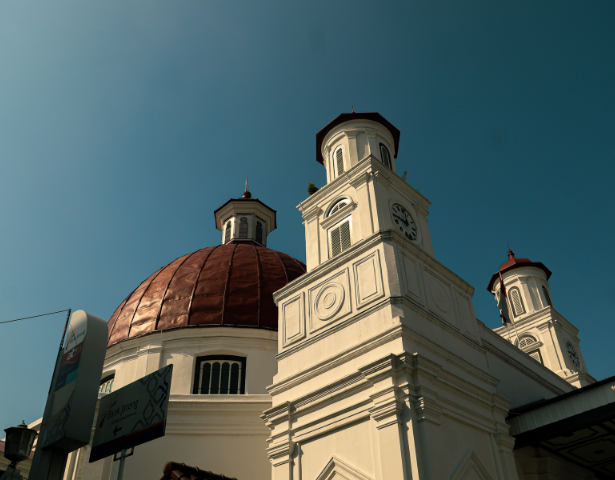
Return to Kota Lama and step inside Gereja Blenduk, whose history stretches back to the eighteenth century even though the domed landmark seen today emerged through later rebuilding and renovation. Look beyond its European appearance to consider a more practical question: what happens when architecture conceived through foreign traditions has to function beneath Java’s heat, humidity, and tropical light? Continue through the surrounding quarter and into an accessible restored heritage setting, noticing high ceilings, openings, shaded spaces, and other responses to local conditions along the way. Then settle in for a drink and look back at the district from within one of the buildings that survived it. The architecture may carry European lines, but more than two centuries in Semarang have made its story inseparable from the city around it.
Chapter V: The City Inherited
The people who inherit a city also inherit a choice. Leave its old buildings behind, preserve them untouched, or decide they can become something else.
As afternoon softens into evening, move slowly through Kota Lama while its facades begin catching the last light. Former offices, trading houses, shops, and commercial buildings still carry the architecture of a colonial economy, but their purposes have changed. Look closer and the district begins revealing its second life: heritage structures restored as restaurants, cafés, creative spaces, and places where people meet rather than conduct the business they were originally built to serve. The transformation is not complete, nor does preservation erase the history behind these walls. That tension is part of what makes Kota Lama meaningful. Stay as daylight fades and streetlights begin to glow. The buildings remain, but the world moving through them now belongs to a different Semarang.
Chapter VI: After the Old World
By night, Kota Lama no longer feels like a preserved historical district. Music, conversation, light, and movement return the old commercial city to the present.
Settle into a relaxed local dinner as the day’s historical trail appears to be reaching its end. Then a sealed letter arrives. Inside, a series of clues replaces the itinerary, leading you back into Kota Lama after dark and toward a final address that has remained hidden until now. Follow the trail through illuminated streets before stepping inside a restored heritage venue whose walls once belonged to Semarang’s commercial past. Where goods and business once defined these buildings, contemporary Semarang now gathers over music, food, and drinks. Raise a cocktail or non-alcoholic creation to the final transformation of the day. Empires leave structures behind, but they cannot decide what future generations will do with them. Semarang inherited the setting. The city chose what happened next.
INCLUDES
- All transportation within the experience
- Breakfast, lunch, dinner, snacks and drinks
- The artifacts (Black Passport & Digital artifact)
- English-speaking N.I.T.E. Insider
- All admissions and activities outlined in the itinerary
- International airfare to Indonesia
- Accommodation
- Travel insurance (Highly recommended)
- Visa fees (If applicable)
- Personal expenses & additional purchases outside the curated experience