
Mel
Hangzhou, China: When West Lake Brings Everyone Together
In This Article
Hangzhou is one of those cities that seems to have been romanticized for centuries.
And perhaps with good reason.
It is known for West Lake, for Longjing tea, for silk, for temples, gardens, bridges, and landscapes that have inspired poets and painters for generations.
Stories have grown around this place too.
The Legend of the White Snake, one of China’s best-known love stories, is forever connected to West Lake and Leifeng Pagoda. Emperors wrote about the scenery. Artists tried to capture it. Travelers crossed long distances simply to see it.
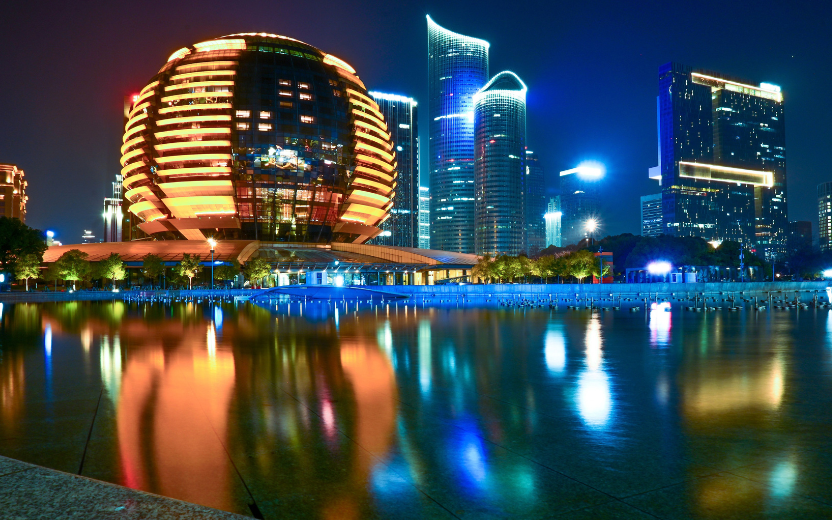
Even today, when Hangzhou has become a modern city of technology, business, shopping malls, and fashionable neighborhoods, West Lake remains at its heart.
But perhaps the most interesting time to understand the lake is not during the busiest part of the day.
It is when the sun begins to disappear.
When the Lake Changes
Late afternoon around West Lake is beautiful in the way you expect it to be.
Boats move slowly across the water.
Hills rise softly in the distance.
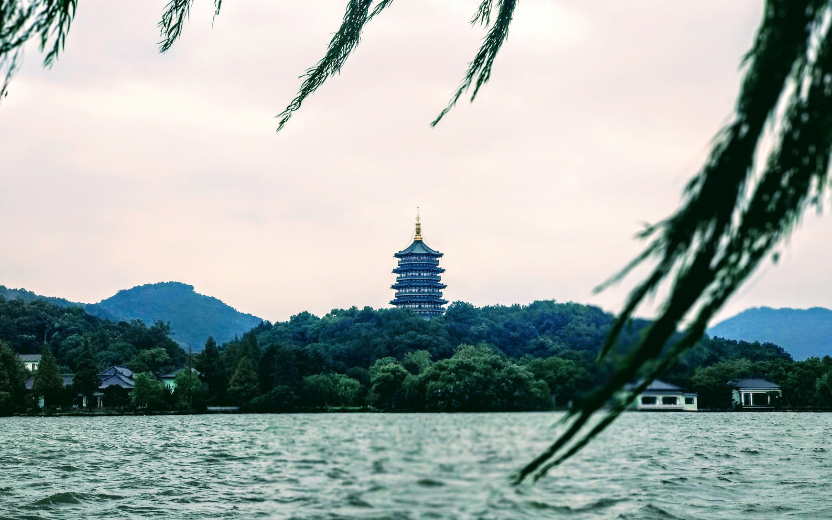
Leifeng Pagoda stands above the trees.
The city seems to disappear just enough for you to understand why generations of people described this landscape with such affection.
Then the light starts to change.
The heat of the day softens.
The sky darkens.
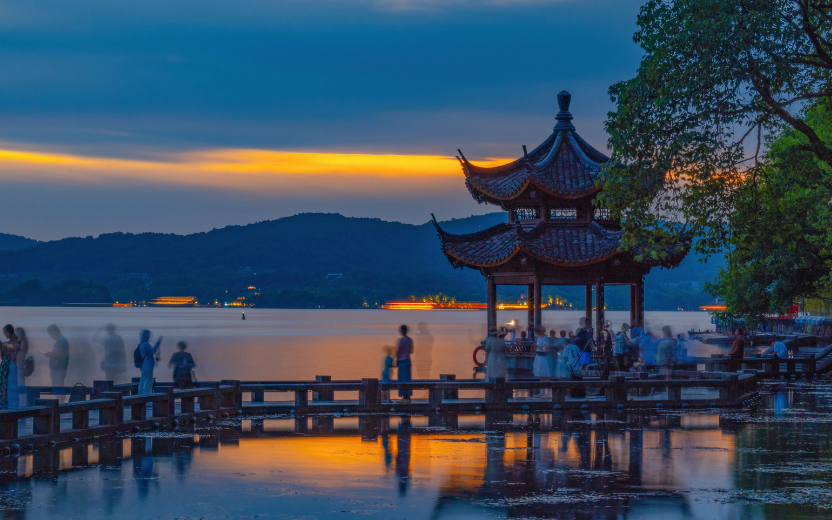
Lights begin appearing around the lake.
And slowly, something else happens.
West Lake stops feeling like somewhere people came to visit.
It begins to feel like somewhere people came to stay.
Families arrive for an evening walk.
Friends meet after work.
Couples stroll slowly beside the water.
Older people sit together and talk.
Children run ahead while their parents follow behind.
Someone buys a drink.
Someone else carries dessert.
A group of friends finds somewhere to sit and, without really planning to, stays there for an hour.
The famous scenery is still there.
But now people become part of it.
When an Old Story Becomes Part of the Night
Hangzhou has always been a city of stories.
Around West Lake, it is difficult to separate the landscape from the legends that have grown around it.
The Legend of the White Snake tells of love, devotion, separation, and sacrifice, and many of its most famous scenes are connected to places around the lake.
During the day, these stories can feel historical.
Something you learn about.
Something a guide explains.
But at night, when the water turns dark and lights begin reflecting across its surface, it becomes easier to understand how stories like this survived for so long.
There is something naturally theatrical about West Lake.
Water.
Mist.
Pagodas.
Bridges.
Mountains disappearing into darkness.
Then music begins.
Light moves across the water.
A performance unfolds directly upon the lake.
For a while, nature and theatre seem to become the same thing.
And perhaps that is part of Hangzhou’s charm.
Its old stories have never completely disappeared.
They simply continue in new forms.
A Different Hangzhou Just Beyond the Lake
Afterwards, walk toward Hubin.
The atmosphere changes almost immediately.
The quiet romance of the lake gives way to cafés, stylish stores, restaurants, rooftop spaces, bright windows, and groups of people deciding where to go next.
This is modern Hangzhou.
Young professionals meet for drinks after work.
Friends share desserts.
Couples sit outside talking long after they have finished eating.
Families walk together without seeming particularly interested in going anywhere.
Someone is taking photos.
Someone is carrying shopping bags.
Someone is simply leaning against the railing, looking toward the lake.
And somehow, none of this feels disconnected from the centuries-old landscape just a few steps away.
That may be one of the things Hangzhou does particularly well.
The old and the new do not seem to fight each other.
They simply share the same evening.
The Lake as a Meeting Place
There are famous places that people visit because they feel they should.
You take the photograph.
You admire the view.
Then you leave.
West Lake feels different.
People seem to build ordinary life around it.
A walk after dinner.
A conversation with a friend.
A family evening.
A first date.
An old couple sitting quietly beside each other.
None of these moments will appear in a guidebook.
But perhaps these are the moments that tell you most about the city.
Because after dark, you begin to notice that West Lake is not only a symbol of Hangzhou.
It is a meeting place.
A place where people make time for each other.
In a country where cities can move incredibly quickly, there is something comforting about watching so many people deliberately slow down.
They walk.
They sit.
They talk.
They look at the water.
Nothing particularly remarkable has to happen.
Being together seems to be enough.
Maybe This Is Why West Lake Has Lasted
For more than a thousand years, people have looked at West Lake and found something worth remembering.
The scenery, of course, is beautiful.
But perhaps landscapes remain meaningful because people keep placing their lives inside them.
Generations have come here.
They have fallen in love.
Told stories.
Walked with friends.
Brought their children.
Sat beside the water.
Watched the sun disappear.
And then another generation came and did the same thing.
Tonight, the clothes are different.
The skyline is different.
There are smartphones, rooftop lounges, shopping districts, and cafés serving carefully photographed desserts.
But beside the lake, people are still doing something remarkably simple.
They are spending time together.
Friends laugh beneath the lights.
Families walk slowly beside the water.
Couples stop on bridges without any particular reason to move on.
Visitors find themselves slowing down too.
And perhaps that is when Hangzhou becomes easiest to understand.
Not when you are trying to see everything.
But when you stop.
When the lake becomes dark.
When the city lights appear.
And when, surrounded by strangers doing exactly the same thing, you realize that everyone has come here for something surprisingly similar.
A little beauty.
A little time.
And someone to share it with.
Discover the stories, people, and evenings that make China unforgettable with MASX’s I-TEN-AIR-RARE-RE: CHINA packages! https://masxworld.com/product/china-mystique-and-intrigue-i-ten-air-rare-re/