
Mel
Katong & Joo Chiat: Where Singapore’s Many Stories Meet
In This Article
Singapore is often introduced through its skyline.
Marina Bay.
Glass towers.
Gardens that look futuristic.
Airports that feel like cities.
Everything is polished, efficient, and very modern.
But if you want to understand how Singapore became the place it is today, sometimes you have to leave the skyline behind.
Head east instead.
Walk through Katong and Joo Chiat.
Here, Singapore feels lower, slower, more colorful, and somehow more personal.
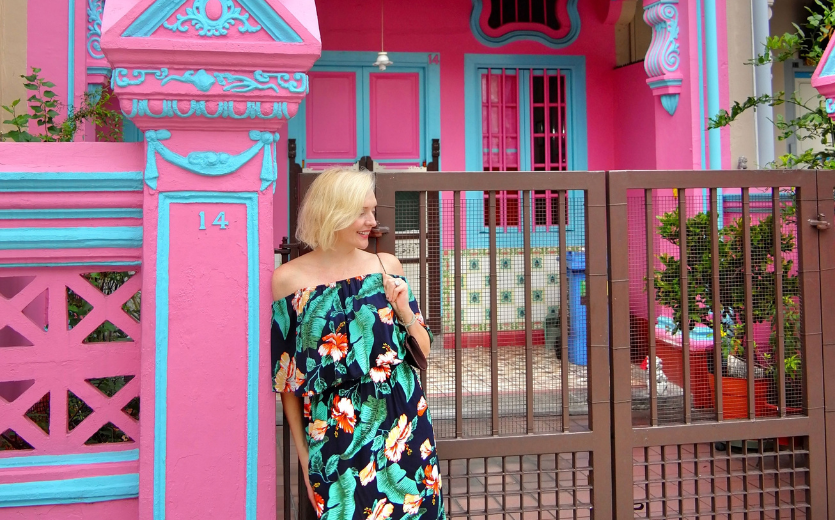
Pastel shophouses line narrow streets.
Old coffee shops sit beside modern cafés.
A family-run food stall may be only a few doors away from a stylish boutique.
Churches, temples, homes, restaurants, and small businesses share the same neighborhood.
And suddenly, Singapore begins to feel less like a perfectly planned city and more like a place shaped by generations of people.
A Neighborhood Built by Movement
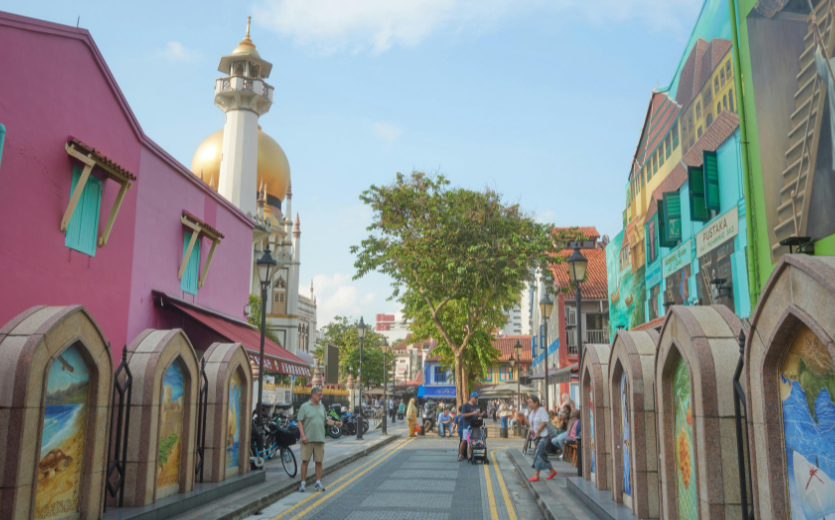
Katong and Joo Chiat were not always part of the dense city we know today.
In the 19th century, much of the area was made up of coconut and cotton plantations, villages, and seaside homes. As Singapore grew in the early 20th century, people began moving east from the crowded city center, creating new residential neighborhoods with their own shops, schools, religious institutions, and communities.
That movement brought different groups together.
Peranakan families settled here.
Eurasian communities grew around churches and schools.
Malay, Chinese, Indian, and other communities lived, worked, traded, cooked, worshipped, and raised families nearby.
Over time, the area developed its own identity.
Not one culture.
Many.
That is important because Singapore itself was shaped in much the same way.
The Peranakan Story Is Everywhere
Katong and Joo Chiat are especially known for their strong Peranakan heritage.
Peranakan culture grew from generations of cultural mixing in Southeast Asia, particularly among Chinese communities who settled in the region and developed distinct local traditions in language, food, clothing, architecture, and family life.
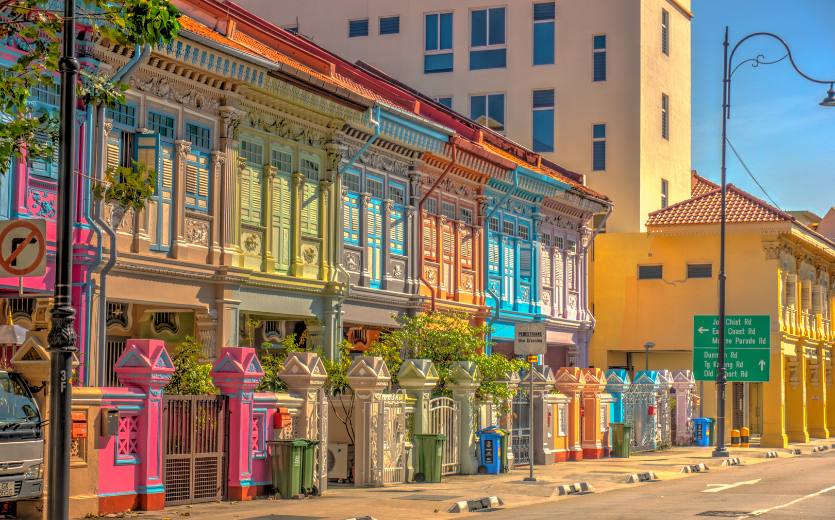
By the early 20th century, prominent Peranakan families were buying land in the area, building homes and businesses, and helping shape the streetscape that visitors still recognize today. Many of the colorful shophouses and terrace houses around Joo Chiat Place, Everitt Road, and Koon Seng Road reflect that history.
And they are difficult not to notice.
Mint green.
Pale blue.
Pink.
Yellow.
Decorative tiles.
Floral details.
Wooden shutters.
Elaborate façades that make an ordinary residential street feel unexpectedly theatrical.
You stop to take a photograph.
Then another.
But after a while, you realize these buildings are not simply pretty backgrounds.
They are evidence.
Proof that generations of people built lives here.
Old Singapore, Still Being Used
That may be one of the nicest things about Joo Chiat.
Its history does not feel sealed away.
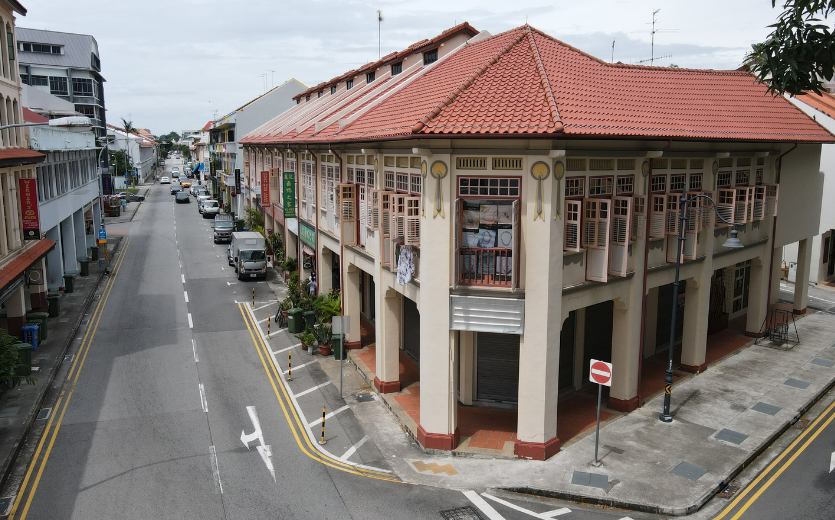
The neighborhood is protected as a conservation area, with many early 20th-century shophouses and terrace houses preserved as part of Singapore’s architectural heritage. Joo Chiat received conservation status in 1993, with additional buildings protected in later years.
But conservation here does not mean everything has become a museum.
People still live in these buildings.
They open cafés inside them.
They run restaurants.
They sell clothes, desserts, furniture, coffee, and food.
A century-old streetscape continues to change without completely disappearing.
And perhaps that is a good metaphor for Singapore itself.
Always moving forward.
But carrying pieces of what came before.
Come Hungry
Of course, it is almost impossible to talk about Katong without talking about food.
This is Singapore.
Eventually, every story becomes a food story.
Katong and Joo Chiat have long been known as a food destination, particularly for Peranakan and local dishes.
You may come for laksa.
Then notice a bakery.
Then something fried.
Then a dessert you have never tried.
Then somebody walks past carrying something that smells better than whatever you were originally planning to eat.
Plans change quickly here.
And that is exactly how you should explore the area.
Do not make the day too efficient.
Stop.
Look.
Follow smells.
Order something because the person at the next table seems very happy eating it.
Have coffee somewhere old-fashioned.
Then have another one somewhere very modern.
Katong works best when you allow old and new to interrupt each other.
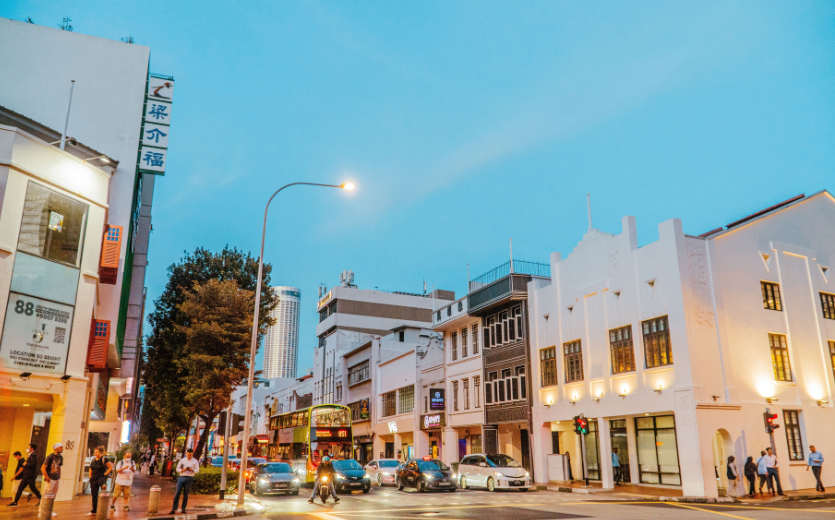
The Beauty Is in the Mixture
One street feels deeply traditional.
The next feels fashionable.
One shop has clearly been there for generations.
Another opened recently and somehow fits perfectly into the same row of old shophouses.
An elderly resident walks past with groceries.
A group of young people is photographing drinks for Instagram.
A family sits down for lunch.
Tourists stop in front of the colorful houses.
Life keeps moving around the architecture.
Nothing feels frozen.
That mixture is the point.
Singapore is sometimes described as multicultural in a very neat way.
Chinese.
Malay.
Indian.
Eurasian.
Peranakan.
Different boxes placed beside each other.
But walking through Katong and Joo Chiat makes the story feel much less tidy.
Cultures influence each other.
Food changes.
Languages mix.
Architectural styles borrow from different traditions.
Families build identities that do not fit neatly inside one category.
That is how cities really form.
Slowly.
Messily.
Humanly.
A Different Way to Understand Singapore
You can learn a lot about Singapore by looking at Marina Bay.
It tells you where the country has gone.
Its ambition.
Its planning.
Its confidence.
Its extraordinary transformation.
But Katong and Joo Chiat tell you something different.
They show you where many of those stories came from.
Migration.
Community.
Family.
Adaptation.
Different people bringing different traditions and gradually creating something that belonged specifically to Singapore.
Joo Chiat is officially recognized as one of Singapore’s important historic secondary settlements, preserving architecture that traces the city’s outward growth during the first half of the 20th century.
But you do not need to know any of that before arriving.
You can feel it.
In the houses.
In the food.
In the small shops.
In the way old buildings continue to hold modern life.
Maybe This Is Singapore Too
Singapore is famous for changing quickly.
And it should be.
Few places have transformed so dramatically in such a short period of time.
But perhaps places like Katong and Joo Chiat matter precisely because they remind us that progress does not always have to mean forgetting.
A city can build upward without completely erasing what was already there.
Old houses can hold new businesses.
Traditional food can sit beside modern cafés.
Heritage can remain part of everyday life rather than becoming something people only visit on school trips.
And people from completely different backgrounds can leave traces of themselves in the same neighborhood.
Walk slowly enough through Katong and Joo Chiat, and Singapore begins to feel different.
Less like a city designed all at once.
More like a city assembled over generations.
One family.
One shop.
One recipe.
One house.
One story at a time.
And perhaps that is one of the most beautiful ways to understand Singapore.
Not as one perfect identity.
But as many different lives, somehow learning to belong in the same place.
Ready to experience the stories, cultures, and communities that shaped Singapore? Discover it with MASX and book your Xperience today.