
Mel
Jodhpur: Where Rajasthan Turns Blue
In This Article
Jodhpur is the kind of city that announces itself before you fully arrive.
First, there is the fortress.
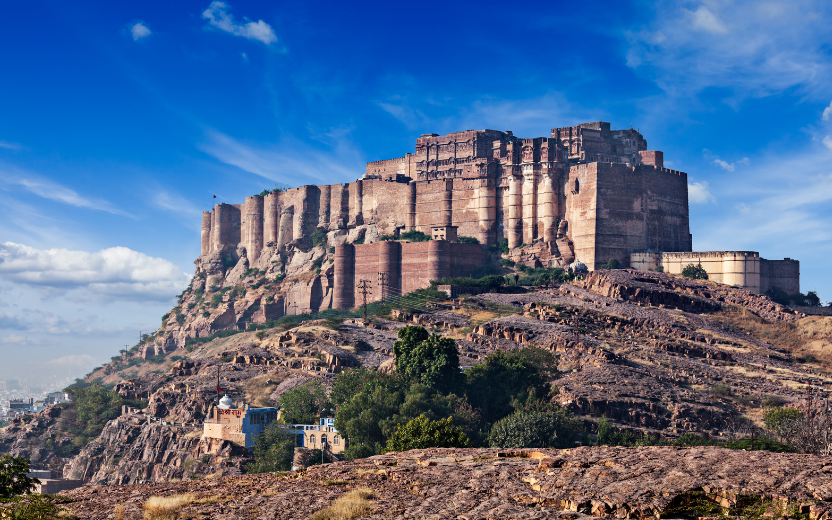
Mehrangarh rises above the city like something carved out of the rock itself, enormous and watchful, dominating the skyline from almost every angle. Below it, the old city spreads outward in a maze of narrow lanes, rooftops, temples, markets, and houses painted in shades of blue.
That contrast is what makes Jodhpur so memorable.
It feels grand and intimate at the same time.
There is the scale of royal Rajasthan, with monumental architecture, palace histories, and the legacy of Marwar’s rulers.
And then there is the life happening underneath it all.
Scooters squeezing through alleys.
Neighbors talking from doorways.
Laundry hanging above blue-painted walls.
Temple bells.
Street food frying somewhere nearby.
A shopkeeper waving you over.
Someone carrying groceries home beneath one of India’s most imposing forts.
Jodhpur does not feel like a city that has separated its history from everyday life.
The two exist on top of each other.
The Blue City
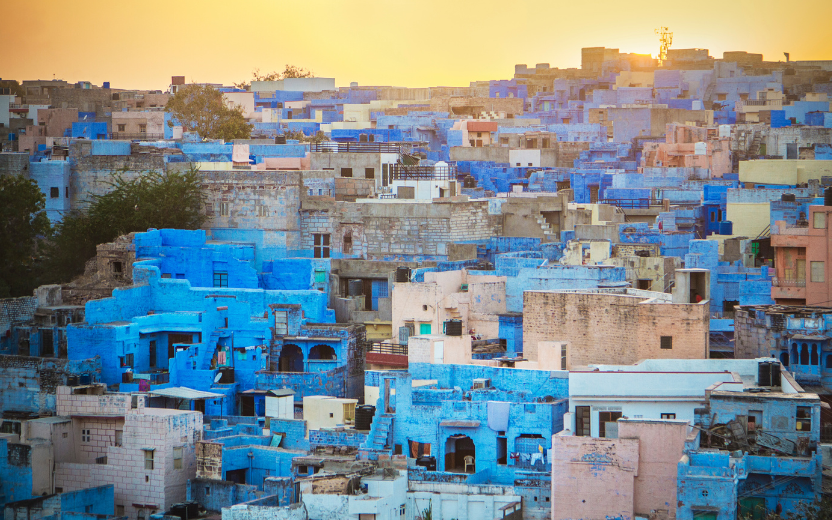
Jodhpur is best known as the Blue City, and from above, it is easy to understand why.
Climb high enough around Mehrangarh Fort and the old neighborhoods below begin to look like a patchwork of indigo, turquoise, powder blue, and faded cobalt.
The exact reasons behind the blue-painted houses are layered in history and local tradition, but whatever their origin, the color has become inseparable from Jodhpur’s identity.
From street level, though, the Blue City feels very different from the postcard view.
The lanes are tight.
The walls are weathered.
Some houses are brilliantly painted, while others have faded under years of desert sun.
Doors open into courtyards.
Small shrines appear unexpectedly between homes.
Children pass on bicycles.
People stop to talk.
This is not simply a “blue attraction.”
It is a living neighborhood.
And that is what makes wandering through it so rewarding.
Mehrangarh Above Everything
Then there is Mehrangarh Fort.
It is difficult to overstate how much presence it has.
Built high above the old city, the fort feels less like a building and more like part of the landscape.
Massive gates lead into courtyards and richly decorated rooms, while the ramparts open onto sweeping views across Jodhpur.
From up there, the city makes sense in a different way.
You see the blue neighborhoods.
The dense old town.
Newer districts stretching farther into the distance.
And suddenly, the relationship between fortress and city becomes clear.
For centuries, Mehrangarh was not simply something above Jodhpur.
It was the center of power, identity, and protection around which the city grew.
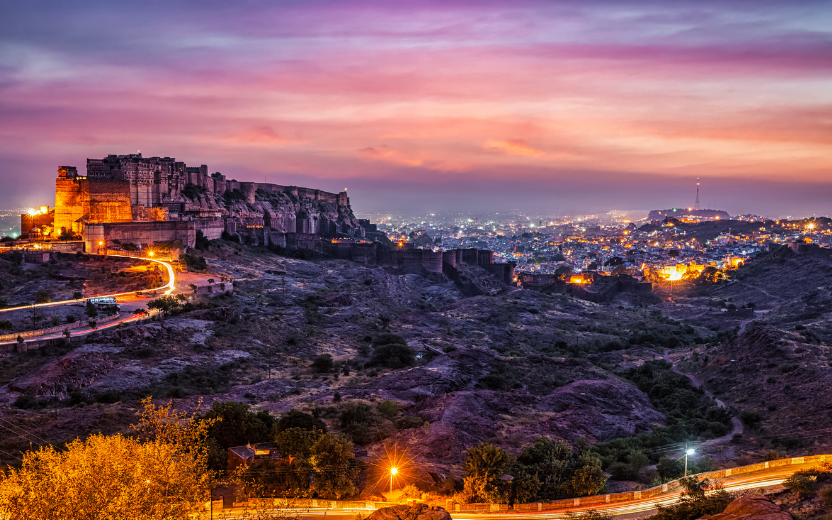
Even now, after dark, the illuminated fort still seems to hover above everything.
Dinner beneath it can feel surprisingly atmospheric.
You look up between conversations and there it is again, glowing above the city.
A City of Flavor
Jodhpur is also a city that is very easy to remember through food.
Rajasthan is famous for bold flavors, and Jodhpur has plenty of its own favorites.
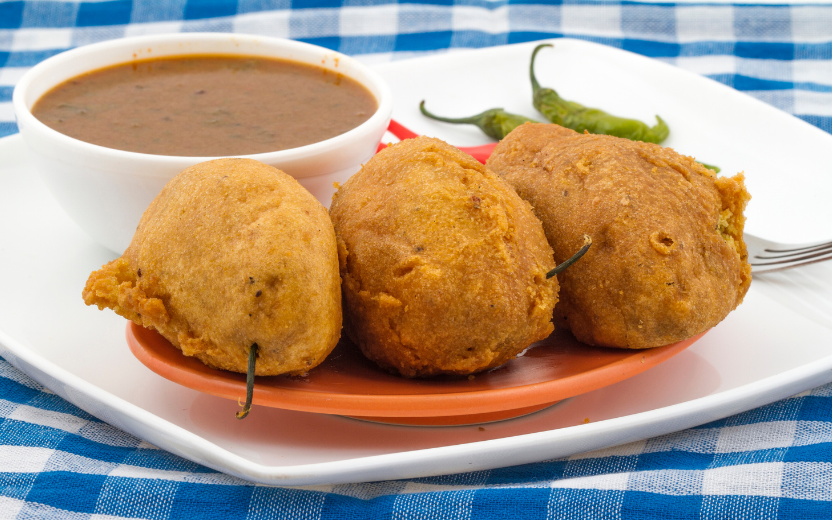
Mirchi vada brings together chili, potato, spice, and deep-fried comfort.
Makhaniya lassi is thick, sweet, rich, and particularly welcome after walking through the heat.
Then there are savory snacks, sweets, chai, and small food shops that seem to attract a constant flow of regulars.
The best way to experience this side of the city is not necessarily through one carefully planned meal.
Walk.
Try something.
Keep going.
Stop when something smells good.
Let someone recommend what to order.
Jodhpur is the kind of place where a snack can easily become one of the things you remember most.
Beyond the City Walls
Part of Jodhpur’s appeal is also where it sits.
The city is surrounded by the harsher beauty of Rajasthan.
To the south and southeast lie the Aravalli landscapes, with rocky hills, villages, and historic temple sites such as the remarkable Ranakpur Jain Temple.
Farther west, the landscape gradually opens toward the Thar Desert and Jaisalmer.
Jodhpur therefore feels like a transition point.
It has the density and history of a major Rajasthan city, but the desert is never very far away.
You can feel it in the dry air.
In the color of the stone.
In the food.
In the pace of the afternoon.
In the way the city seems to glow warmer as the sun drops.
When Jodhpur Is Best
Jodhpur is impressive in daylight.
But evening changes it.
The heat softens.
The streets become easier to wander.
Food stalls grow busier.
Families and friends come out.
The old buildings catch warm light.
And Mehrangarh begins to glow above the city.
That is when Jodhpur becomes less about sightseeing and more about atmosphere.
You may spend the day learning about rulers, forts, architecture, and history.
But at night, the city becomes simpler.
Walk through the old streets.
Order something spicy.
Find somewhere to sit.
Look up at the fort.
Listen to the city around you.
Jodhpur has a way of making Rajasthan feel both enormous and very close.
Royal history towers above you.
Everyday life unfolds beside you.
And somewhere between the two is the real character of the Blue City.
Would you like to experience Jodhpur for yourself? Explore MASX India packages here. https://masxworld.com/india/