Lynn Taitt: The Trinidad-born Guitarist Who Helped Give Birth to Reggae
When people talk about the origins of reggae music, the conversation usually begins with basslines, drums, producers, or later—its global icons. Guitarists are rarely at the center of that story.
That omission has quietly distorted history.
Because before reggae had a name, before it carried political weight or spiritual symbolism, before it traveled the world—it had a feel. And that feel was shaped, refined, and standardized by a Trinidad-born guitarist named Lynn Taitt.
If reggae is a language, Lynn Taitt helped write its grammar.
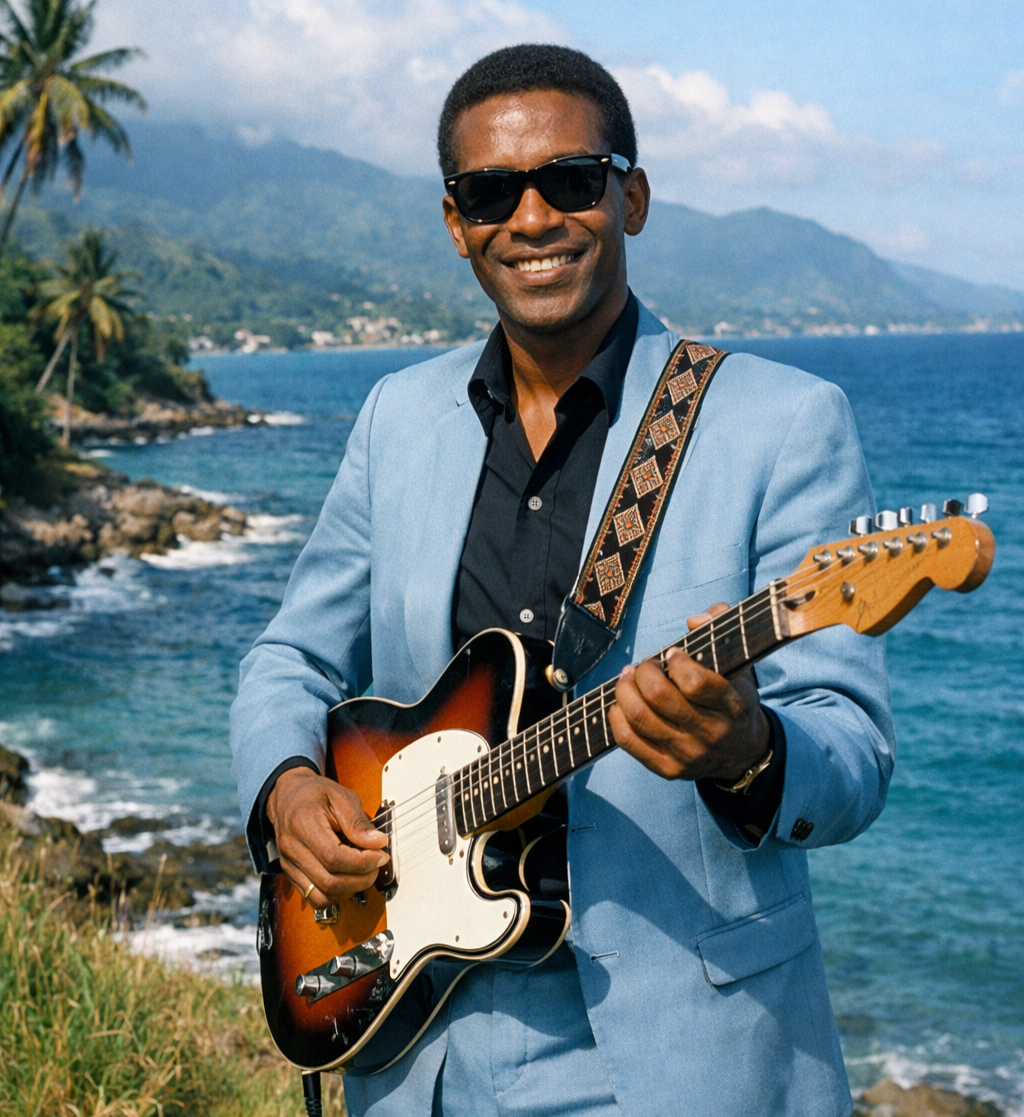
Image created by ChatGPT
Before Reggae, There Was Space
In the early 1960s, Jamaican popular music was moving fast. Ska was energetic, horn-driven, and restless—built for dancing and movement. But as the decade progressed, musicians began slowing things down. The heat, the mood, the streets—everything demanded more space.
That transition gave birth to rocksteady, and rocksteady is where Lynn Taitt became unavoidable.
Taitt didn’t simply adapt to the slowing tempo. He reimagined the role of the guitar entirely.
Instead of filling every bar, he carved out silence. Instead of competing with horns, he complemented bass. Instead of speed, he chose precision.
This was revolutionary.
The Guitar as Architecture
Between roughly 1964 and 1968, Lynn Taitt—primarily through his band Lynn Taitt & the Jets—became one of the most recorded musicians in Jamaican history. Studio One, Treasure Isle, Federal, Dynamic—his guitar is everywhere.
But more important than volume was function.
Taitt established:
The muted off-beat skank
Clean, clipped chord voicings
Melodic single-note fills that answered the vocal rather than overpowering it
A rhythmic discipline that left room for bass and drums to dominate
This approach became the structural blueprint for reggae guitar.
When reggae finally emerged as its own genre at the end of the 1960s, the guitar had already found its role—thanks largely to Lynn Taitt.
Reggae Was Not Invented Overnight
It’s tempting to look for a single “moment” when reggae was born. The truth is more complex—and more interesting.
Reggae evolved through collective experimentation:
Drummers like Lloyd Knibb and later Carlton Barrett redefined rhythm
Bassists like Jackie Jackson and Aston “Family Man” Barrett pushed melody into the low end
Producers like Coxsone Dodd, Duke Reid, and Lee “Scratch” Perry shaped sound and culture
But what often goes unspoken is this:
Reggae needed a guitar style that knew when not to speak.
Lynn Taitt gave reggae that restraint.
He turned the guitar into a rhythmic compass—quiet, steady, essential.
A Bridge, Not a Footnote
Lynn Taitt did not “invent reggae” in isolation. But he connected its eras:
From ska’s energy
Through rocksteady’s groove
Into reggae’s spacious, hypnotic pulse
Without that bridge, reggae would not sound the way it does.
His playing taught future generations a crucial lesson:
Power in reggae comes from what you leave out.
That philosophy would echo through roots reggae, dub, lovers rock, and beyond—eventually influencing punk, hip-hop, and global bass music.
Why Lynn Taitt Was Overlooked
Like many session musicians, Taitt worked behind the scenes. His name rarely appeared on record sleeves. His sound became so foundational that it felt anonymous—mistaken for inevitability.
But inevitability is always built by someone.
Today, as reggae history is revisited with clearer eyes, Lynn Taitt’s role is becoming impossible to ignore. Not as a background player—but as a sonic architect.
The Birth of Reggae, Reconsidered
If reggae is a house:
The bass and drums are the foundation
The producers designed the rooms
The singers brought the stories
But Lynn Taitt shaped the space people move through.
He didn’t shout.He didn’t rush.He listened.
And in doing so, he helped reggae become what it is.
MASX World Perspective
At MASX World, we believe culture is built not just by icons—but by the quiet innovators who define form, feel, and function. Lynn Taitt represents that truth perfectly.
To understand reggae, you don’t just listen to the bass.
You listen to the space between the notes.
And in that space—you’ll hear Lynn Taitt.
Ready to experience Carnival in Jamaica?
Check out our Jamaica Carnival 2026 package, the ultimate way to experience one of Jamaica’s most iconic festivals, Carnival!!!. Don’t miss your chance to be part of this once-in-a-lifetime adventure. Book NOW to secure your spot!
“DON’T SIMPLY TRAVEL,LIVE ULTIMATE XPERIENCES” (L.U.X.) IN JAMAICA!





 September 11 – September 25