


MASX WORLD
Indonesia: Where Traditional Music Lives as a Community Identity
In Indonesia, traditional music isn’t something you schedule a ticket for. It isn’t locked inside concert halls or preserved behind museum glass.
It’s simply… there.
In village courtyards.
At temple ceremonies.
During community celebrations.
In the background of everyday life.
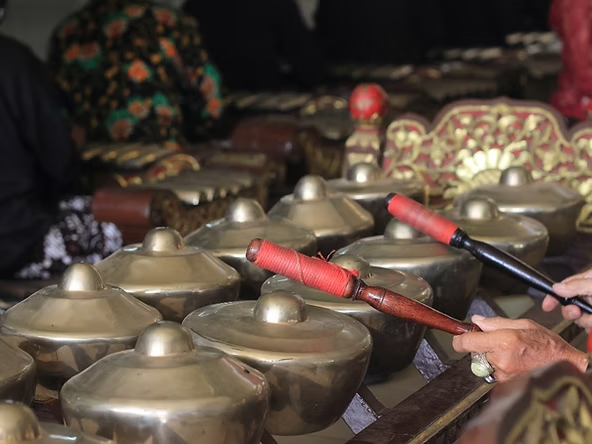
This is especially true for Gamelan, Indonesia’s most iconic traditional music — not preserved as history, but lived as rhythm.

Music That Belongs to Everyone
Gamelan isn’t built around solo stars or individual fame. It’s a collective sound, created by groups of musicians playing interlocking parts. No single instrument dominates. Every rhythm depends on another.
This structure reflects Indonesian values deeply:
- Community over individual ego
- Harmony over volume
- Balance over display
In many parts of Indonesia, especially Java and Bali, Gamelan is something people grow up with, not something they discover later.
Children hear it at ceremonies before they can explain it. They learn to play as part of school, village life, and family tradition. By the time they’re adults, the music already lives inside them.
Embedded in Ceremonies and Daily Life
Gamelan accompanies life’s most important moments:
- Temple festivals and religious rituals
- Weddings and coming-of-age ceremonies
- Shadow puppet performances and traditional dance
It’s not background music — it guides the rhythm of events. Movements, prayers, and performances align with the music’s flow.
Even outside formal ceremonies, Gamelan sounds drift through neighborhoods during rehearsals and gatherings. Practice itself is social, often followed by shared meals, conversation, and laughter.
Music becomes a reason to come together — not a performance to consume.
Why Gamelan Survived Modernization
Indonesia, like much of the world, has embraced modern life. Pop music, social media, and global culture are everywhere. Yet traditional music didn’t disappear.
Why?
Because it was never separated from daily life to begin with.
Gamelan survived modernization because:
- It’s taught collectively, not competitively
- It belongs to the community, not individuals
- It adapts without losing identity
Even contemporary Indonesian artists incorporate Gamelan elements into modern compositions, film scores, and experimental music — not as decoration, but as foundation.
The tradition evolves, but the roots remain untouched.
Not a Performance — a Rhythm of Life
To outsiders, Gamelan performances can feel meditative, even hypnotic. The layered rhythms don’t rush. They invite patience and attention.
For locals, it’s something simpler and deeper:
- A familiar sound of home
- A shared cultural language
- A rhythm tied to memory and belonging
This is why Indonesian traditional music doesn’t need defending or rescuing. It isn’t fragile.
It’s practiced. Repeated. Passed down naturally.
Experiencing It as a Visitor
Travelers to Indonesia often encounter Gamelan without seeking it out:
- During temple festivals in Bali
- At village ceremonies in Java
- In cultural centers and community halls
The most meaningful experiences happen when visitors observe quietly, respectfully, without expecting a staged performance. Here, music isn’t created for an audience — it exists with the community.
That distinction matters.
Indonesia’s Quiet Cultural Strength
In a world increasingly shaped by global trends, Indonesia offers something rare: a culture that didn’t need to choose between tradition and modern life.
It simply allowed both to exist.
Traditional music remains strong here not because it’s protected — but because it’s loved, shared, and lived.
Not as nostalgia. Not as resistance.
But as rhythm.
LIVE ULTIMATE XPERIENCES (L.U.X.) IN INDONESIA!
Ready to Adventure? Go visit our website Indonesia: Exotic Islands