
Mel
Caribbean Pride on Football’s Biggest Stage: Fascinating World Cup Facts You Probably Didn’t Know
In This Article
Every four years, billions of fans around the world unite to watch the FIFA World Cup—the biggest sporting event on the planet. While football giants like Brazil, Argentina, Germany and France often dominate the headlines, the Caribbean has quietly produced some incredible World Cup stories of its own.
From historic appearances to unforgettable moments and inspiring underdog journeys, the Caribbean continues to prove that passion for football runs just as deep as its love for carnival, music and culture.
Here are some fascinating facts that celebrate the Caribbean’s place in World Cup history.
Trinidad & Tobago Made History in 2006
No conversation about Caribbean football is complete without mentioning Trinidad & Tobago’s unforgettable debut at the 2006 FIFA World Cup in Germany.
Nicknamed the Soca Warriors, Trinidad & Tobago became the smallest nation by population to qualify for the tournament at the time. Their opening match against Sweden ended in a remarkable 0-0 draw despite playing with ten men for almost the entire second half.
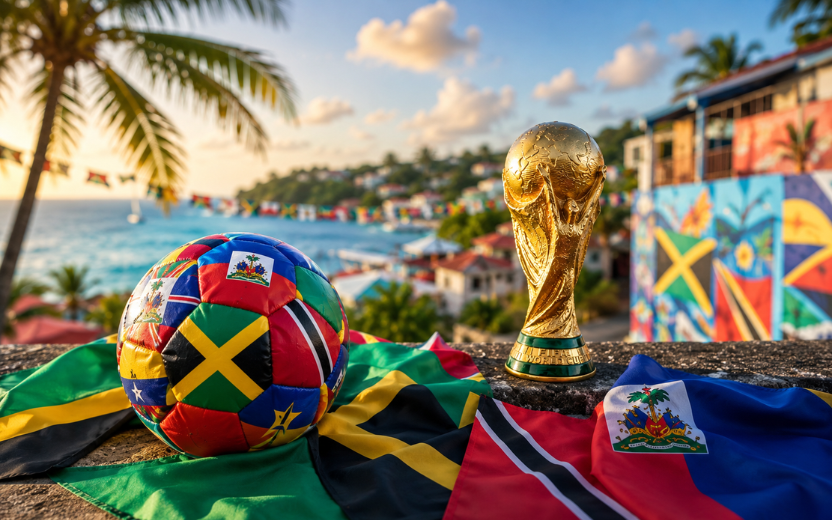
Goalkeeper Shaka Hislop and defender Brent Sancho became national heroes overnight, while captain Dwight Yorke led one of the most celebrated teams in Caribbean sporting history.
Although they didn’t advance beyond the group stage, simply reaching the World Cup remains one of the greatest achievements in Caribbean football.
Jamaica Were the First English-Speaking Caribbean Nation
Before Trinidad & Tobago, Jamaica blazed the trail.
The Reggae Boyz qualified for the 1998 FIFA World Cup in France, becoming the first English-speaking Caribbean nation to reach football’s biggest tournament.
They recorded their historic first World Cup victory by defeating Japan 2-1, with Theodore Whitmore scoring both goals.
That achievement inspired an entire generation of footballers throughout the Caribbean and proved that the region could compete on the world’s biggest stage.
Haiti Shocked the Football World
Many football fans don’t realise that Haiti qualified for the 1974 FIFA World Cup in West Germany.
Their most famous moment came against Italy when Emmanuel Sanon scored to end legendary goalkeeper Dino Zoff’s incredible streak of over 1,100 minutes without conceding an international goal.
Although Haiti ultimately lost the match, Sanon’s goal remains one of the country’s greatest sporting moments and an iconic chapter in World Cup history.
Curaçao Is Making Caribbean History
The expanded 48-team FIFA World Cup has opened new doors for smaller footballing nations, and Curaçao has taken full advantage.
The island nation qualified for its first-ever FIFA World Cup, becoming the smallest country by both population and land area to reach the tournament. Their achievement has become one of the biggest feel-good stories of the 2026 competition.
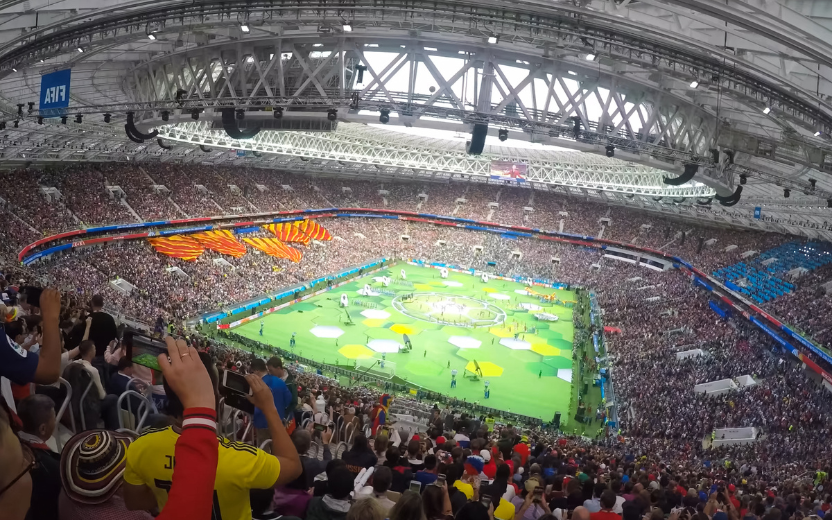
Their squad combines local talent with players of Curaçaoan heritage raised in the Netherlands, showcasing the strength of the Caribbean diaspora on the global stage.
Caribbean Talent Is Everywhere
Even when Caribbean nations are not the main headline, Caribbean heritage is still woven throughout the World Cup.
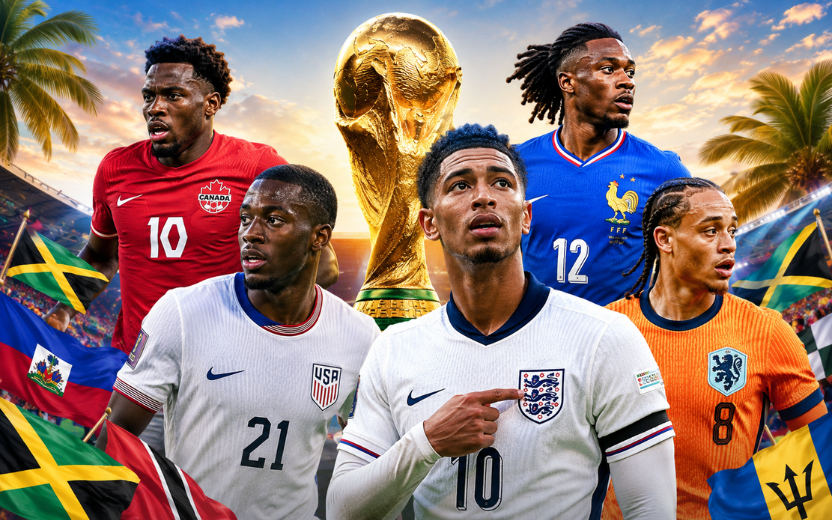
Many players representing larger football nations carry deep Caribbean roots, showing how far the region’s influence stretches across the global game. Canada, for example, has several standout players with Caribbean backgrounds. Jonathan David, one of Canada’s biggest stars, was eligible for Haiti and remains one of the clearest examples of Haitian talent shining on another international stage. Cyle Larin, another key Canadian forward, was born in Canada to a Jamaican family, while Tajon Buchanan, known for his pace and creativity, is also of Jamaican descent.
The United States also carries Caribbean influence through players like Timothy Weah, whose mother is Jamaican-American. His story is especially unique because he is the son of Liberian legend George Weah, yet his Caribbean connection adds another layer to the multicultural makeup of the U.S. team.
England’s squad is another reminder of the Caribbean’s reach. Superstar midfielder Jude Bellingham, one of the faces of world football, has Jamaican heritage through his mother, Denise Bellingham. Alongside him is defender Kyle Walker, whose father is Jamaican, highlighting the long-standing contribution of players with Caribbean roots to English football.
France, the Netherlands and other major football nations have long benefited from players whose families come from former colonies, island territories and diaspora communities across the Caribbean. Sometimes these links are obvious through nationality. Other times, they live in family histories, cultural identity, playing style and the communities that shaped these players before they reached the world stage.
That is what makes Caribbean football influence so special. It is not limited to the teams officially representing the region. It appears in the speed of a winger, the confidence of a striker, the rhythm of a midfield, and the pride of families watching from Kingston, Port-au-Prince, Bridgetown, Port of Spain, Willemstad and beyond.
The Caribbean may be made up of small islands and nations, but its football footprint is global. Every World Cup is a reminder that Caribbean talent does not stay in one place—it travels, adapts, shines and leaves its mark wherever the game is played.
Football and Carnival Share the Same Spirit
One of the things that makes the Caribbean unique is how sport and celebration naturally go hand in hand.
Watch a Caribbean crowd during a World Cup match and you’ll hear drums, horns, chanting, dancing and infectious energy that rivals any carnival celebration.
Whether it’s a packed sports bar in Bridgetown, a beach lime in Tobago or a fan zone in Kingston, football becomes another excuse to celebrate Caribbean culture.
Did You Know?
Here are a few quick World Cup facts that might surprise you:
- The FIFA World Cup is watched by over 5 billion people across the globe.
- The 2026 tournament is the first to feature 48 teams, creating more opportunities for emerging football nations.
- Trinidad & Tobago held the record as the smallest nation ever to qualify until Curaçao earned its historic place in 2026.
- Haiti’s Emmanuel Sanon ended one of international football’s longest clean-sheet streaks in World Cup history.
- Caribbean supporters are widely regarded as some of the most colourful and passionate fans in world football.
The Caribbean Is More Than Just Beaches
While visitors often come to the Caribbean for turquoise waters, luxury resorts and sunshine, they quickly discover something even more memorable—its people, culture and unmatched passion.
Whether you’re dancing through Crop Over in Barbados, experiencing Trinidad Carnival, enjoying Spice Mas in Grenada or simply watching football with locals at a beachfront bar, you’ll find an atmosphere unlike anywhere else in the world.
The same energy that fuels carnival also fills stadiums, fan zones and neighbourhood watch parties whenever the World Cup kicks off.
Experience the Caribbean with MASX
Football may unite the world for one month, but the Caribbean celebrates all year long.
If you’ve ever dreamed of experiencing the music, culture, food and unforgettable atmosphere that make the islands so special, now is the perfect time to start planning.
Whether you’re heading to Trinidad Carnival, Barbados Crop Over, Grenada Spice Mas, or another incredible Caribbean festival, MASX makes it easy with curated travel packages, accommodation and insider experiences designed for carnival lovers.
Because in the Caribbean, every celebration—whether it’s football or carnival—is one you’ll never forget.