

Mel
Kyoto Sets Its Mountains Ablaze Once a Year
In This Article
Every August, something unusual appears above Kyoto after dark.
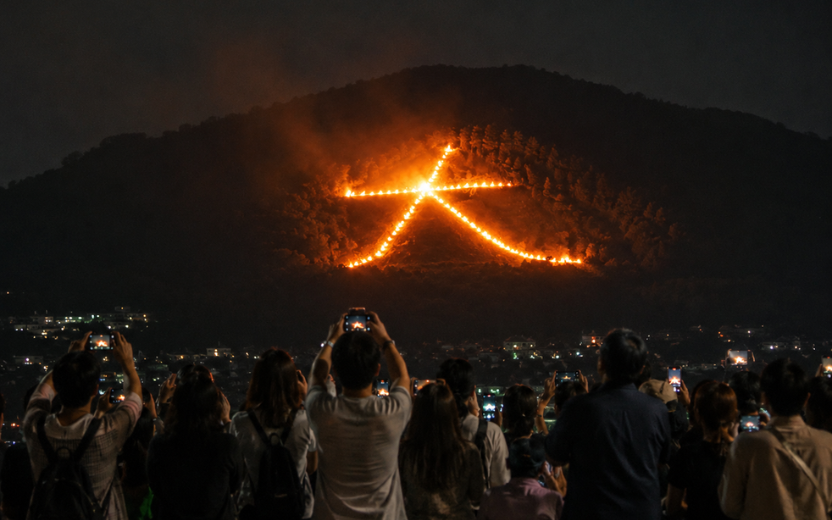
Huge symbols made from fire begin glowing across the mountains surrounding the city. The most famous is a giant 大, the Japanese character meaning “large” or “great.”
This is Gozan Okuribi, one of Kyoto’s most striking summer traditions. But the fires aren’t simply there to create a spectacle.
They’re part of a goodbye.
Five Mountains. Five Fires.
On the evening of August 16, five enormous bonfires are lit across Kyoto’s mountains, one after another.
Together, they’re known as Gozan Okuribi, meaning the “Five Mountain Send-Off Fires.” The displays include two giant 大 characters, the characters 妙 and 法, a boat shape and a traditional torii gate.
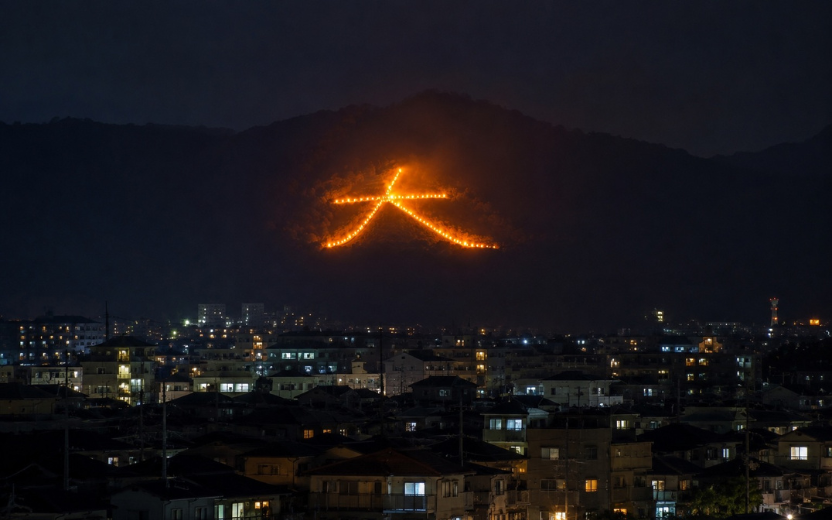
From across Kyoto, people look toward the mountains as each formation emerges from the darkness.
The mountains themselves aren’t actually set on fire. Hundreds of carefully positioned fire beds create the enormous shapes visible from the city below.
This Is Actually a Goodbye
To understand the fires, you first need to understand Obon.
Obon is a Japanese Buddhist tradition honoring deceased ancestors. During this period, ancestral spirits are traditionally believed to return to visit their families, who may welcome them with lanterns, offerings and visits to family graves.
Then comes August 16.
Okuribi are send-off fires. In Kyoto, the mountain fires traditionally mark the end of Obon and are associated with sending the spirits of ancestors back to the other world.
Suddenly, those enormous flames mean something very different.
A Tradition With a Mysterious Beginning
For something so closely associated with Kyoto today, the exact origins of Gozan Okuribi aren’t completely clear.
Different stories and historical theories surround the five fires, and records don’t provide one simple explanation for how the entire tradition began.
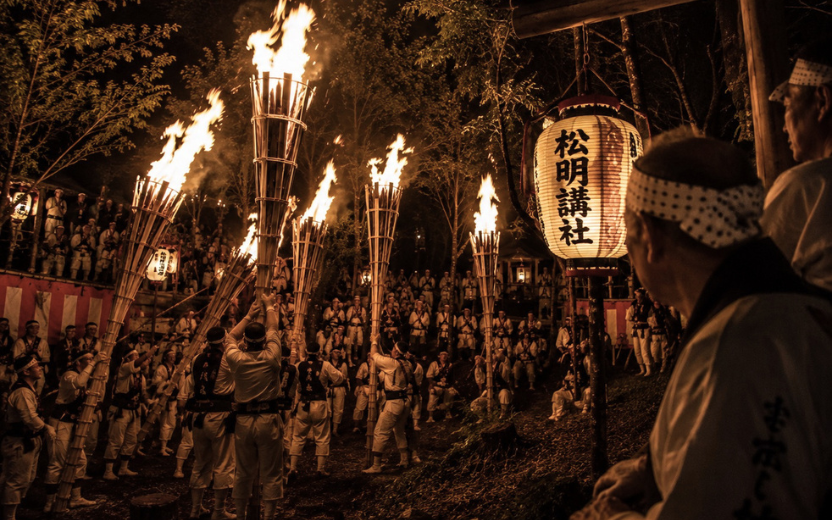
But over generations, the fires became deeply connected with Kyoto’s Obon observances.
Today, local communities continue the work required to prepare and light the fires across the mountains each year.
Watch Kyoto Look Up
You don’t need to climb a mountain to experience Gozan Okuribi.
On August 16, people gather at viewing spots around Kyoto and wait for darkness. Then, beginning with Daimonji, the fiery formations gradually appear against the mountains.
For travelers, it’s an unusual way to experience Kyoto. There are no temple gates to walk through and no exhibit to study. The city itself becomes the viewing space.
You simply find your place, wait for nightfall and look toward the mountains.
For most of the year, Kyoto’s mountains form the backdrop to the city.
On one August night, they become part of the ceremony.
Experience Japan After Dark With MASX
Japan changes after sunset, revealing traditions and experiences that are easy to miss during the day. MASX Japan packages go beyond famous landmarks to connect travelers with the culture and stories that give each destination its character.
👉 MASX Japan: https://masxworld.com/japan/
—————————————————
Follow MASX for cinematic travel inspirations, hidden gems, cultural facts, and so much more!
Instagram: https://www.instagram.com/masxworld
Facebook: https://www.facebook.com/share/1C5Ado1tV5/?mibextid=wwXIfr
TikTok: https://www.tiktok.com/@masxworld
YouTube: https://www.youtube.com/@masxworld