
Mel
One New Year, Many Traditions: Lunar New Year Across Asia
In This Article
January 1 arrives.
Fireworks explode over cities. Countdown clocks hit zero. People make resolutions and send “Happy New Year” messages before going back to work a few days later.
Then, several weeks afterward, parts of Asia seem to do New Year all over again.
Red lanterns appear.
Markets become crowded.
Families travel home.
Children receive money.
Tables disappear beneath enormous amounts of food.
And suddenly everyone is wishing each other another Happy New Year.
So what exactly is going on?
The simple answer is that January 1 and Lunar New Year are not competing New Years.
Today, countries such as China, Vietnam and South Korea use the Gregorian calendar for everyday civil life, including January 1 as the beginning of the official year. Korea, for example, officially follows the Gregorian calendar while continuing to base major traditional holidays such as Seollal and Chuseok on the lunar calendar. VISITKOREA – Imagine Your Korea
Lunar New Year survives because calendars are not only ways of counting days.
They carry seasons, agriculture, ancestors, religion, family traditions and centuries of cultural memory.
So when Lunar New Year arrives, people are not simply changing the number on the calendar.
They are returning home.
So Why Does the Date Keep Changing?
First, a small technical point.
What we commonly call the “lunar” New Year is generally based on traditional lunisolar calendars, which follow both the cycles of the moon and the solar year.
That is why the celebration moves around on the Gregorian calendar, usually falling sometime between late January and February.
For centuries, these traditional calendars helped organize farming seasons, festivals, ritual dates and community life across parts of East and Southeast Asia.
Modern governments eventually adopted the Gregorian calendar for administration and international consistency.
But traditions do not disappear just because an office calendar changes.
And perhaps that is why Lunar New Year can feel so different from January 1.
January 1 says:
The year has changed.
Lunar New Year often feels more like:
Come home. We are starting again together.
China: Red Everywhere
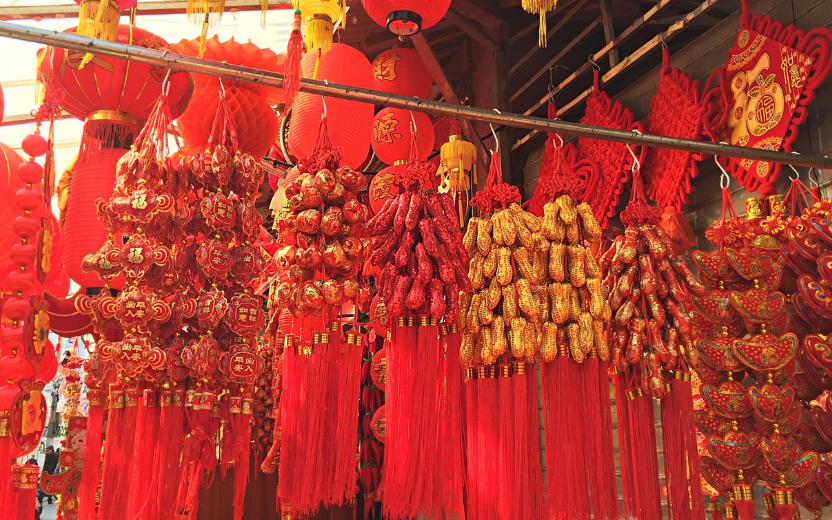
In China, the holiday is usually known as Chūnjié (春节), the Spring Festival.
And “festival” is the right word.
In the days before New Year, people travel enormous distances to reunite with family. Homes are cleaned. Red decorations appear on doors and windows. Spring couplets carrying wishes for good fortune are hung around entrances.
Then comes the reunion dinner.
This is one of the most important moments of the holiday.
The exact dishes vary enormously by region and family, but food is often loaded with symbolism.
Fish can represent abundance.
Dumplings are associated with prosperity.
Certain foods are chosen because their names sound like words connected with luck, wealth or longevity.
Children receive hóngbāo, red envelopes containing money.
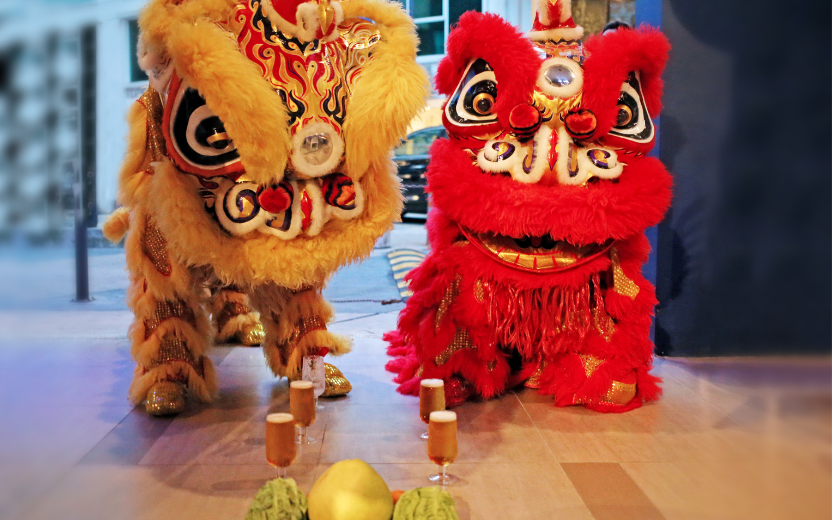
Fireworks and firecrackers have traditionally been used to welcome the new year and drive away bad fortune, while lion and dragon dances bring streets and public celebrations to life.
Red seems to appear everywhere.
But beneath all that color and noise is something much simpler.
People are home.
That is the center of it.
Vietnam: Clean the House, Welcome the Year
In Vietnam, Lunar New Year is Tết Nguyên Đán, usually shortened simply to Tết.
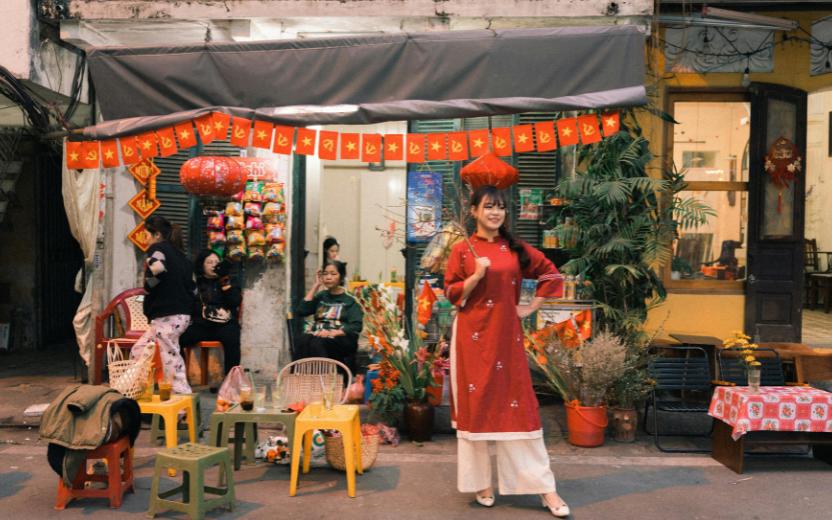
It is the country’s most significant traditional holiday, centered on reunion, hope and good fortune. Vietnam Tourism
Preparation begins well before the first day.
Homes are thoroughly cleaned.
People may get haircuts and buy new clothes.
Debts are settled when possible.
The idea is almost beautifully literal:
Do not drag too much of the old year into the new one.
Then the flowers arrive.
In northern Vietnam, peach blossoms are closely associated with Tết.
In the south, yellow apricot blossoms are especially popular.
Kumquat trees appear outside homes and businesses, their small orange fruits adding another burst of color.
And then there is food.
Bánh chưng, the square sticky-rice cake traditionally associated with northern Vietnam, and bánh tét, its cylindrical relative found especially in central and southern regions, become part of family tables and holiday preparations.
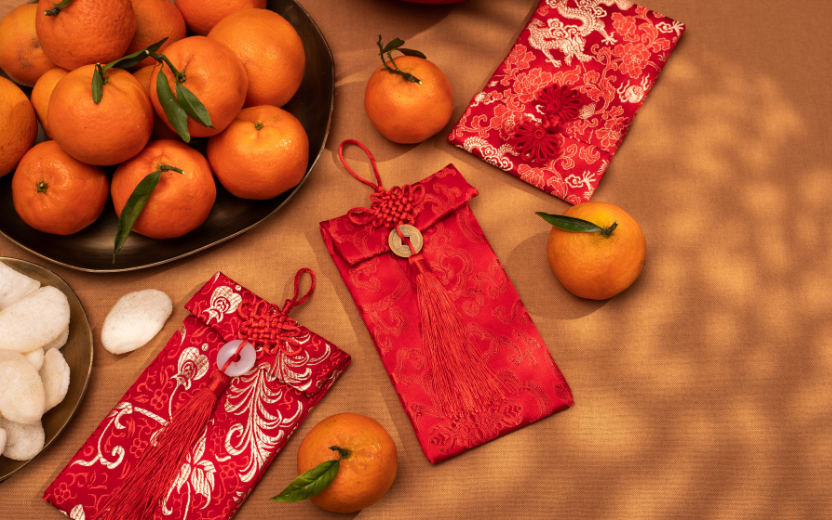
Children receive lì xì, lucky money in red envelopes.
Families honor their ancestors.
And one particularly interesting tradition is xông đất, the first visitor to enter the home after the New Year begins.
That person can symbolically influence the family’s luck for the coming year, so traditionally the first visitor may be chosen rather carefully.
In other words, Tết is probably not the ideal morning to unexpectedly knock on someone’s door because you were “just in the neighborhood.” Vietnam Tourism
South Korea: One Bowl, One Year Older
South Korea’s Lunar New Year is called Seollal (설날).
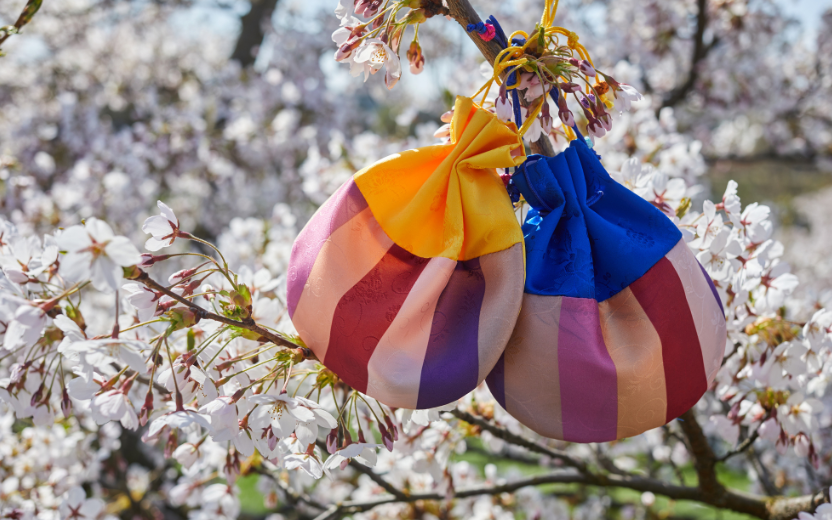
It is one of the country’s most important traditional holidays and a major time for families to return to their hometowns. VISITKOREA – Imagine Your Korea
The morning may begin with charye, an ancestral memorial ritual practiced by some families.
Younger family members then perform sebae, a deep formal bow to their elders.
In return, elders offer blessings and children often receive sebaetdon, New Year’s money. VISITKOREA – Imagine Your Korea
And then everyone eats tteokguk.
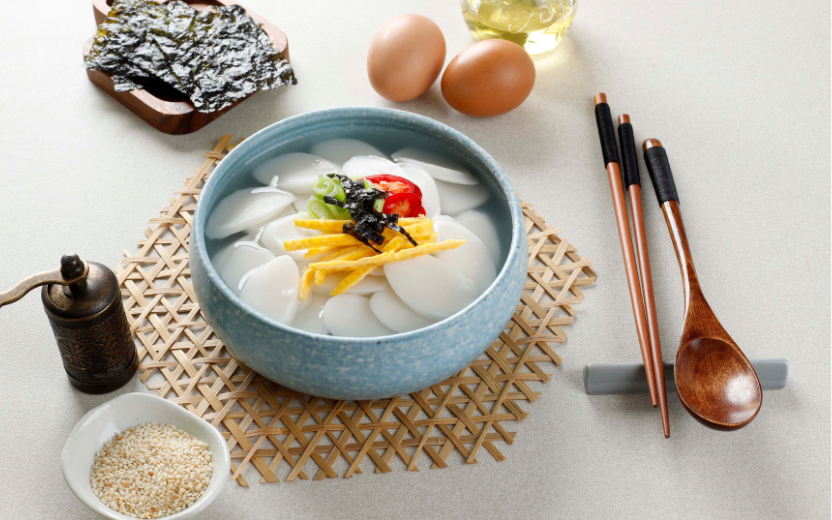
This clear soup filled with sliced rice cakes is one of the foods most strongly associated with Seollal. Traditionally, eating a bowl is connected symbolically with beginning the new year and becoming another year older. VISITKOREA – Imagine Your Korea
After the formalities, things can become considerably more competitive.
Families play yunnori, a traditional board game involving four wooden sticks tossed into the air.
It looks friendly.
It is a family holiday.
Everyone loves each other.
And then somebody’s game piece gets sent back to the beginning.
Good luck maintaining the peace.
Singapore: Tradition Meets the Modern City
In Singapore, Lunar New Year is especially important among the country’s Chinese community, but the celebration is visible far beyond individual homes.
Chinatown turns red.
Lanterns stretch above streets.
Shopping malls transform.
Families visit relatives carrying gifts.
Children receive red packets.
And food becomes extremely serious business.
One of Singapore and Malaysia’s most recognizable New Year traditions is yusheng, a colorful raw-fish salad associated with prosperity.
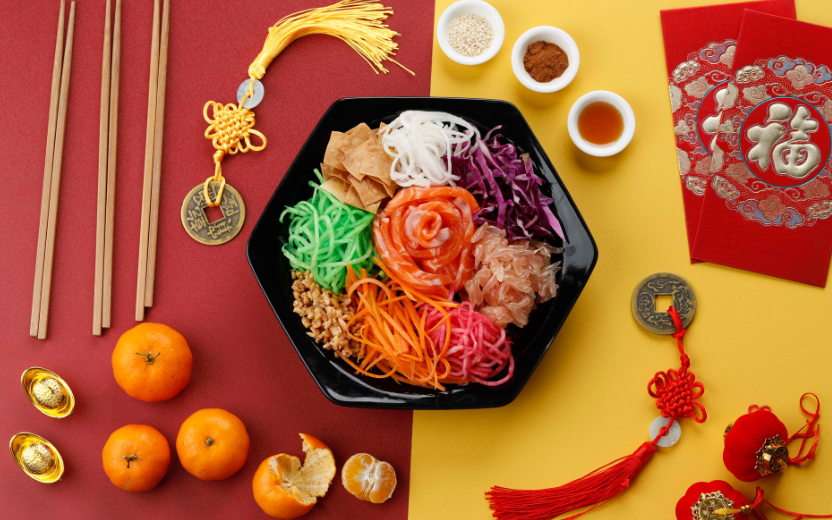
Everyone gathers around the plate with chopsticks and tosses the ingredients high into the air while shouting auspicious wishes.
The higher the toss, the better the fortune.
At least, that is the theory.
The table afterward may have a different opinion.
Pineapple tarts, bak kwa and other seasonal favorites also appear in homes and shops.
Singapore is interesting because Lunar New Year sits inside an intensely multicultural city.
One community’s major celebration becomes part of the visual rhythm of the entire country.
Different Countries, Similar Wishes
Travel across Asia during Lunar New Year and the details begin to change quickly.
One family is folding dumplings.
Another is preparing bánh chưng.
Somebody in Korea is eating tteokguk.
Someone in Singapore is enthusiastically launching salad into the air.
Flowers change.
Food changes.
Languages change.
Even the customs surrounding ancestors, luck and family are not identical.
And that is worth emphasizing:
There is no single universal “Asian Lunar New Year.”
These celebrations share historical and calendrical connections, but each culture has developed its own traditions.
Even within one country, customs vary by region and family.
But certain ideas keep appearing.
Come home.
Eat together.
Respect the people who came before you.
Wish the younger generation well.
Clear away some of the bad things from last year.
Invite something better into the next one.
Perhaps that is why the holiday has lasted.
Two New Years? Why Not?
So do people celebrating Lunar New Year reject January 1?
Not really.
In countries such as South Korea, January 1 is also officially celebrated, while Seollal remains the culturally significant traditional New Year. VISITKOREA – Imagine Your Korea
The same basic idea applies across much of the region.
January 1 belongs to the modern international calendar.
Lunar New Year belongs to something older.
Family.
Memory.
Season.
Ritual.
Home.
And maybe having two New Years is not such a strange idea anyway.
January 1 gives you a chance to promise yourself you will exercise more, save money and finally organize your inbox.
Then Lunar New Year arrives a few weeks later and gives you another chance when all of that has already gone terribly wrong.
More importantly, it offers something January 1 often does not.
A reason for millions of people to stop moving forward for a moment and go back.
Back to hometowns.
Back to parents and grandparents.
Back to foods they have eaten since childhood.
Back to rituals they may not think about during the rest of the year.
And then, together, everyone turns forward again.
New year.
New luck.
Another beginning.
Want to experience Lunar New Year in Asia? Explore it with MASX and make the celebration part of your journey. Check our NEW YEAR, NEW HERE packages!
China: https://masxworld.com/product/mystique-and-intrigue-new-year-new-here-chun-jie/
Vietnam: https://masxworld.com/product/un-pho-gettable-vietnam-new-year-new-here-tet/