

Mel
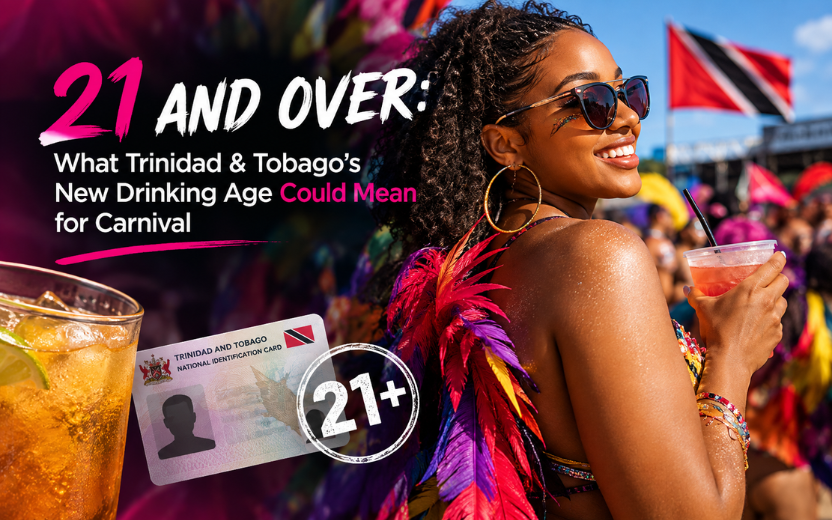
21 and Over: What Trinidad & Tobago’s New Drinking Age Could Mean for Carnival
In This Article
For generations, Trinidad & Tobago’s social culture has been built around music, food, fete, freedom and, inevitably, a few drinks along the way. From Carnival Monday and Tuesday to late-night fetes, beach parties and Sunday lime, alcohol has long been woven into the country’s social fabric.
Now, that relationship may be changing.
The Government of Trinidad & Tobago has moved legislation through Parliament that would raise the legal age for purchasing, possessing and consuming alcohol from 18 to 21. The bill has now passed both the House of Representatives and the Senate, with the Senate passing it on October 7, 2026. It also introduces requirements for purchasers to produce valid national photo identification when buying alcohol.
The change is part of a much broader package that also proposes new age restrictions surrounding tobacco, cannabis, gambling and vaping. But among all the measures, the drinking-age change has perhaps generated the most immediate conversation—especially in a country where Carnival and nightlife are major parts of the cultural and tourism experience.
So what happens when the party meets a new set of rules?
A New Age for Drinking in Trinidad
Under the proposed legislation, anyone under 21 would no longer be legally permitted to purchase, possess or consume intoxicating liquor.
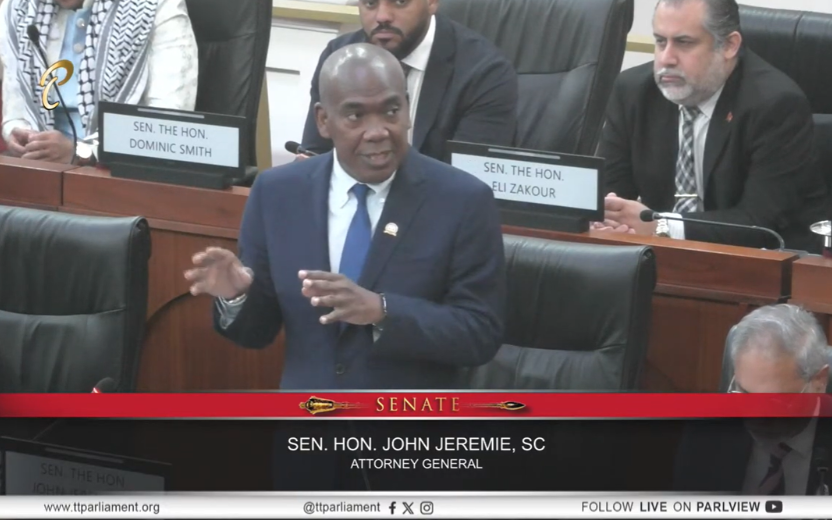
The Government’s argument is centred on public health, safety and the potential consequences of early exposure to alcohol and other addictive substances. During parliamentary debate, Attorney General John Jeremie argued that the policy should look beyond the traditional age of majority and consider the developmental period between 18 and 25, pointing to concerns around judgement, dependence, injury and long-term health outcomes.
The Government has also pointed to international examples, including the United States, where the minimum legal drinking age is 21.
But Trinidad & Tobago is not the United States.
And that distinction matters.
What Does This Mean for Carnival?
This is where things get particularly interesting.
Carnival is more than two days on the road. It is an entire season of fetes, breakfast parties, boat rides, cooler events, concerts, all-inclusive experiences, private events and nightlife.
And a significant portion of the Carnival-going population is between 18 and 20.
For those young adults, the change could mean that turning 18 will no longer carry the same access to the country’s nightlife and alcohol-centred social experiences that it traditionally has.
Imagine an 18-year-old playing mas for the first time.
They can vote. They can work. They can get married. They can enter into contracts and make many other significant adult decisions.
But under the proposed legislation, they would not be legally permitted to purchase or consume a rum and coke at a Carnival fete.
That contrast is already one of the central points of debate surrounding the legislation.
The Government, however, maintains that being legally recognised as an adult does not necessarily mean every regulated activity must carry the same age threshold.
And that is where the conversation becomes less about simply being “old enough to drink” and more about what kind of society Trinidad & Tobago wants to be.
The Impact on Fetes and Nightlife
For the local entertainment industry, the implications could be significant.
Promoters may have to become considerably more vigilant about age verification. Bars, clubs, restaurants and event organisers will potentially face greater responsibility when it comes to ensuring that patrons are legally permitted to purchase or consume alcohol.
The legislation also proposes requiring valid national photo identification to establish that a purchaser is 21 or older. Sellers who cannot verify the purchaser’s age would have to refuse the sale.
That could mean a very different experience at Carnival events.
ID checks could become more common at the entrance to parties. Promoters may need clearer systems for separating drinking and non-drinking patrons. Security teams could have an even greater role. And businesses may need to rethink how they structure their events around an audience that previously included legal drinkers from age 18.
For international visitors, meanwhile, the rules could create another layer of preparation.
If you’re coming to Trinidad for Carnival, knowing the local laws will become just as important as knowing which fete you’re attending.
But Could There Be a Positive Side?
There is certainly an argument that the legislation could encourage a healthier relationship with alcohol.
The Government has pointed to concerns about substance abuse among young people, while supporters argue that reducing access during the late teenage years could help prevent harmful drinking patterns and their associated consequences.
There is also an argument that Carnival does not have to revolve around alcohol.
Music, culture, mas, soca, food, fashion and the sheer energy of being Trinbagonian have always been at the heart of the experience.
Could a shift in drinking culture encourage more people to focus on the actual experience rather than the amount they can consume?
Perhaps.
But that depends heavily on enforcement.
The Real Question: Will It Be Enforced?
This may ultimately be the biggest question of all.
Trinidad & Tobago already has laws regulating alcohol sales to younger people, but enforcement has historically been a challenge. A new age limit is only as effective as the systems used to enforce it.
How will it work at a packed Carnival fete with thousands of people?
What happens when someone who is 20 arrives with friends who are 21?
How will promoters deal with large groups?
Will every person be required to show ID when purchasing a drink?
And what happens at informal events, private parties and other spaces outside traditional bars and licensed venues?
The Government’s decision to make national photo identification part of the proposed framework suggests that enforcement is being taken seriously.
But legislation can establish the rule. It cannot, by itself, guarantee compliance.
What About Carnival Tourism?
This is perhaps the most interesting question from a tourism perspective.
Trinidad Carnival attracts visitors from around the world, many of whom arrive specifically for the combination of music, nightlife, culture and freedom that makes the festival so distinctive.
For most international visitors over 21, the new legislation may have little direct effect.
But for younger travellers aged 18–20, it could change the Carnival experience considerably.
Trinidad will also be competing with other Caribbean destinations where the legal drinking age remains lower. Across the region, drinking-age laws vary, with many Caribbean destinations maintaining an age of 18 and some setting the threshold even lower.
That raises an important tourism question:
Will a 21+ drinking age make Trinidad Carnival feel more restrictive—or simply more responsible?
The answer may depend less on the number itself and more on how the country implements it.
Carnival Will Still Be Carnival
One thing is unlikely to change.
Trinidad Carnival will still be Trinidad Carnival.
The music will still be loud. The costumes will still be spectacular. Soca will still take over the streets. J’ouvert will still begin before sunrise. And thousands of people will still travel from across the globe to experience what makes Carnival in Trinidad unlike anywhere else.
But the social environment surrounding that experience may be evolving.
Perhaps the future of Carnival is one where alcohol plays a smaller role.
Perhaps the new restrictions will simply push drinking underground and create new enforcement challenges.
Perhaps businesses will adapt and create more innovative alcohol-free experiences for younger Carnival-goers.
Or perhaps, five years from now, nobody will think twice about it.
Only time will tell.
So, What Do You Think?
This is one of those issues where there are legitimate arguments on both sides.
Is raising the legal drinking age to 21 a necessary step towards protecting young people and improving public health?
Or does it unfairly restrict adults who are already legally recognised as adults at 18?
Will it make Carnival and nightlife safer?
Could it negatively affect fetes, bars, promoters, hotels and tourism?
And most importantly—will it actually work in Trinidad & Tobago?
We want to hear from you.
Would raising the legal drinking age to 21 make Trinidad Carnival better, worse, or simply different?
Let us know what you think.
Because if there is one thing Trinidadians have never been afraid to do, it is debate.