
Mel
South Korea After-Dark: How Locals Turn a Night Out Into a Memory
In This Article
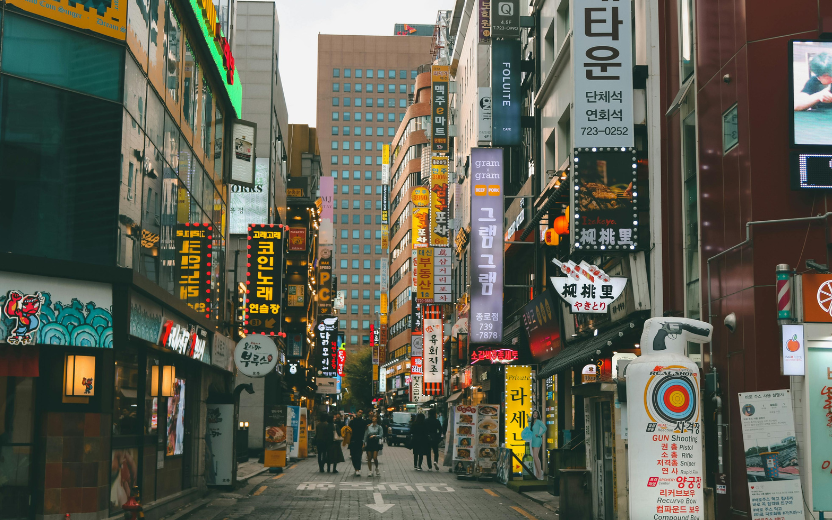
A night out in South Korea rarely ends after dinner.
That is probably the first thing to understand.
You may begin with barbecue.
Then somebody suggests a second round.
Then someone wants ramen.
Then suddenly you are in a noraebang at midnight singing a song you absolutely should not be singing in public.
After that, somebody spots a photo booth.
Then there is another convenience store stop.
And somehow, what was supposed to be a simple dinner has become an entire night.
That is part of the charm of going out in Korea.
The night unfolds one small decision at a time.
First, Eat Something
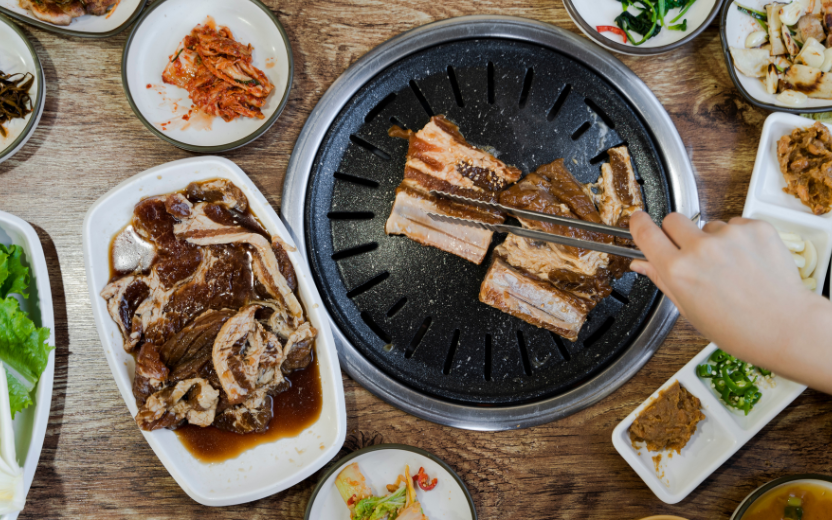
Korean nights often begin around a table.
Food is shared.
Meat is grilled.
Side dishes appear.
Someone pours a drink.
Someone orders one more thing even though everyone already said they were full.
The important part is not necessarily where you eat.
It is that meals are social.
People talk.
They stay.
They order another round.
Then, rather than going home, the group simply moves somewhere else.
That is where the night really begins.
Then Someone Says, “Noraebang?”
Noraebang literally means “singing room.”
But that explanation does not quite capture it.
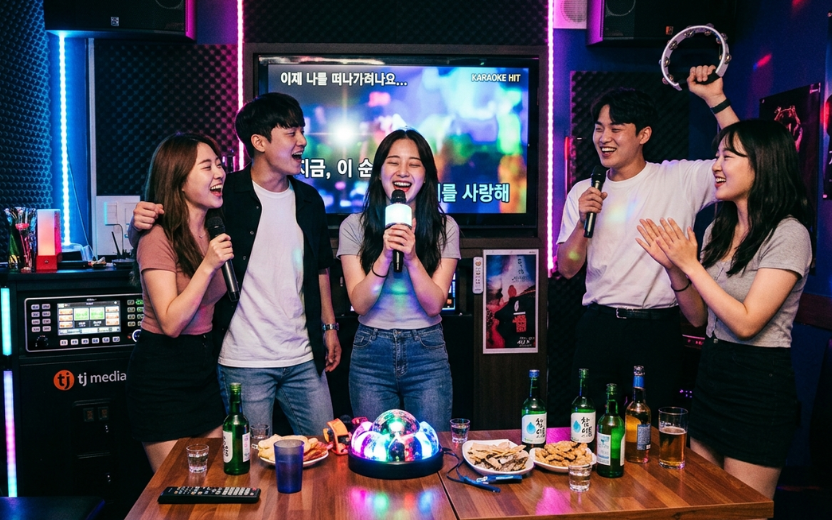
These are private karaoke rooms where friends, coworkers, couples, and sometimes complete strangers gather to sing together without worrying about who is watching.
Inside, the lights are usually dramatic.
Disco effects.
Microphones.
Tambourines.
A song list that somehow contains everything.
At first, people may act shy.
Nobody wants to go first.
Then one person chooses a song everyone knows.
Suddenly the whole room is singing.
By the third song, confidence has increased dramatically.
By the fifth, somebody is standing.
By the tenth, everyone is convinced they could probably debut tomorrow.
That is the beauty of noraebang.
You do not need to sing well.
You just need to participate.
It turns embarrassment into laughter very quickly.
And somehow, after singing badly together for an hour, people feel closer.
The Convenience Store Is Part of the Night
In many countries, a convenience store is somewhere you enter, buy something, and leave.
In Korea, it can be part of the evening itself.
Convenience stores are deeply woven into everyday food culture, especially among younger people, with ready-to-eat meals, ramyeon, samgak gimbap, snacks, desserts, coffee, beer, and constantly changing limited-edition products. Korean tourism authorities even describe convenience stores as social spaces where people sit, eat, talk, and enjoy late-night snacks.
So after noraebang, you might end up standing in front of a wall of instant noodles trying to choose one.
Someone buys ramyeon.
Someone else gets triangle gimbap.
Another person returns with ice cream.
There is beer.
There are strange new snacks that everyone agrees should be tried once.
Hot water goes into the noodles.
You find a table inside or outside.
And suddenly this very ordinary convenience store becomes another stop in the night.
There is even a word, pyeonmaek, for enjoying beer at a convenience store.
It is simple.
Cheap.
Unpretentious.
And strangely satisfying.
Then Take Four Photos
At some point, someone will probably suggest taking pictures.
Not normal pictures.
Four-cut photos.
Self-service photo booths producing strips of four quick images have become a major part of youth culture in Korea, especially among teens and people in their twenties. Tourism authorities note that the number of unmanned four-cut photo booths grew rapidly, with young people making up the majority of users.
You go inside.
Choose a frame.
Pick props.
Try to look normal.
Fail.
The countdown starts.
Everyone panics.
Four photos later, one person looks perfect, one person has their eyes closed, someone is laughing, and nobody is completely satisfied.
So obviously you take another set.
The photos get printed.
Everyone takes a copy.
And suddenly you have a tiny physical memory of the night.
That may be why these booths are so popular.
Phones already take perfect photographs.
Photo booths give you something less perfect.
And much more fun.
One Night, Many Stops
This is what makes Korean nights feel different.
They have chapters.
Dinner.
Drinks.
Noraebang.
Convenience store.
Photo booth.
Maybe a late-night snack.
Maybe a walk.
Maybe somebody suddenly insists the night cannot end yet.
Korea even has a culture of describing these stages as first round, second round, third round.
The location changes.
The mood changes.
The group gets louder.
Then quieter.
Then hungry again.
There is always somewhere else to go.
Sometimes the Best Stop Is the Simplest One
Perhaps the most memorable part is not the restaurant or the karaoke room.
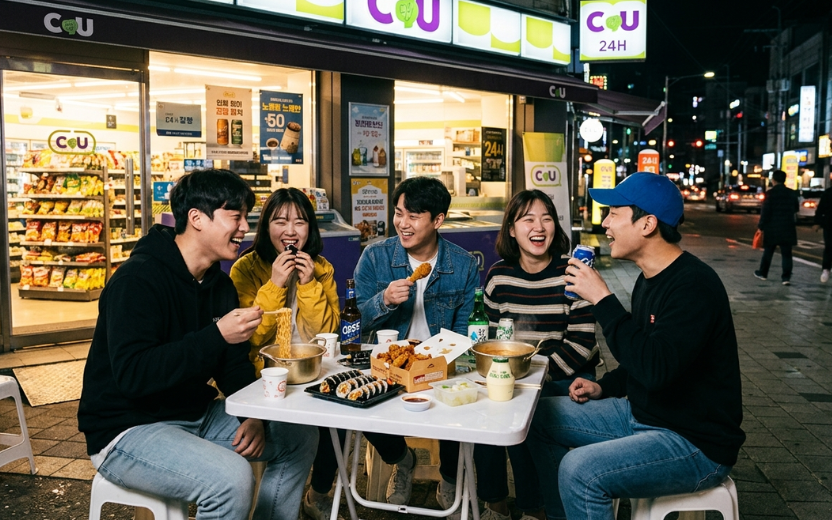
It might be sitting outside a convenience store at 1 a.m.
Plastic table.
Cold drink.
Cup noodles.
Cars passing nearby.
Someone laughing about something that happened three hours earlier.
Nobody is dressed up anymore.
Nobody cares what the original plan was.
The night has already become something else.
That is one of the most appealing things about Korean nightlife.
It does not always need to be glamorous.
You can have a great night with convenience store snacks and a bad singing voice.
The Night Becomes the Memory
Travelers often look for Korea’s famous experiences.
Palaces.
Markets.
K-pop.
Beauty stores.
Historic villages.
And all of those things matter.
But sometimes you understand a place more clearly by doing something completely ordinary.
Singing badly with friends.
Eating ramyeon under fluorescent lights.
Taking four ridiculous photos.
Sharing snacks outside a convenience store.
Walking home much later than planned.
These are not grand experiences.
But they are very human ones.
And perhaps that is why they stay with you.
A good night in Korea is not necessarily about doing something extraordinary.
It is about moving from one small moment to the next until, somehow, the whole night becomes unforgettable.
Ready for a night like this in Korea? Don’t just imagine it. Book your Xperience with MASX today! https://masxworld.com/south-korea/