
Mel
Mong Kok: Hong Kong at Full Volume
In This Article
If you want to understand how intense Hong Kong can feel, go to Mong Kok.
Not the polished skyline.
Not the harbor.
Not the luxury malls.
Mong Kok.
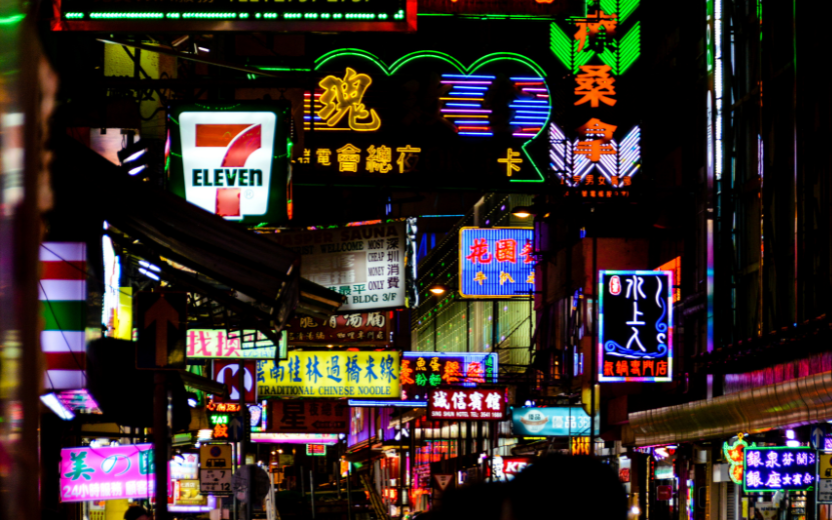
Here, the streets seem permanently switched on.
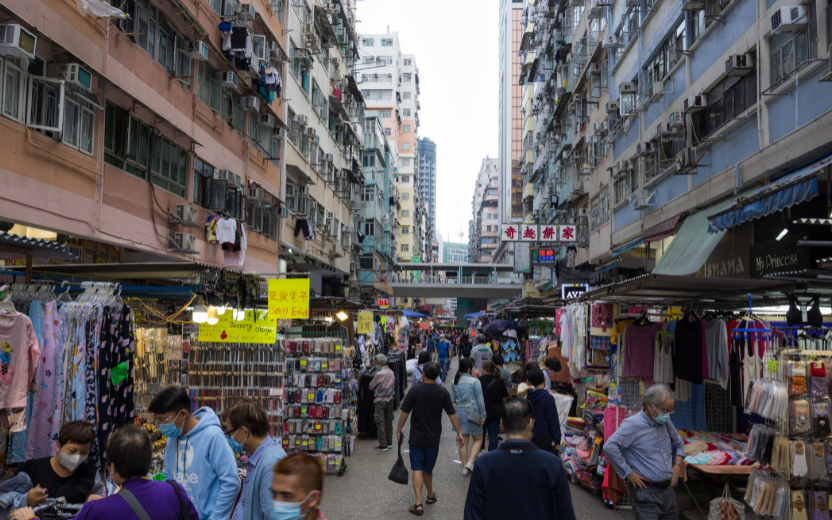
Signs compete for space above your head. People move in every direction. Shops spill onto sidewalks. Food smells drift through the crowd. Someone is bargaining. Someone is carrying five shopping bags. Someone else is standing completely still in the middle of all of it, trying to figure out where to go next.
For a first-time visitor, it can feel overwhelming.
Then, very quickly, it becomes fun.
The Market Maze
Start with Ladies’ Market on Tung Choi Street.
At night, the street becomes a long tunnel of stalls and lights.
Clothes.
Accessories.
Souvenirs.
Phone cases.
Bags.
Small gifts.
Things you did not know you needed until someone held them up and named a price.
The stalls seem endless, and the crowd moves slowly because everybody is looking at something.
You squeeze past people.
Stop.
Turn around.
Negotiate.
Walk ten meters.
Stop again.
This is not elegant shopping.
That is exactly why it is memorable.
Ladies’ Market gives you one of those classic Hong Kong moments where commerce, noise, personality, and sheer density all seem to occupy the same narrow street.
Then Things Get Strange
Keep walking through Mong Kok and the city suddenly changes character.
This is one of the neighborhood’s best qualities.
Hong Kong has a long tradition of streets becoming associated with particular trades or products, and Mong Kok still reflects that in wonderfully specific ways.
One of the most distinctive examples is Goldfish Street, around the northern section of Tung Choi Street.\
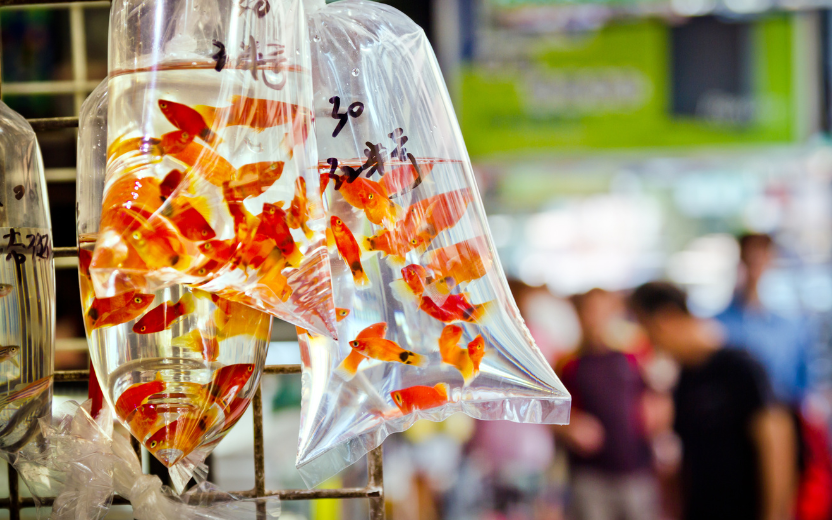
Rows of aquarium shops display fish, tanks, plants, equipment, and aquatic creatures beneath bright shop lights.
It is completely different from Ladies’ Market.
And that is the point.
One moment you are bargaining over a T-shirt.
The next, you are staring at hundreds of colorful fish.
Only a few blocks separate the two.
That is Mong Kok.
It does not really believe neighborhoods need to make sense.
From Goldfish to Sneakers
Then there is Fa Yuen Street, better known to many visitors as Sneaker Street.
This is where Mong Kok’s old-school market energy collides with modern Hong Kong youth culture.
Sportswear stores line the street.
Sneakers fill windows and walls.
New releases sit beside everyday classics.
Young shoppers compare styles.
Collectors search for something harder to find.
People walk in and out of stores carrying boxes.
The atmosphere feels very different from the traditional market streets nearby, yet somehow it belongs perfectly.
That contrast is one of the things that makes Mong Kok interesting.
It is not frozen in some nostalgic version of Hong Kong.
Traditional markets, specialty shops, sneaker culture, chain stores, tiny independent businesses, street food, and neon-lit modern city life all overlap.
Mong Kok keeps changing without becoming quiet.
Follow the Smell
Eventually, shopping stops being the priority.
Food takes over.
This is inevitable.
Mong Kok is the kind of place where you can arrive with a dinner plan and abandon it fifteen minutes later because something smells better.
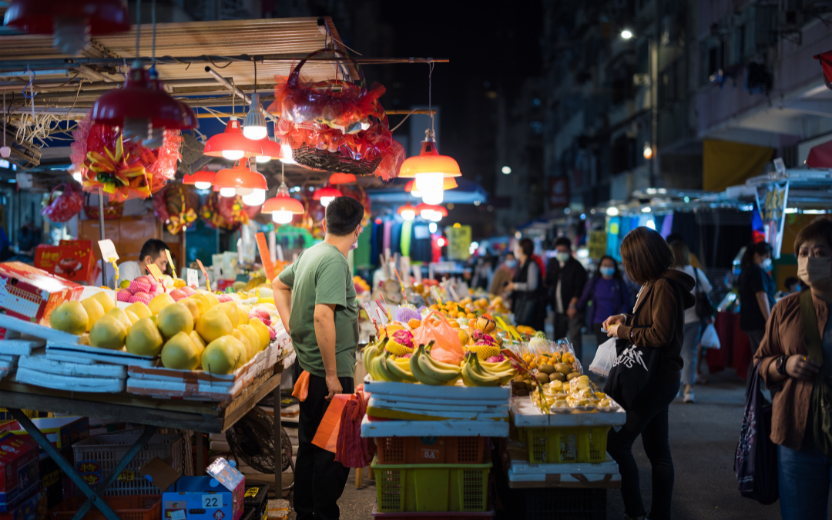
Curry fish balls.
Siu mai.
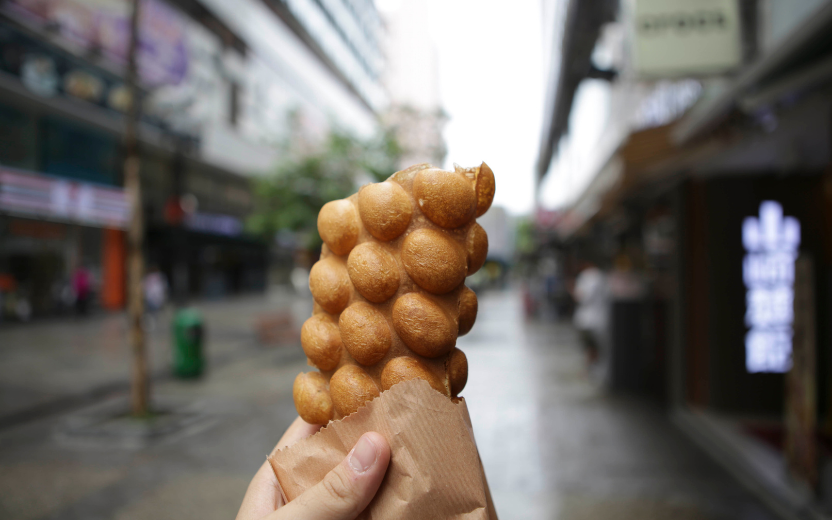
Egg waffles.
Cheung fun.
Skewers.
Milk tea.
Something frying.
Something steaming.
Something you cannot identify but suddenly need to try.
The best approach is not to turn it into a formal food tour.
Just walk.
Eat one thing.
Keep moving.
Share something else.
Buy a drink.
Then discover you are hungry again.
That is how Mong Kok works.
The surrounding streets, including areas around Dundas Street, are full of casual food stops that make it easy to build your own dinner one snack at a time.
Hong Kong, Compressed Into a Few Blocks
Mong Kok can feel chaotic because it is.
But there is an energy inside that chaos.
People are working.
Shopping.
Eating.
Meeting friends.
Looking for bargains.
Searching for shoes.
Buying fish.
Picking up dinner.
Taking photos.
Heading somewhere else.
Everything seems to be happening at once.
And perhaps that is why Mong Kok feels so unmistakably Hong Kong.
The city is famous for using space intensely.
Buildings go upward.
Businesses squeeze together.
People adapt.
A single neighborhood can contain multiple worlds within a few streets.
Mong Kok takes that idea and pushes it almost to the extreme.
Come After Dark
Mong Kok works during the day.
But night gives it another layer.
Lights become brighter.
Signs stand out.
Food stalls feel more tempting.
Crowds grow thicker.
The streets become louder and more cinematic.
This is when first-time visitors often get the Hong Kong they imagined before arriving.
Dense.
Fast.
Bright.
Slightly chaotic.
Full of things happening just beyond whatever you are currently looking at.
You do not need to understand every street.
In fact, getting slightly lost is part of the experience.
Turn a corner because it looks interesting.
Follow a crowd.
Stop for food.
Look inside a strange shop.
Buy something unnecessary.
Then keep going.
The Best Way to Experience Mong Kok
Do not arrive with too rigid a plan.
Mong Kok rewards curiosity more than efficiency.
You can begin at Ladies’ Market.
Walk toward Goldfish Street.
Cut across to Fa Yuen Street.
Eat along the way.
Then end up somewhere completely different from where you expected.
That is probably the right way to do it.
Because Mong Kok is not really about one attraction.
It is about accumulation.
The noise.
The smells.
The lights.
The crowds.
The tiny discoveries.
The feeling that every street has something else happening.
By the end of the night, you may be tired.
Your hands may be full.
You may have eaten too much.
You may have bought something you absolutely did not need.
Perfect.
That means Mong Kok probably worked.
What are you waiting for? Come experience Mong Kok for yourself and discover Hong Kong at full volume. Book your Xperience with MASX today.https://masxworld.com/hong-kong/