
Mel
Chiang Mai After-Dark: A Quieter Side of the City
In This Article
Chiang Mai is often introduced through its temples, mountain views, night markets, cafés, and lively Old City streets.
But after dark, there is another side of Chiang Mai that feels much more intimate.
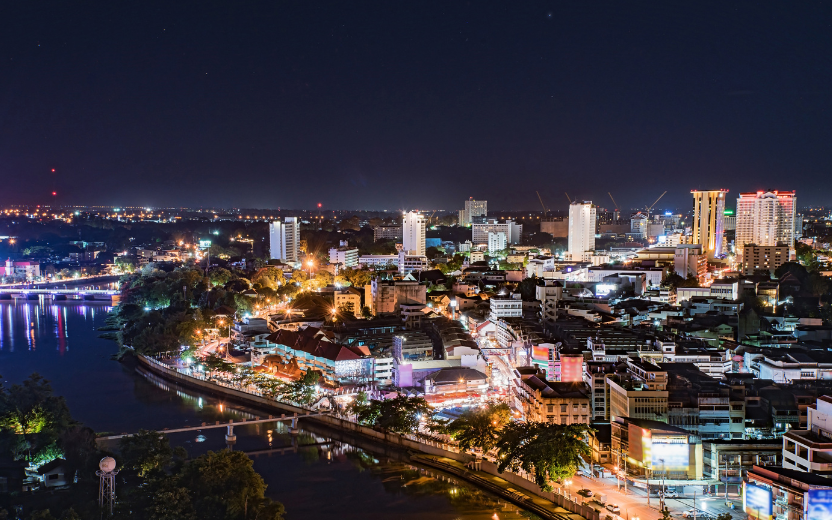
Cross toward the Ping River and the atmosphere begins to change.
The roads feel calmer.
Buildings sit lower.
Old teak houses and neighborhood shops replace some of the busier tourist streets.
Locals stop at temples, flower vendors prepare garlands, bicycles pass through small lanes, and dinner happens in places that feel woven into everyday life.
This is not the loudest side of Chiang Mai.
That is exactly why it is worth discovering.
Wat Ket Karam: Chiang Mai at a Slower Rhythm
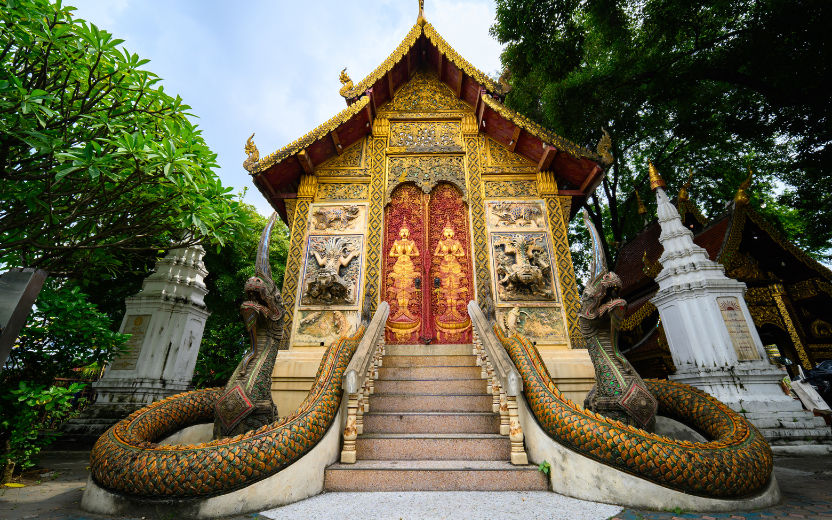
Wat Ket Karam sits in one of Chiang Mai’s historic riverside neighborhoods.
By late afternoon and early evening, the temple grounds feel especially peaceful.
Locals still come to pray, make merit, light incense, and spend a quiet moment inside the grounds. The surrounding neighborhood has a slower pace than many of Chiang Mai’s better-known visitor districts, and the temple reflects that.
There is no need to rush through it.
Walk slowly.
Notice the old wooden buildings.
Listen to the temple bells and everyday sounds around you.
As the light fades, Wat Ket offers something simple but valuable: a reminder that Chiang Mai’s temples are not only historic monuments.
They remain part of ordinary life.
Ton Lam Yai Flower Market: The City Working After Dark
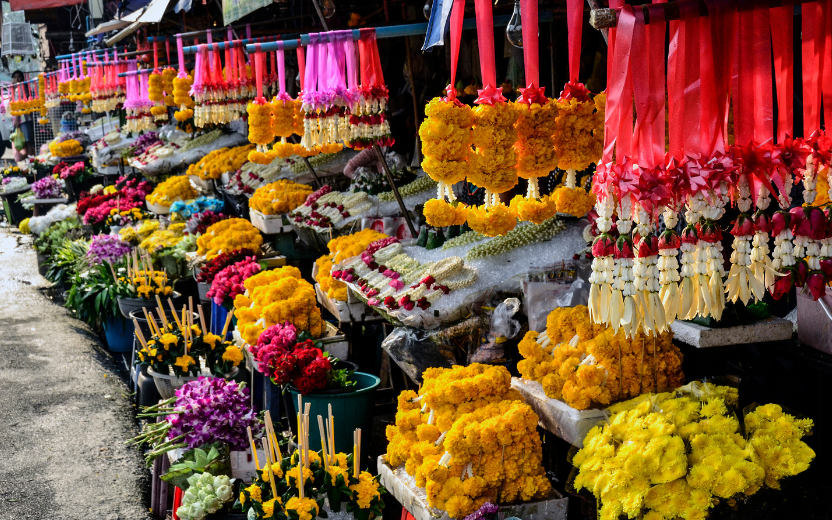
If you want to see a completely different kind of Chiang Mai evening, head toward Ton Lam Yai Flower Market.
The market becomes particularly atmospheric after dark, when vendors work among enormous bundles of flowers.
Marigolds.
Jasmine.
Orchids.
Roses.
Temple garlands.
The colors are bright, but the mood is practical.
People are preparing flowers for temples, ceremonies, homes, businesses, and the next day’s trade.
That is what makes the market interesting.
It does not feel staged.
You are watching part of the city’s daily rhythm continue into the night.
Vendors sort stems.
Garlands are assembled.
Flowers arrive in bulk.
Customers choose what they need.
The air smells fresh and slightly sweet.
For travelers, it is visually beautiful.
For local people, it is simply work.
That contrast makes Ton Lam Yai one of the most interesting places to understand how Chiang Mai functions beyond its tourist attractions.
Wat Ket and Charoen Rat: A Neighborhood Made for Walking
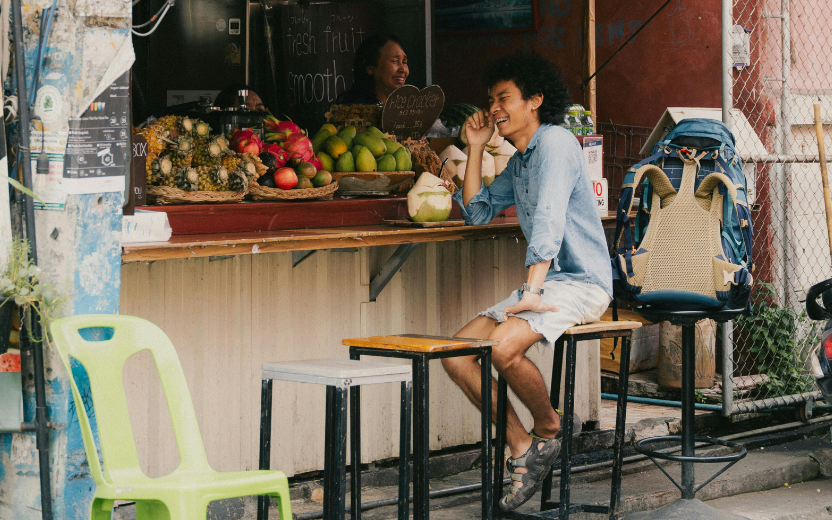
The streets around Wat Ket and Charoen Rat Road offer a very different atmosphere from the Old City or Nimman.
This is Chiang Mai at a more human scale.
Old teak houses still appear between shops and restaurants.
Low-rise buildings line the road.
Small courtyards sit behind walls.
Bicycles and scooters pass without the same intensity found in busier districts.
And the Ping River is never far away.
The area is best explored slowly.
Look down the smaller lanes.
Notice the mixture of old family homes, cafés, local businesses, and heritage buildings.
Some places feel almost hidden.
Others have been carefully restored.
The neighborhood has changed over time, but it still carries traces of Chiang Mai’s old riverside trading communities and residential life.
This is a good place to understand that Chiang Mai is not only temples and tourism.
It is also neighborhoods where people have lived, worked, traded, prayed, and raised families for generations.
The Northern Thai Table
No evening in Chiang Mai should end without food.
And this part of the city gives you a good opportunity to move away from polished tourist dining and toward something more local.
Northern Thai cuisine has its own character.
Herbs are different.
Flavors can be earthy, smoky, herbal, rich, and sometimes surprisingly subtle.
There is much more to explore than khao soi alone.
A casual market setting can be one of the best places to try khanom jeen, soft rice noodles served with curries and fresh vegetables.
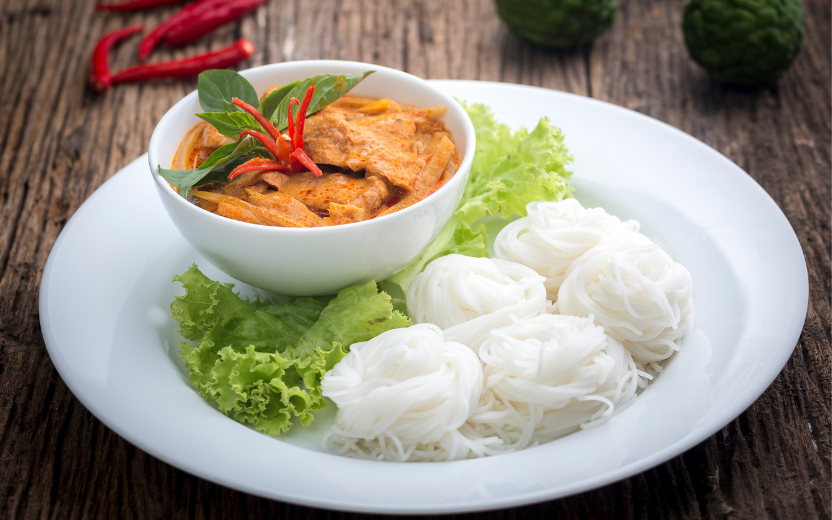
At places such as Kanomjeen Sanpakoi, the experience is straightforward and local: choose your curry, add vegetables, sit down, and eat the way people nearby are eating.
Another option is a rustic Northern Thai restaurant in an old-house setting, where classic Lanna dishes feel connected to the architecture and atmosphere around them.
The point is not to find the fanciest meal.
It is to end the evening somewhere that feels like Chiang Mai.
Why This Side of Chiang Mai Matters
Chiang Mai is easy to enjoy.
It has famous temples.
Beautiful cafés.
Night markets.
Mountain scenery.
And plenty of places designed for visitors.
But the quieter riverside neighborhoods offer something different.
They show you how the city lives.
A temple where people still come to pray after work.
A flower market preparing for tomorrow.
A residential street where old houses and modern businesses coexist.
A local table filled with Northern Thai food.
None of these experiences are dramatic on their own.
Together, they reveal a softer side of Chiang Mai.
One that feels less like sightseeing and more like observing the rhythm of the city itself.
And sometimes, that is the best way to understand a place.
Follow MASX for cinematic travel inspirations, hidden gems, cultural facts, and so much more!
Instagram: https://www.instagram.com/masxworld
Facebook: https://www.facebook.com/share/1C5Ado1tV5/?mibextid=wwXIfr
TikTok: https://www.tiktok.com/@masxworld
YouTube: https://www.youtube.com/@masxworldhttps://www.youtube.com/@masxworld
Book your Asia After-Dark Xperience! https://masxworld.com/