


MASX WORLD
From Bacchanal to Reflection: The Connection Between Carnival and Lent in Trinidad and Tobago
Every year in Trinidad and Tobago, the energy of Carnival builds to a spectacular climax on Carnival Monday and Tuesday. Streets overflow with masqueraders, soca music blares from every corner, and the spirit of freedom and celebration takes over the nation. But as the final notes of music fade and the last costumes are packed away, a significant transition begins. On the very next day—Ash Wednesday—the country moves from celebration into the solemn season of Lent.
Understanding Lent helps explain why Carnival exists in the first place. The two are deeply connected through history, religion, and culture.
The Meaning of Lent
Lent is a 40-day period of fasting, reflection, and repentance observed by many Christians, particularly Catholics, Anglicans, and other denominations. It begins on Ash Wednesday and continues until Easter Sunday (excluding Sundays).
During Lent, believers traditionally:
Give up certain foods or pleasures
Reflect on spiritual growth
Engage in prayer and charity
Practice self-discipline
The season commemorates the 40 days Jesus spent fasting in the desert, according to the Bible.
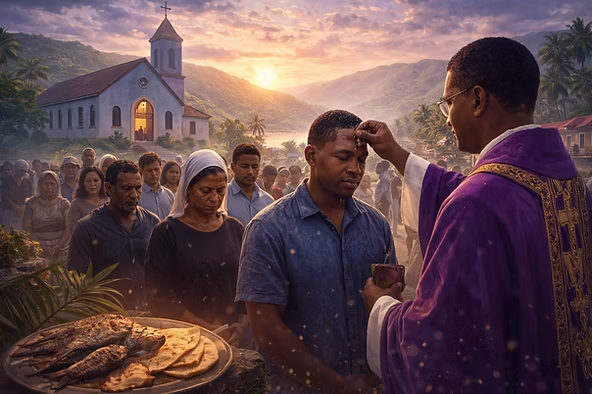
In Trinidad and Tobago, Lent remains a meaningful observance, particularly in communities with strong Catholic traditions. Churches hold Ash Wednesday services where ashes are placed on the forehead in the shape of a cross, symbolizing repentance and humility.
Why Carnival Happens Before Lent
The word Carnival itself hints at its religious origins. It comes from the Latin phrase “carne vale,” meaning “farewell to meat.”
Before the fasting and sacrifice of Lent, communities historically held a final period of indulgence. This meant:
Eating rich foods
Drinking and socializing
Celebrating with music and dance
In many Catholic cultures around the world—Brazil, Italy, New Orleans, and the Caribbean—this period evolved into large pre-Lenten festivals. Trinidad and Tobago’s Carnival became one of the most vibrant expressions of this tradition.
Essentially, Carnival is the last big celebration before the discipline of Lent begins.
The Trinidad & Tobago Twist
While Carnival has religious roots, Trinidad and Tobago transformed it into something uniquely local.
Over centuries, African traditions, French Catholic customs, and Caribbean creativity blended together to create the modern festival we know today.
Carnival now includes:
Masquerade bands
Soca and calypso music
Steelpan
J’ouvert celebrations
Road March competitions
Fetes across the country
Even though the festival has grown far beyond its original religious framework, its timing remains tied to the Christian calendar.
Carnival always ends the day before Ash Wednesday, marking the shift into Lent.
The Cultural Reset After Carnival
Anyone who lives in Trinidad and Tobago knows the shift is dramatic.
On Carnival Tuesday night, the streets are alive with music and celebration. By
Wednesday morning, the mood changes noticeably:
Costumes disappear
Party trucks vanish
Businesses reopen
Churches fill with worshippers
For many, Ash Wednesday represents a moment to pause after weeks of excitement.
Some people even joke that after Carnival, everyone needs Lent just to recover.
Lenten Traditions in Trinidad and Tobago
Throughout Lent, many Trinbagonians observe traditions that reflect both religious devotion and local culture.
Common practices include:
Giving something up: People often sacrifice certain habits or foods—like alcohol, sweets, or meat.
Eating fish on Fridays: Many Catholics avoid meat on Fridays during Lent, making fish dishes popular.
Church services and reflection: Ash Wednesday, Good Friday, and Easter services remain important moments in the Christian calendar.
Quieter social life: While life continues as normal, the frenetic party energy of Carnival season slows significantly.
Carnival and Lent: Two Sides of the Same Tradition
At first glance, Carnival and Lent might seem like opposites.
Carnival represents:
Freedom
Celebration
Music and movement
Lent represents:
Reflection
Discipline
Spiritual focus
But historically, they are actually two parts of the same cultural cycle.
Carnival is the explosion of life and joy before the quiet introspection of Lent. Together, they create a rhythm that has shaped Trinidad and Tobago’s cultural calendar for generations.
More Than a Festival
Today, Carnival is celebrated by people of all religions and backgrounds, and many enjoy the festival purely for its cultural significance. Yet its connection to Lent reminds us that Carnival did not appear out of nowhere—it grew from centuries of tradition.
In Trinidad and Tobago, the transition from Carnival to Lent tells a deeper story: one about faith, history, celebration, and balance.
After all the feathers, music, and bacchanal, the season of reflection begins.
And just like that, the countdown quietly starts again… to the next Carnival.
Are you ready to visit Trinidad?
Check out our Trinidad Carnival 2027 packages to experience the MAGIC that is TRINIDAD CARNIVAL!!!
Click here now to secure your trip to “MasX: Trinidad Carnival 2027 – The Magic and The Madness”.
LIVE ULTIMATE XPERIENCES(L.U.X.) IN TRINIDAD AND TOBAGO!
Are You Ready? Let’s Go!!!