

MASX WORLD
Hong Kong Is Back — But It’s Not the Same
There was a time when Hong Kong felt unstoppable.
Neon-lit nights. Financial dominance. East-meets-West energy pulsing through crowded streets. It was fast, cinematic, and unapologetically alive.
Then the world paused.
Travel restrictions, political shifts, and years of limited movement changed the city in ways visitors could feel — even from afar.
Now Hong Kong is reopening, reviving, and redefining itself.
But the real question isn’t whether Hong Kong is back.
It’s: back to what?

The Comeback Story
Since borders reopened, Hong Kong has been actively rebuilding its tourism momentum.
International flights have returned. Major events are back on the calendar. Art Basel, Rugby Sevens, and global conventions are once again drawing crowds.
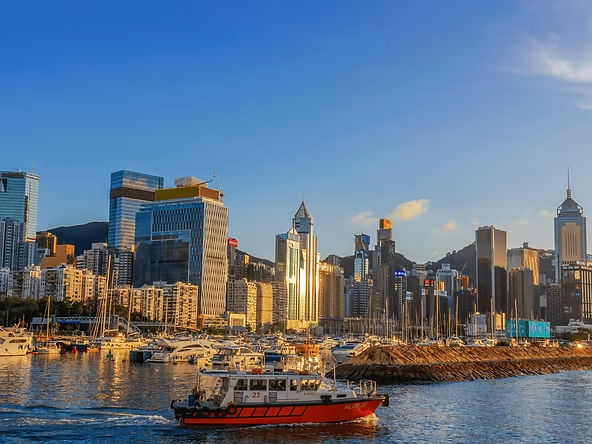
The skyline still glows. Victoria Harbour still stuns at sunset.
But beneath the surface, the city feels more reflective.
Hong Kong isn’t trying to recreate the past. It’s navigating what comes next.
Nightlife Is Reawakening — Differently
Pre-2020 Hong Kong nightlife was legendary.
Lan Kwai Fong pulsed until sunrise. Rooftop bars filled with expats, bankers, creatives, and travelers.
Today, nightlife is returning — but it feels more local, more curated.
You’ll still find rooftop cocktails and skyline views. But there’s also a noticeable shift toward:
- Intimate cocktail bars
- Independent music spaces
- Art-driven pop-up events
- Community-focused gatherings
The energy is still there — just slightly more intentional.
The Creative Scene Is Stronger Than Ever
If there’s one area where Hong Kong feels undeniably alive, it’s art and culture.
West Kowloon Cultural District has transformed into a serious global arts hub. M+ Museum is redefining contemporary Asian art visibility.
Art Basel’s return signaled more than tourism recovery — it signaled confidence.
There’s a renewed push to position Hong Kong not just as a financial center, but as a cultural bridge.
East Meets West — Still, But Evolving
Hong Kong has always existed between worlds.
Cantonese traditions mix with British colonial history. Dim sum sits beside Michelin-starred fusion restaurants.
That identity remains — but conversations around belonging, governance, and cultural preservation are more visible now.
Travelers who visit today aren’t just exploring skyscrapers and ferry rides.
They’re stepping into a city navigating complexity.
And that complexity makes it fascinating.
What Travelers Should Know Now
Hong Kong remains:
- Extremely efficient
- Safe and well-connected
- Easy to navigate
- English-friendly in most areas
But the travel experience is shifting.
You may notice:
- Fewer expat-heavy neighborhoods than before
- More Mandarin presence alongside Cantonese
- A stronger emphasis on regional tourism
It’s still global — but also more introspective.
How to Experience the Real Hong Kong Today
If you want to move beyond surface tourism:
- Take the Star Ferry at night — not just for the view, but for the quiet pause.
- Explore Sham Shui Po markets instead of just luxury malls.
- Visit neighborhood cha chaan teng cafés for local breakfast culture.
- Spend time in PMQ and Tai Kwun for contemporary creative energy.
The city reveals itself in layers.
And it rewards those who look past the skyline.
Is Hong Kong Still Worth Visiting?
Absolutely.
But not because it’s unchanged.
Because it’s evolving.
Hong Kong today feels like a city aware of its global role — and aware of its transformation.
For travelers who value authenticity, nuance, and cultural shifts in motion, this is a compelling moment to visit.
Not to relive what it was.
But to witness what it’s becoming.