



MASX WORLD
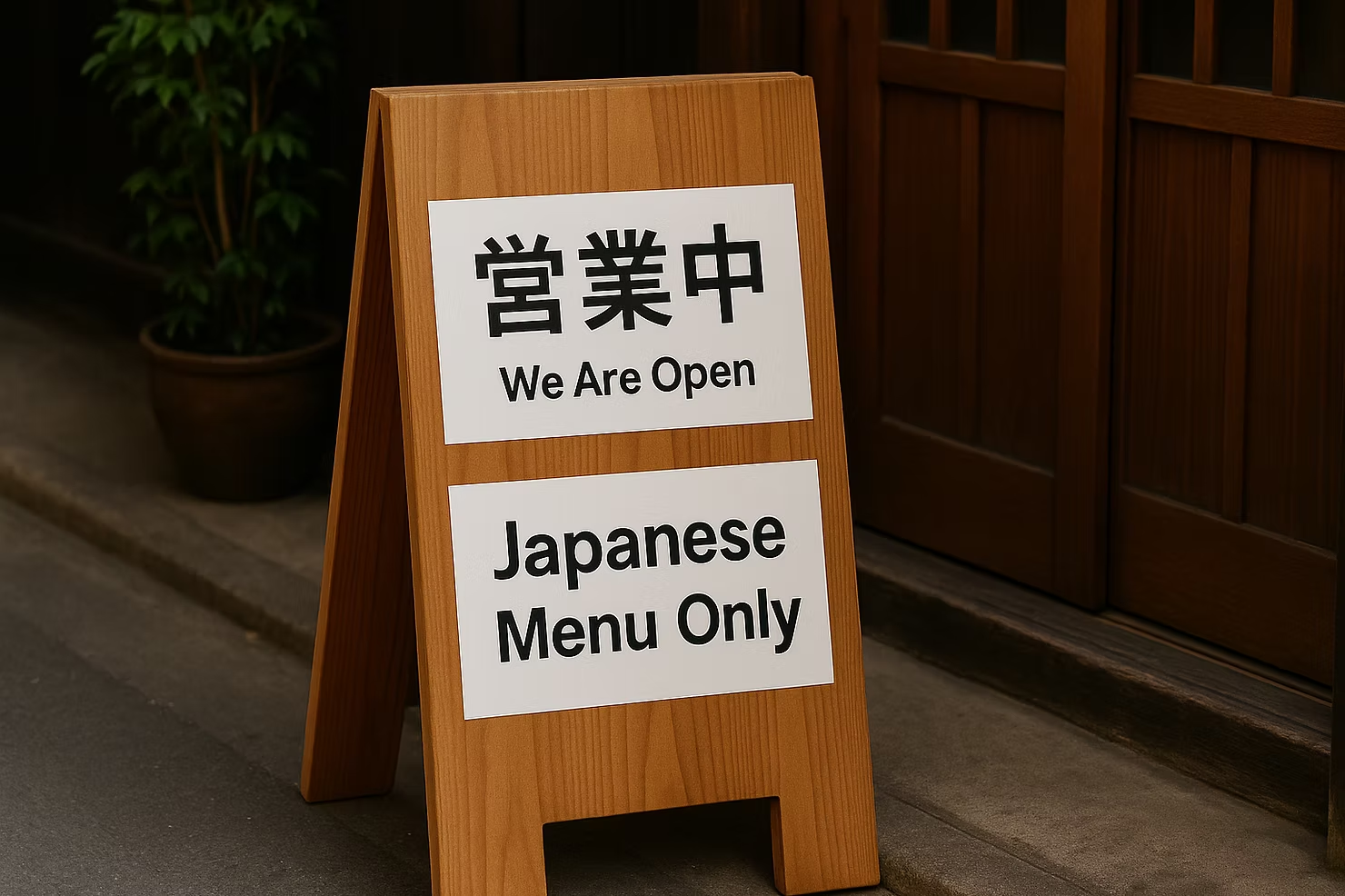
“Japanese Only” Signs in Japan: What They Really Mean for Travelers
While exploring Japan, some visitors are surprised to encounter small signs that read “Japanese Only.” They may appear on the door of a tiny bar, a neighborhood restaurant, or a quiet café tucked away from tourist streets.
To outsiders, the message can feel personal — even unwelcoming. To locals, the meaning is often far more practical and complex.

A Sign That Feels Harsh — But Usually Isn’t
Japan is known for hospitality, so seeing a sign that seems to say “not for you” can be confusing. But in many cases, these signs are not about nationality or appearance. They’re about capacity — what a small business can realistically handle.
Most of the places displaying these signs are extremely small, sometimes no larger than a living room. Many are run by just one or two people, handling cooking, service, and payment all at once.
In that environment, even minor communication challenges can become overwhelming.
Language Is Often the Real Issue
In many “Japanese Only” establishments, staff:
- Speak only Japanese
- Use handwritten or Japanese-only menus
- Rely on verbal explanations rather than visuals
Unlike some major tourist destinations, English is not widely spoken in Japan, even in big cities. Owners know that many visitors don’t speak Japanese, and they worry that the experience will be stressful — for both sides.
In this sense, the sign acts less like a rejection and more like a warning:
“We can’t communicate smoothly here. If you’re okay with that, you’re welcome. If not, you may have a better experience elsewhere.”
Time, Rhythm, and Regulars
Another layer is Japan’s strong culture of regular customers. Small shops often survive because locals return week after week, sometimes for decades. These relationships shape the rhythm of the space — familiar orders, quiet conversation, unspoken understanding.
Spending long stretches explaining menus, rules, or payment systems to one-time visitors can disrupt that rhythm. For owners, choosing efficiency isn’t about profit — it’s about preserving the flow that keeps their community intact.
Avoiding Conflict, Not Creating It
Japan is a society that values harmony and avoids confrontation. Over the years, some shop owners have had difficult experiences with visitors — not always intentional, but disruptive nonetheless.
Issues like:
- Ignoring etiquette
- Raising voices
- Leaving without paying
- Treating staff aggressively, assuming no one will argue back
have pushed some owners to take preventative measures.
As tourism increases, these moments add up. For people who dislike conflict, a sign can feel like the safest option.
Dining Is a Shared Experience
In Japan, dining is about more than food. It’s sensory and social — shaped by sound, smell, pace, and behavior. Quiet voices, subtle scents, and finishing what you order all help protect the atmosphere.
When these unspoken rules are broken, even unknowingly, it can affect everyone in the room. Some shops choose limitation over explanation to protect that shared experience.
It’s Rarely Personal
This is the most important thing for travelers to understand: “Japanese Only” is rarely personal.
It’s usually about:
- Language comfort
- Space limitations
- Emotional labor
- Protecting calm and routine
In many cases, it’s preservation — not exclusion.
What Travelers Can Do
If you encounter a place like this:
- Smile
- Nod
- Say “Wakarimashita. Arigatou gozaimasu.” (I understand, thank you)
That small moment of grace matters.
You’ll leave a positive impression — and more often than not, another welcoming door is just a few steps away.
Understanding the fine print doesn’t just help you travel better. It helps you see Japan the way it sees itself — quietly, thoughtfully, and with care.
If you are interested in the world’s unwritten rules, please watch our Foreign Fine Print series on Youtube!
Foreign Fine Print is a MASX World original series exploring the unwritten rules behind the world’s most fascinating cultures.
Not etiquette guides. Not travel hacks. But the invisible systems that shape how people live together.
🕒 New episodes every Tuesday at 9AM EST
🌏 Subscribe & turn on notifications — because every culture has fine print, and we help you read it before you go.