
Mel
The Sacred Fire That Shapes India’s Greatest Festivals
In This Article
From the illuminated ghats of Varanasi to the summit of Arunachala Hill, fire appears in some of India’s most recognizable religious celebrations. Although these festivals differ in history, geography, and tradition, they all share a belief that has shaped Indian culture for thousands of years. In India, fire is more than a source of light—it represents purity, transformation, and a sacred connection between humans and the divine.
This belief is rooted in Hindu tradition, where fire is personified as Agni, the divine messenger between humans and the gods. Offerings placed into a sacred fire are believed to carry prayers to the divine, making fire an essential part of worship, from weddings and temple ceremonies to seasonal festivals. It is this enduring symbolism that lies behind many of India’s greatest celebrations, where every flame represents far more than a spectacular display.
Dev Deepawali: A River of Light
Held in the sacred city of Varanasi, Dev Deepawali is celebrated on the full moon of Kartik Purnima, around fifteen days after Diwali. According to Hindu tradition, this is the night when the gods descend to Earth to celebrate their victory over evil.
To mark the occasion, millions of oil lamps, known as diyas, are placed along the ghats of the Ganges River. As darkness falls, priests perform the Ganga Aarti while thousands of pilgrims gather on the riverbanks and in boats to witness the illuminated city.
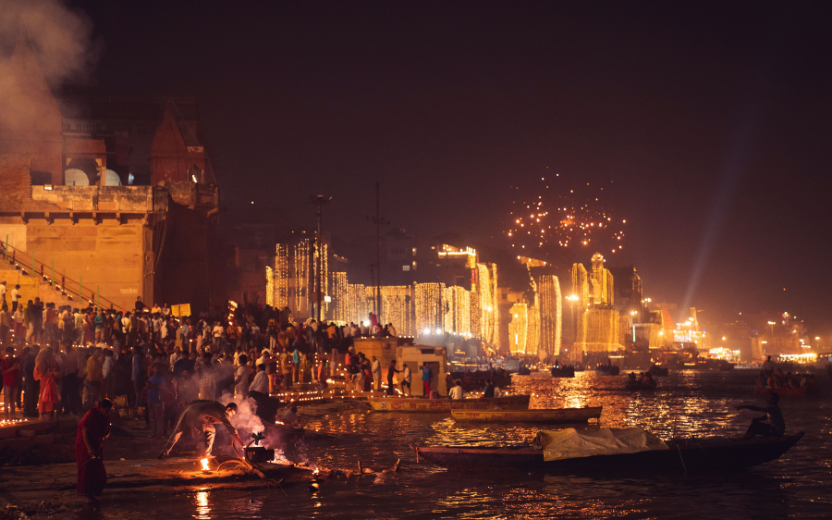
Unlike Diwali, which is widely celebrated across India in homes and neighborhoods, Dev Deepawali transforms one of the world’s oldest continuously inhabited cities into a vast open-air place of worship.
Karthigai Deepam: Lighting a Sacred Mountain
In the southern state of Tamil Nadu, Karthigai Deepam centers on Arunachala Hill, a mountain regarded as sacred to Lord Shiva.
The highlight of the festival comes when a massive beacon is lit at the summit. Visible from miles away, the flame symbolizes Shiva’s appearance as an infinite pillar of fire—a story that represents the limitless nature of the divine.
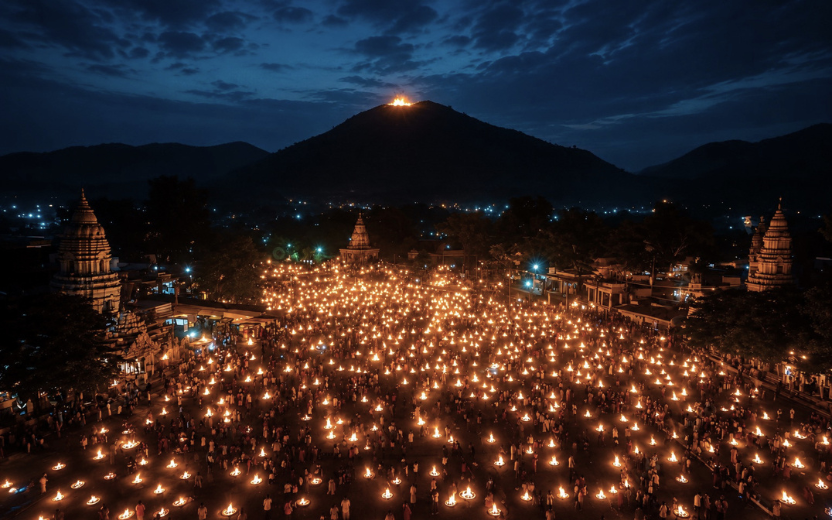
At the same time, homes and temples throughout the region are illuminated with rows of clay lamps, linking everyday acts of devotion with one of Hinduism’s most important spiritual symbols.
Holika Dahan: Fire as Renewal
On the evening before Holi, communities across India gather around large bonfires for Holika Dahan.
The festival commemorates the legend of Prahlad, a devoted follower of Vishnu, who survived a fire while the demoness Holika was destroyed. The story symbolizes the triumph of righteousness over evil.
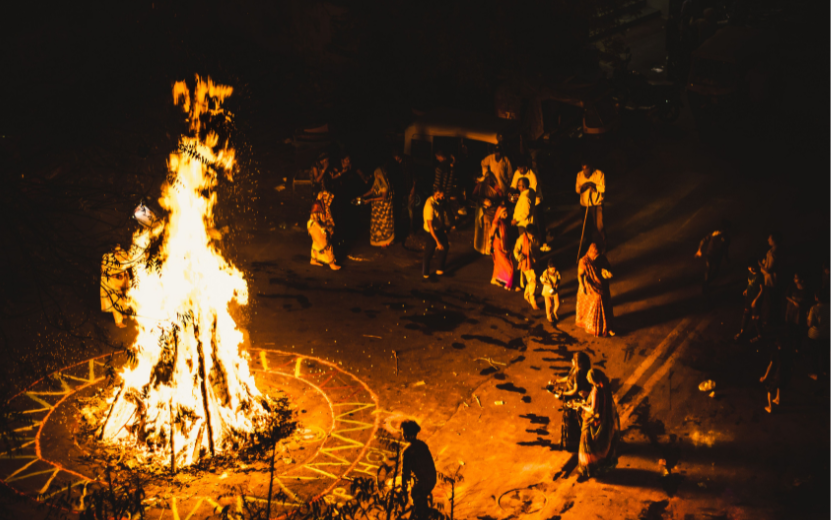
Today, the bonfires continue to represent purification and renewal. Many participants walk around the flames, offer prayers, and mark the end of one season before Holi’s colorful celebrations begin the following day.
Theyyam: Fire Within Ritual
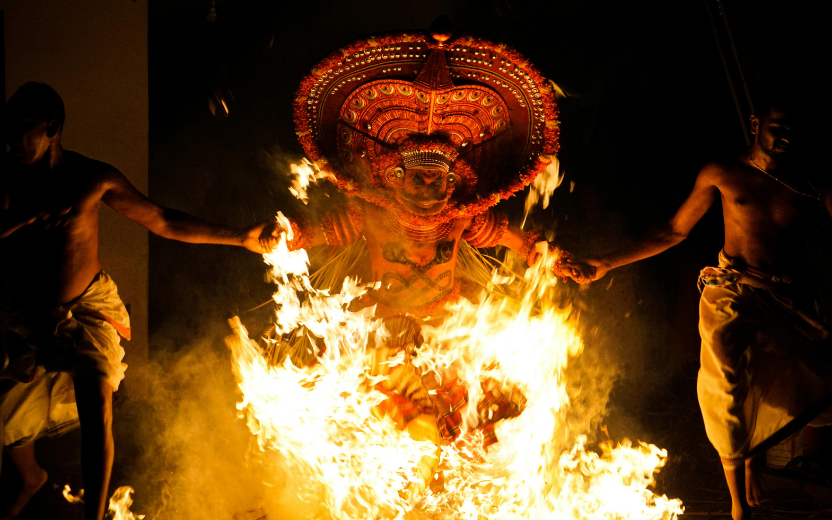
Although Theyyam is not a festival dedicated to fire, flames play an important role in many of its rituals.
Practiced in Kerala, Theyyam is an ancient ceremonial tradition in which elaborately dressed performers are believed to become temporary manifestations of deities or ancestral spirits. Fire often surrounds these performances, illuminating temple courtyards and accompanying rituals that have been preserved for centuries.
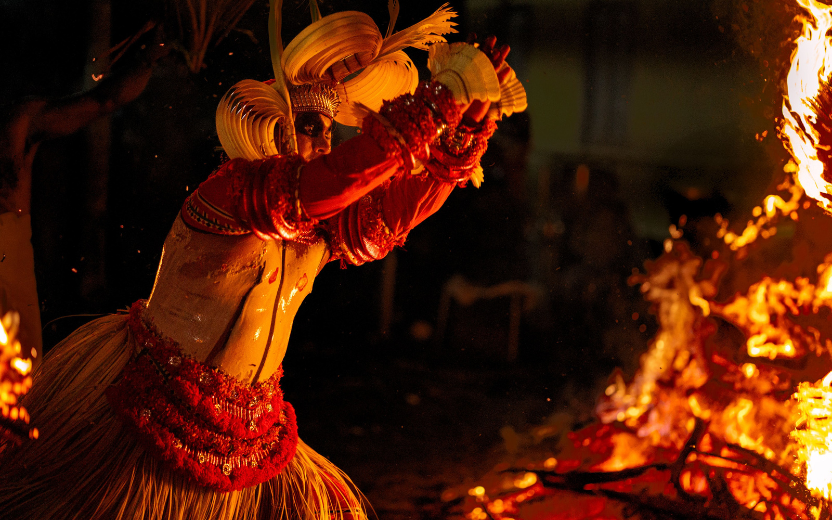
Rather than serving as decoration, the flames reinforce the sacred atmosphere of the ceremony and symbolize the presence of divine power.
Ganga Aarti: Fire Beyond Festivals
Not every sacred flame in India belongs to an annual festival.
Every evening, priests perform Ganga Aarti along the banks of the Ganges in cities such as Varanasi, Haridwar, and Rishikesh. Large ceremonial lamps are raised toward the river while prayers and devotional songs fill the air.
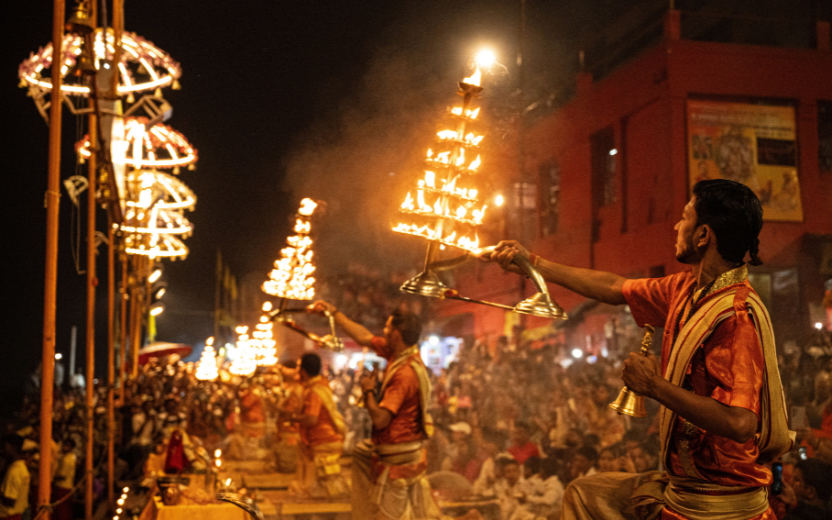
For many Hindus, the ritual expresses gratitude to the Ganges, which is revered as both a river and a goddess. It also demonstrates that the symbolism of fire extends beyond festivals into everyday religious life.
One Sacred Element, Many Traditions
India’s festivals are remarkably diverse, shaped by different regions, languages, and beliefs. Yet many of the country’s most significant celebrations continue to share one powerful symbol.
For travelers, witnessing these celebrations offers far more than a spectacular visual experience. It provides an opportunity to understand the traditions, beliefs, and stories that continue to shape one of the world’s oldest civilizations.
At MASX, we believe the best way to experience India is not simply by visiting its famous landmarks, but by immersing yourself in the living traditions that define the country.
Ready to discover India’s incredible festivals and cultural heritage? Browse our India travel experiences: https://masxworld.com/india/
—————————————————
Follow MASX for cinematic travel inspirations, hidden gems, cultural facts, and so much more!
Instagram: https://www.instagram.com/masxworld
Facebook: https://www.facebook.com/share/1C5Ado1tV5/?mibextid=wwXIfr
TikTok: https://www.tiktok.com/@masxworld
YouTube: https://www.youtube.com/@masxworld