



Mel
The Tree of Blue Eyes: A Colorful Tradition Hidden Near Cappadocia
In This Article
There are some places in the world that immediately make you stop, smile, and reach for your camera.
And then there are places that make you curious.
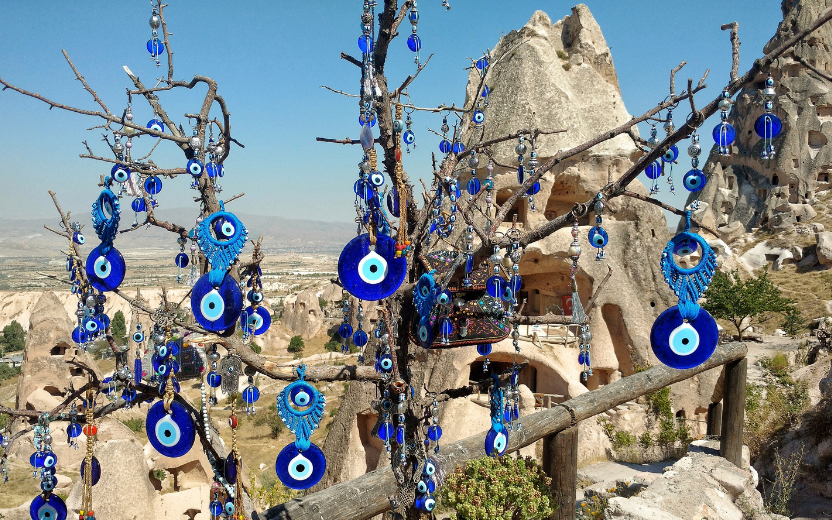
Just outside the dreamlike landscapes of Cappadocia, travelers sometimes come across a striking sight: trees completely covered in hundreds — sometimes thousands — of blue glass charms swaying gently in the wind.
At first glance, it almost feels magical.

Branches sparkle under the sunlight. Blue circles catch the breeze. Tiny glass eyes move softly against the backdrop of Cappadocia’s rocky valleys and open skies.
This is the famous Turkish evil eye tree — one of the most colorful and fascinating cultural symbols visitors discover in Türkiye.
What Is the Blue Eye?
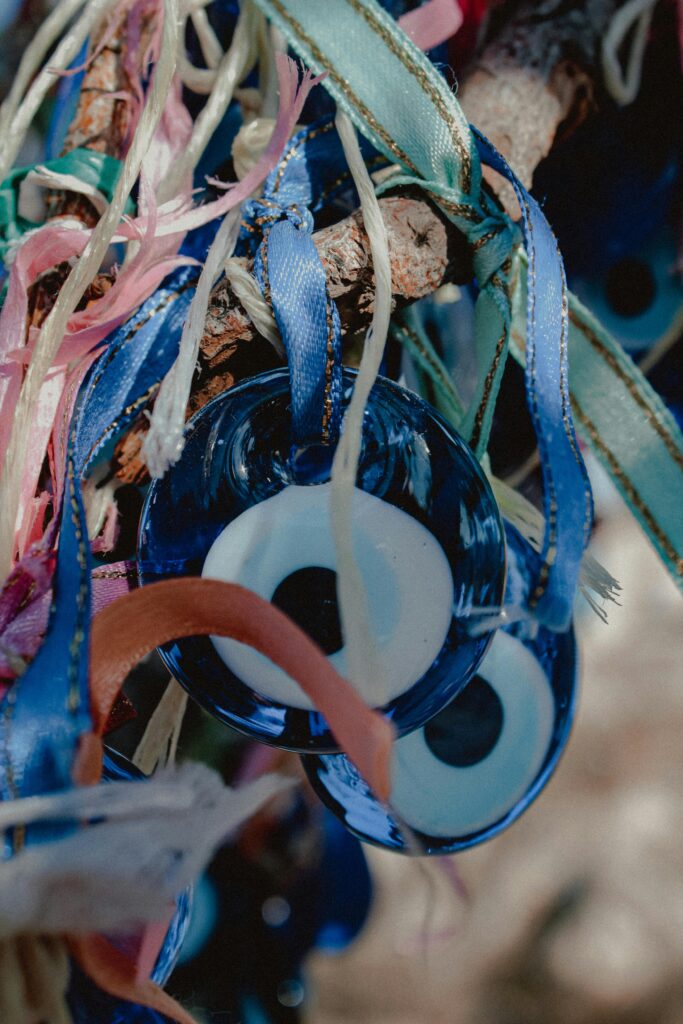
Known locally as the Nazar Boncuğu, the blue eye charm is one of the most recognized symbols in Turkish culture.
You will see it everywhere in Türkiye — hanging in homes, cafés, taxis, hotel entrances, jewelry shops, and even attached to newborn babies’ clothing. But seeing hundreds gathered together on a tree creates something entirely different: part tradition, part art installation, part spiritual expression.
The symbol itself is believed to protect against the “evil eye,” a concept found across many cultures throughout history. The idea is simple: excessive envy, jealousy, or negative energy can bring bad luck or misfortune.
The blue eye charm is believed to reflect that negativity away and protect the person carrying it.
Whether people see it as spiritual protection, cultural tradition, or simply a meaningful symbol, the charm remains deeply connected to everyday life in Türkiye.
Why Do People Visit the Blue Eye Trees?
Partly because they are beautiful.
But also because they tell a story.
Many visitors stop at these trees while exploring Cappadocia’s valleys, viewpoints, and villages. Some come for photos, while others are drawn by curiosity about local beliefs and traditions.
There is also something unexpectedly joyful about them.
Unlike quiet religious rituals or formal monuments, the blue eye trees feel playful and expressive. Bright blue charms hang from every branch like little wishes floating in the air. The movement, the color, and the setting create an atmosphere that feels both peaceful and uplifting.
For many travelers, it becomes one of those small but memorable moments that stay with them long after the trip ends.
What Do People Leave or Offer?
Visitors often add their own blue eye charms to the tree.
Some bring one purchased from a local market in Cappadocia. Others tie ribbons, make wishes, or leave small tokens while thinking about protection, luck, happiness, or future journeys.
There is no strict ritual.
That is part of the charm.
Some people quietly reflect before hanging their Nazar. Others laugh with friends while choosing the perfect branch. Some simply admire the sight and continue their adventure through Cappadocia.
The experience feels personal rather than formal — a mix of tradition, symbolism, and travel memories all coming together in one colorful place.
More Than Just a Souvenir
It is easy to think of the blue eye as simply a popular Turkish souvenir.
But spending time around these trees reveals something deeper.
The Nazar reflects values that are still very present in Turkish culture: protection, intention, positivity, and care for loved ones. Even today, many locals gift blue eye charms to family members moving into a new home, starting a new business, or beginning a new chapter in life.
It is both symbolic and emotional.
And somehow, seeing thousands of them gathered together under the Cappadocian sky makes that meaning feel even stronger.
A Little Magic in Cappadocia
Cappadocia is already famous for its hot air balloons, cave hotels, and surreal landscapes.
But sometimes, it is the smaller cultural moments that make a destination unforgettable.
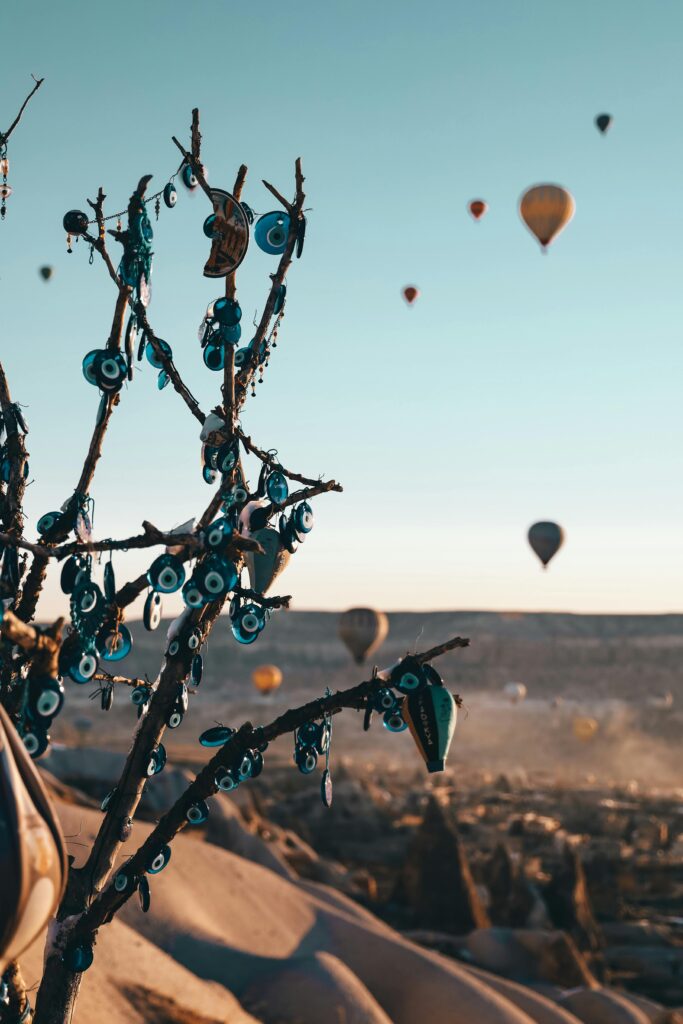
A tree covered in blue eyes may sound simple. Yet standing beneath one — hearing the charms softly clink in the wind while the sun lights up the valleys around you — feels oddly special.
Part tradition.
Part superstition.
Part art.
Part memory.
And entirely Türkiye.
If you are interested in the world’s unwritten rules, please watch our Foreign Fine Print series on Youtube!
Foreign Fine Print is a MASX World original series exploring the unwritten rules behind the world’s most fascinating cultures.
Turkey’s Unwritten Rules & Cultural Layers Explained 🇹🇷 | Foreign Fine Print



2 Comments
amazing picture thank you for take picture
its so beautiful place and amazing pictue